
DogSence Uk #19 Why Does My Dog Chew Their Nails?

Dogs sometimes nibble their nails briefly while grooming. Frequent, forceful or persistent chewing is different—it may indicate itching, discomfort, a damaged nail or another problem requiring attention.
Are They Simply Grooming?
Occasional gentle nibbling that stops quickly may be normal grooming, particularly after a muddy walk.
Check the paws for trapped dirt, grass or other debris. If the chewing continues, repeatedly affects the same paw or is difficult to interrupt, look more closely.

Itchy Paws

Dogs may chew around their nails because the surrounding skin feels itchy. Possible causes include:
Environmental allergies
Fleas or mites
Contact irritation
Bacterial or yeast infections
Dampness trapped between the toes
You may also notice redness, licking, an unusual smell, saliva staining or sore skin.
Itching has many possible causes, so avoid assuming that it is automatically a food allergy.
A Damaged or Painful Nail
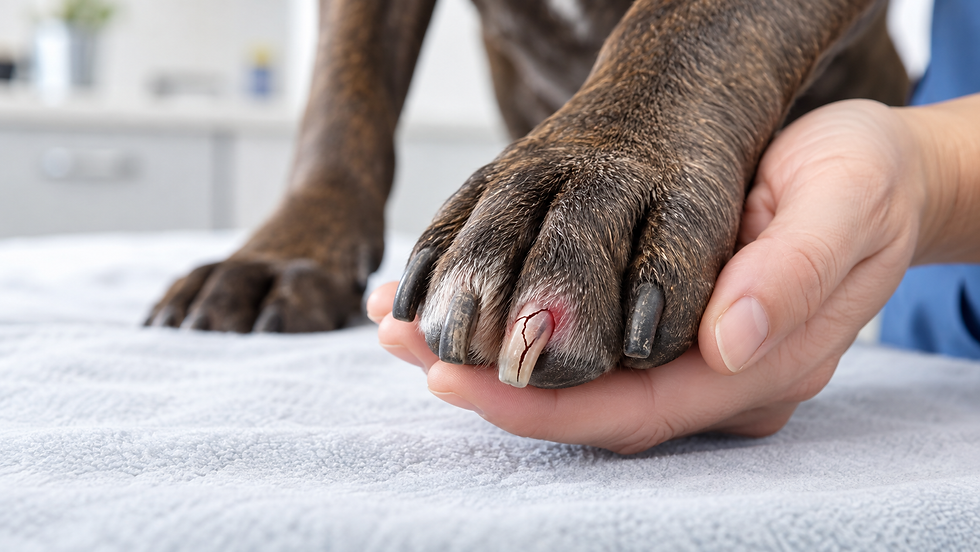
A split, torn or partially detached nail can be very painful. Dogs may chew at it because it catches on bedding or hurts when they walk.
Check for:
Cracks or splits
Bleeding
Swelling around the nail
A nail growing towards the pad
Limping
Sensitivity when the paw is touched
A broken or exposed nail centre
Do not pull off a loose nail. A veterinary professional may need to trim or remove the damaged section safely and provide appropriate pain relief.
Nails That Are Too Long

Overgrown nails may press against the floor, catch on surfaces or change how the toes sit. Dewclaws are particularly easy to miss because they may not wear down during ordinary walking.
If the nails have become severely overgrown, they should usually be shortened gradually because the sensitive quick may also have grown longer.
Something Between the Toes

Grass seeds, thorns, grit, small stones and dried mud can become lodged around the toes or nails.
After walks, examine:
Between each toe
Around every nail
The pads
The tops of the paws
The dewclaws
Seek veterinary advice if the paw is swollen, painful or producing discharge, or if you suspect a grass seed has entered the skin.
Stress, Boredom or Habit
Some dogs chew their paws or nails when they are under-stimulated, unsettled or anxious. However, behavioural causes should not be assumed until pain, itching and disease have been considered.
Record when the chewing occurs. A pattern connected with being left alone, household changes or difficulty settling may help your vet or a qualified clinical animal behaviourist understand the problem.
When Should You Contact Your Vet?

Arrange veterinary advice if:
The chewing is frequent or intense
One paw receives constant attention
The skin is red, swollen, smelly or sore
A nail is split, loose, bleeding or discoloured
Your dog limps or avoids using the paw
There is discharge between the toes
Several nails are cracking or breaking
The problem keeps returning
Repeated damage affecting several nails can occasionally be associated with an underlying nail disorder and deserves a veterinary examination.
What Can You Do at Home?

Check the paws after every walk.
Rinse away ordinary mud with clean lukewarm water.
Dry carefully between the toes.
Keep nails at an appropriate length.
Prevent persistent chewing until advice is obtained.
Record photographs or videos for your vet.
Use only products intended for dogs and recommended for the problem.
Do not apply essential oils, human creams, disinfectants or bitter homemade mixtures. These may irritate the skin or be unsafe when swallowed.

Final Advice
Brief nail nibbling can be ordinary grooming, but repeated chewing is often a sign that something feels itchy, painful or uncomfortable.
Check every nail, toe and pad, and contact your vet if the behaviour persists or you notice pain, swelling, broken nails or damaged skin.
This article provides general information for UK dog owners and does not replace veterinary advice, diagnosis or treatment.


Comments