


7 Subtle Signs Your Dog Is Stressed (That Most Owners Completely Miss) Your Dog May Be Trying to Tell You Something... Are You Listening?

🐶
You walk through the door after a long day, and your dog greets you with a wagging tail, bright eyes, and plenty of excitement. Everything seems perfect.
But dogs are incredibly good at hiding stress.
Unlike humans, they can't tell us when they're feeling overwhelmed. Instead, they communicate through small body language signals that many owners never notice.
In fact, research from the Dog Ageing Project found that over 84% of dogs show signs of fear or anxiety in everyday situations, yet many owners don't recognise these early warning signs until behaviour problems develop.
Learning your dog's "secret language" can help prevent fear, anxiety, and even aggression before they become bigger issues.
1️⃣ Lip Licking (When There's No Food Around) 👅
A quick flick of the tongue across the nose isn't always about food.
It's actually one of the most common calming signals dogs use when they feel uncomfortable.
You might notice it:
During a vet visit
When someone leans over them
Around unfamiliar dogs
During grooming
Your dog is politely saying:
"I'm feeling a little uncomfortable."
Norwegian dog behaviour expert Turid Rugaas identified over 30 calming signals, with lip licking being one of the most common.
✅ Tip: If you notice repeated lip licking while petting your dog, give them a little space and let them come back to you.
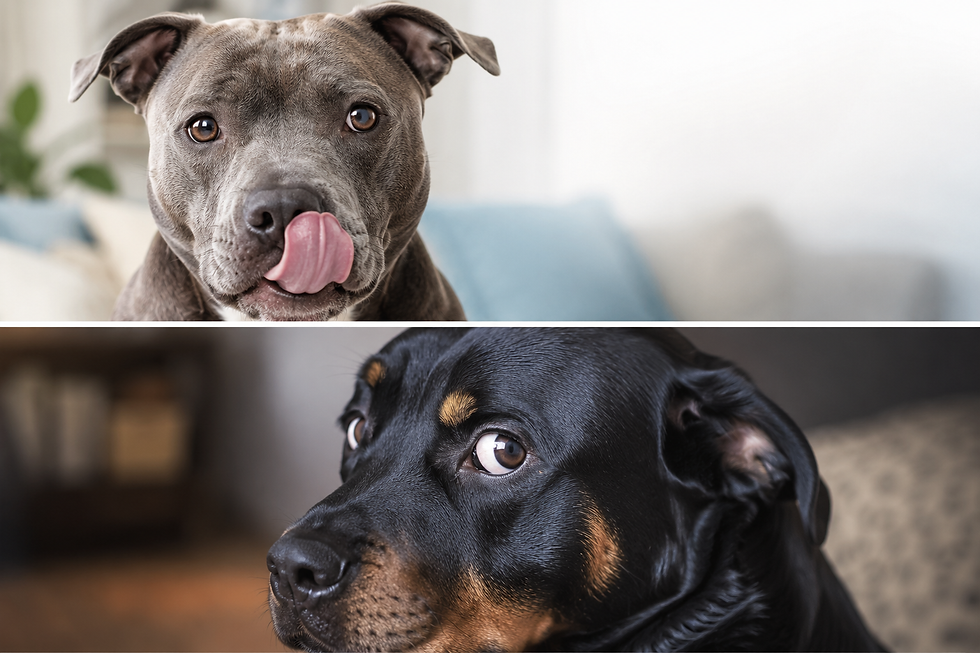
2️⃣ Whale Eye (Showing the Whites of Their Eyes) 👀
Have you ever noticed your dog turning their head away while keeping their eyes fixed on something?
The white part of the eye becomes visible like a crescent moon.
This is known as "Whale Eye."
It often appears when dogs feel:
Trapped
Pressured
Guarding something valuable
Overwhelmed
Many owners mistake this look for guilt.
It isn't.
It's a clear sign your dog is uncomfortable and trying to avoid conflict.
3️⃣ Yawning at Strange Times 😴
Dogs yawn for many reasons.
But if your dog suddenly gives a huge yawn:
During training
While guests visit
At the vet
During photographs
…it usually isn't because they're tired.
Yawning helps dogs release tension and calm themselves.
Context is everything.
A bedtime yawn is perfectly normal.
Repeated yawning during stressful situations usually isn't.

4️⃣ The Full Body Shake (When They Aren't Wet) 💦
We've all seen dogs shake after a bath.
But many also perform the exact same shake after stressful situations.
You might notice it after:
Meeting another dog
Leaving the vets
Grooming
Nail trimming
Busy environments
Think of it as your dog's emotional reset button.
They're literally shaking off the stress.

5️⃣ Paw Lift or Suddenly Freezing 🐾
A slightly raised front paw can mean uncertainty.
If it's combined with:
Standing completely still
A tense body
Watching something carefully
your dog is deciding whether they feel safe.
This is commonly seen when:
Meeting strangers
Seeing unfamiliar dogs
Entering new places
It's an early warning sign that should never be ignored.

6️⃣ Panting When It Isn't Hot 🌡️
Panting isn't always caused by exercise or warm weather.
If your dog is panting:
Indoors
After little activity
In cool temperatures
stress may be the cause.
Other signs often appear alongside panting:
Dilated pupils
Tense facial muscles
Rapid blinking
Restlessness
Interestingly, research has even shown that owners' long-term stress levels can mirror those of their dogs, meaning our emotions can influence theirs too.

7️⃣ Looking Away or Turning Their Head 🙈
Dogs often avoid direct eye contact when they're uncomfortable.
Instead they'll:
Turn their head away
Look elsewhere
Move their whole body
They're saying:
"Please give me a little space."
This is especially common around:
Excited children
Over-friendly strangers
Tight hugs
Loud environments
Respecting these signals helps build trust and prevents situations from escalating.

🐕 How You Can Help a Stressed Dog
If you notice several of these signals, don't panic.
Instead:
✅ Give your dog more space.
✅ Lower your voice.
✅ Avoid forcing interactions.
✅ Keep training positive and rewarding.
✅ Provide enrichment such as:
Sniff walks
Puzzle toys
Food games
Calm environments
✅ Watch for patterns.
Does the behaviour only happen:
Around certain people?
In busy places?
During grooming?
At the vets?
Identifying triggers is one of the best ways to reduce stress.
❤️ Your Dog Isn't Being Difficult... They're Communicating
Dogs don't speak with words.
They speak with body language.
By learning these subtle signals, you'll understand your dog far better than most owners ever do.
The reward?
A stronger bond...
Greater trust...
And a happier, more confident companion.
Sometimes the smallest signals tell the biggest story. 🐾
💬 Final Thoughts
The next time your dog licks their lips, looks away, freezes, or suddenly shakes off, take a moment to ask yourself:
"What is my dog trying to tell me?"
Understanding these early stress signals can make a huge difference to your dog's wellbeing and help prevent more serious behavioural problems in the future.
👇 Have you noticed any of these signs in your dog? Share your experience in the comments—we'd love to hear your story! 🐶💕


Comments