


Alapaha Blue-Blood Bulldog: Power, History, Myths and Life Beyond the Farm

The name sounds like inherited wealth. The job description involved unruly cattle.
Meet the Alapaha Blue-Blood Bulldog: a powerful American working breed with striking looks, a complicated family tree and a history far removed from the show-ring spotlight.
There’s plenty to discover behind the broad head and muscular frame. But with this breed, separating documented history from well-repeated folklore is part of the story.
Alapaha Blue-Blood Bulldog: Quick Facts

Origin: Southern United States, particularly Georgia and Florida.
Name: Associated with the Alapaha River in southern Georgia.
Type: Athletic, muscular bulldog with a livestock-working background.
Historical jobs: Managing cattle, catching livestock and guarding property.
Coat: Short, commonly white with coloured patches.
Lifespan: Around 12–14 years is a published guide, rather than a firmly established population average.
Other name you may encounter: Otto Bulldog.
UK population: No reliable nationwide total could be verified.


From Southern Farms to Modern Home

The Alapaha’s roots lie among the working bulldogs of the American South.
These dogs were kept for practical reasons: helping with livestock, protecting property and working alongside farming families. Their usefulness mattered more than whether they matched a fashionable appearance.
However, the early history is incomplete. The Alapaha Blue-Blood Bulldog Association acknowledges that origins before 1979 are difficult to verify and that accounts differ.
The association dates its formation to 1979, when breeders organised efforts to preserve and standardise these working dogs. That does not mean the dogs appeared from nowhere that year—it marks a stage in the development of the modern named breed.
An old working-dog tradition and a formally organised breed are related, but they are not quite the same thing.
What Breeds Were Crossed to Create the Alapaha?

There is no universally verified recipe.
Historical accounts describe old southern bulldog stock and regional livestock dogs. Breed-association descriptions mention
Catahoula Leopard Dog and Black Mouth Cur ancestry, while some foundation histories describe other contributions within particular lines.
Names associated with the foundation stock include Otto, Silver Dollar, Cowdog and Catahoula Bulldog. These reflect a more complicated development than a simple first-generation cross between two modern breeds.
That means two things for readers:
Precise ancestry percentages should be treated cautiously without supporting records.
Crossing any bulldog with a Catahoula does not automatically produce a documented Alapaha.
The honest history is interesting enough without giving it an invented formula.

What Jobs Did These Dogs Do?

Forget the idea of a farm dog whose main responsibility was supervising the kitchen.
Historical descriptions include:
Moving and helping control cattle.
Catching and holding difficult livestock until handlers intervened.
Working around free-ranging hogs.
Watching over farms and property.
This work called for physical ability, determination and responsiveness to people. It also helps explain why descriptions of the breed emphasise a combination of strength and athleticism.
These are historical roles to understand, rather than activities to recreate casually with a companion dog.
Power and Strength: Built for More Than a Photograph

A broad chest and strong head may catch the eye, but useful strength involves the whole dog.
Balance, comfortable movement and coordination matter. A dog that struggles to move freely is not made more capable simply by carrying extra weight.
The Continental Kennel Club describes a substantial, well-proportioned dog, with variation between more bulldog-like and less exaggerated types.
For owners, the most valuable questions are practical:
Can the dog move comfortably? Follow guidance? Stop when asked? Relax after activity?
Those abilities matter more in everyday life than being the biggest dog on the pavement.
Does the Alapaha Have an Exceptionally Powerful Bite?

You may encounter precise bite-force figures online. I could not verify a robust, breed-specific measurement that justifies quoting one here.
A strong dog deserves sensible handling without an unsupported number attached to its jaws.
How Big Does an Alapaha Get?
Size varies between sexes, bloodlines and registry standards.
As one example, the Continental Kennel Club lists approximately:
Males: 56–64 cm at the shoulder and 32–50 kg.
Females: 51–58 cm at the shoulder and 29–34 kg.
These are figures from that particular registry—not universal limits or ideal targets for every individual.
A healthy, balanced dog matters more than reaching the top of a weight range.
Is It Just an American Bulldog With Another Name?

The resemblance is understandable.
Both have connections to southern American working bulldogs. However, the Alapaha has its own recorded foundation lines and breed organisations.
They should not simply be treated as interchangeable names. Equally, a photograph cannot reliably establish a dog’s ancestry.
Shared roots do not mean identical breed histories.
How Many Alapahas Are There in the UK?

This is where an honest answer is better than an impressive-looking statistic.
No reliable total for the UK population could be verified.
Registration figures count dogs recorded with a particular organisation. They are not a complete census, and puppy adverts cannot tell us how many dogs live in the country.
Which Country—or UK County—Has the Most?
The United States is the breed’s country of origin and historical centre. However, comparable international figures were not available to establish a reliable popularity ranking.
There was also insufficient evidence to name a UK county with the largest population.
The accurate answer is that the numbers are uncertain—not that the breed must be most popular wherever the most adverts happen to appear.
Temperament: The Individual Behind the Muscles

Breed descriptions often emphasise loyalty, alertness and protective tendencies. They also describe dogs that can be wary of unfamiliar people.
In a modern home, those traits need thoughtful guidance.
Early experiences should help a puppy feel comfortable around ordinary sights, sounds and people. Socialisation means building confidence—not requiring the dog to greet everyone or tolerate overwhelming encounters.
Useful training foundations include:
Walking comfortably on a loose lead.
Returning when called.
Leaving something alone.
Settling on a bed.
Accepting routine handling.
Moving away from distractions.
Reward-based training is recommended in the breed’s veterinary-reviewed profile.
A dog can be devoted to its family without needing to inspect every visitor like nightclub security.

Can Alapahas Live With Children and Other Pets?

Some individuals can live successfully in multi-pet or family homes. That should never be guaranteed by a breed description.
Consider the dog’s history, behaviour, size and responses to other animals. Supervise interactions with children and provide spaces where the dog can rest undisturbed.
The breed’s profile highlights prey-drive concerns around smaller animals. Secure separation and careful assessment matter; friendliness towards people does not establish safety around cats, rabbits or other pets.
Choose the household arrangement that suits the individual dog.
Life Beyond the Farm: Give the Brain a Job

A companion Alapaha does not need a herd of cattle to have a satisfying day.
Appropriate activities might include scent searches, reward-based obedience, varied walks and controlled play. Their suitability depends on the dog’s maturity, health and ability.
The aim is a balanced routine, with time to explore and learn as well as recover and rest.
A working background does not mean a dog needs constant excitement. Learning to switch off is useful too.
Lifespan and Health: Look Beyond “Rare”

A lifespan of around 12–14 years is commonly published, but good breed-wide longevity data are limited. Treat it as a guide.
The current Wisdom Panel profile lists genetic conditions relevant to the breed, including:
Hyperuricosuria (HUU): associated with an increased risk of certain urinary stones.
Canine multifocal retinopathy 1 (CMR1): an inherited retinal condition.
Ichthyosis discovered in the American Bulldog: an inherited skin condition.
Their inclusion does not tell us how common each condition is within the Alapaha population.
Before buying a puppy, ask for documented parental health results and discuss appropriate screening with a vet. A DNA panel cannot assess every possible health issue.
Look at the dogs themselves too: comfortable breathing, free movement and sensible proportions deserve more attention than a rare colour or oversized head.
Short Coat, Surprisingly Persistent Hair

The Alapaha’s coat is short. That does not mean your clothes will remain hair-free.
Regular brushing helps remove loose coat, alongside routine nail, dental and ear care.
Those little hairs may still find their way into a favourite jumper. Consider them a souvenir.
Four Myths Worth Leaving Behind
“Blue Blood means the dog must be blue.”
It does not. The breed is described in a range of colours and markings, commonly with a white base and coloured patches.
“Rare automatically means healthy.”
Rarity is not a health test. Family history, screening and responsible breeding still matter.
“A powerful dog needs harsh training.”
Physical strength is a reason to teach clear, reliable skills. It is not a reason to abandon reward-based methods.
“Registered means recognised everywhere.”
Organisations offer different forms of registration and recognition. For example, the United Kennel Club lists the Alapaha through its Bloodlines Listing Service, while stating it is not eligible for UKC conformation events.
Always check what a particular registration actually means.

Three Facts to Remember
The river connection: the Alapaha River in southern Georgia is associated with its name.
The Otto connection: “Otto” appears in foundation histories and remains a nickname for the breed.
The complicated family tree: several working lines contributed to the modern population, and early accounts do not all agree.
For a dog with such a grand name, the most interesting part of its story is the practical work behind it.
A Note for UK Owners

Do not use a seller’s breed label alone to decide whether a substantial bull-type dog falls outside legal restrictions.
Official XL Bully identification considers physical characteristics, including height and a substantial number of other features. Check the guidance for your UK nation and seek specialist advice if there is uncertainty about an individual dog.
More Than Muscle

The Alapaha Blue-Blood Bulldog brings together a striking appearance and a working history that deserves careful telling.
Its story is strongest when we resist exaggerated strength rankings, guaranteed temperament claims and invented population figures. There is already plenty to appreciate: regional roots, varied foundation lines and generations of dogs valued for their usefulness.
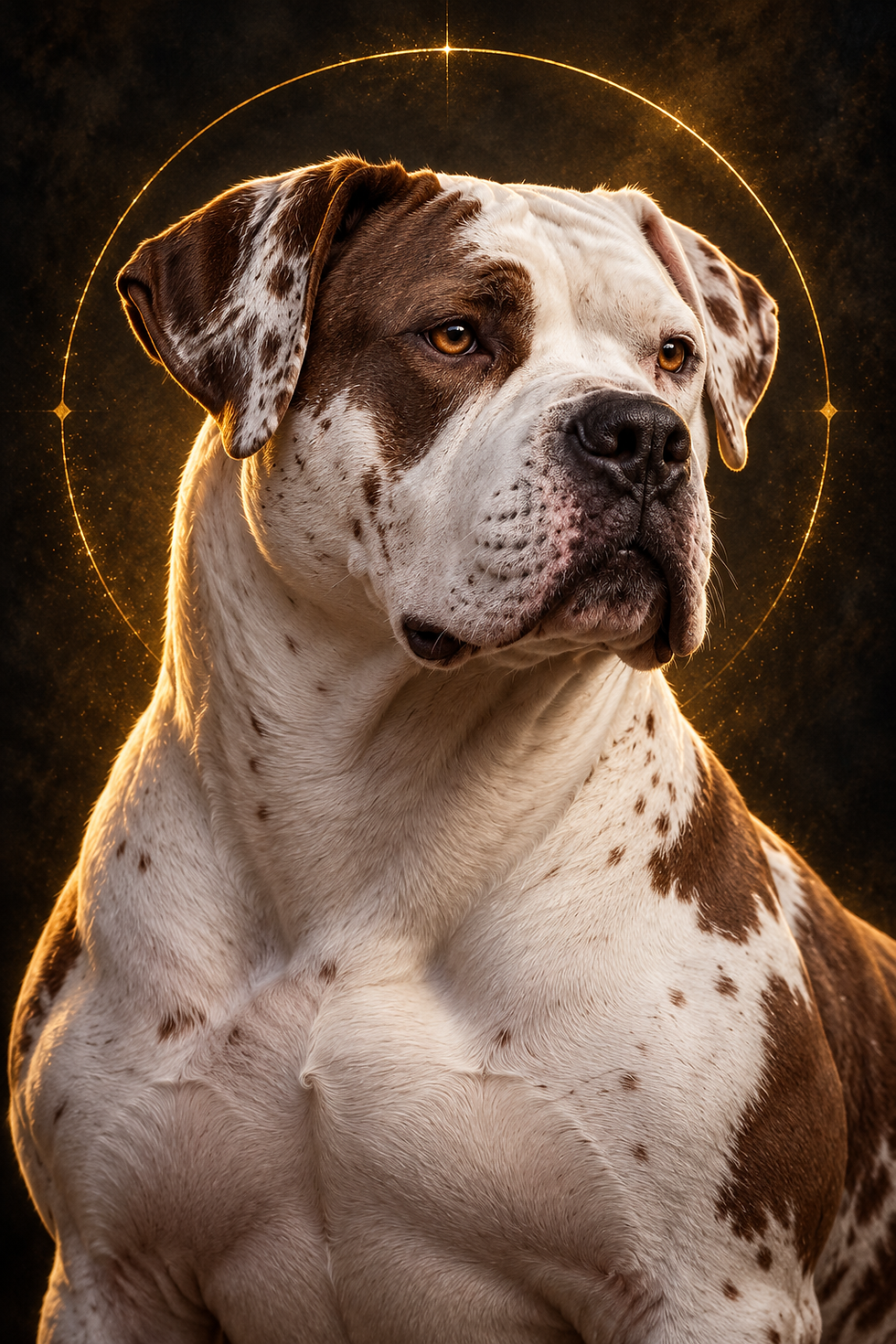
The most impressive Alapaha is one whose power is matched by comfortable movement, good health and a life that meets its needs.


Comments