


HMBarking Up the Right Tree: The Benefits of HMB for Dogs
- May 3
- 6 min read
Updated: May 15

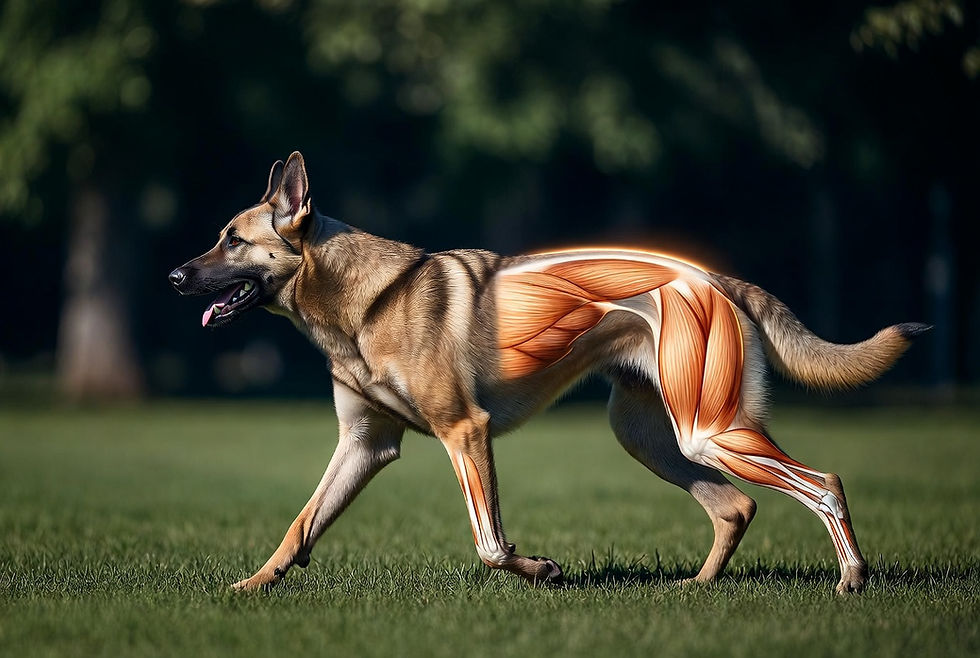
If you’ve ever watched your dog sprint across a field, leap for a ball, or simply bound up the stairs with endless enthusiasm, you already know how important muscle health is to their daily life. But as dogs age—or even during periods of intense activity—their muscles can take a hit. That’s where HMB comes in.
What Is HMB?
HMB (short for beta-hydroxy beta-methylbutyrate) is a compound derived from the amino acid leucine, which plays a key role in muscle metabolism. While it’s often talked about in human fitness circles, it’s gaining attention in the canine world for its potential to support strength, recovery, and overall vitality.
How Exercise Affects Your Dog’s Muscles
Just like humans, dogs experience tiny amounts of muscle damage after exercise—especially if the activity is intense, prolonged, or new to them.
This process is completely normal and part of how muscles grow stronger, but it can come with some downsides.
After a big run, hike, or play session, dogs may experience:
Muscle soreness or stiffness (they may move slower or seem reluctant to jump)
Fatigue or reduced energy levels
Sensitivity when touched in certain areas
Slight changes in posture or gait
This discomfort is similar to what humans call delayed onset muscle soreness (DOMS). While dogs can’t tell us directly, their behaviour often shows when they’re feeling it.
You May Also Be Interested in Creatine For Dogs
Muscle Repair and Building: Where HMB Helps
When muscles are stressed during exercise, the body enters a cycle of breakdown and repair.
This is where HMB plays a key role.
HMB helps by:
Reducing muscle breakdown after activity
Supporting protein synthesis, which is how the body rebuilds muscle fibers
Encouraging lean muscle growth, especially in active or aging dogs
In simple terms, HMB helps tip the balance toward muscle building rather than muscle loss. That means stronger muscles, better resilience, and improved overall condition over time.
Faster Recovery, Happier Dogs
Because HMB supports muscle repair, it may help dogs recover more comfortably after exercise.
This can lead to:
Less post-exercise stiffness
Quicker return to normal activity
More consistent performance in active dogs
For working breeds, agility dogs, or even energetic pets who love long walks, this can make a noticeable difference in how they feel day to day.
Why Combine HMB with a Comprehensive Supplement Like MuscleMatrix?
HMB can play a role in muscle support. Pairing it with a broad-spectrum supplement may offer additional nutritional benefits for active dogs.
Featured Supplement: MuscleMatrix
MuscleMatrix combines HMB with other ingredients aimed at supporting muscle function and overall nutrition.
HMB – may help limit muscle breakdown and support muscle maintenance
Whey protein (80%) & chicken protein – high-quality protein sources to support muscle building
Creatine – involved in energy production for physical activity
L-Glutamine & BCAAs – amino acids that contribute to muscle protein synthesis
Beta-alanine – may support endurance during activity
This blend is formulated to work together by:
Providing nutritional support for muscle maintenance after exercise
Helping support normal recovery processes
Contributing to muscle development when combined with appropriate training and diet
Supporting endurance and general performance
It is suitable for a range of dogs, including active pets, working or agility dogs, seniors, and those in need of additional nutritional support

Supporting Healthy Ageing
As dogs get older, maintaining muscle becomes more difficult. Loss of muscle mass can lead to weakness, instability, and increased strain on joints. HMB may help slow this process by preserving lean muscle, allowing senior dogs to stay mobile and independent for longer.
Potential Immune Support
Some research suggests that HMB may also play a role in supporting the immune system. While this isn’t its primary function, it’s an added benefit—especially for older dogs or those under physical stress.
Is HMB Right for Your Dog?
While HMB shows promise, it’s not a one-size-fits-all solution. Factors like age, activity level, and overall health all play a role in whether supplementation makes sense. It’s always best to consult your veterinarian before introducing anything new into your dog’s diet.
Final Thoughts
From playful pups to wise old companions, muscle health plays a big role in your dog’s quality of life. By supporting muscle repair, reducing soreness, and helping build strength, HMB could be a valuable addition to your dog’s routine.
Because when it comes to your dog’s wellbeing, you really are barking up the right tree. 🐾

Always consult a vet before introducing any supplement, especially for dogs with health conditions, seniors, or those recovering from injury.
Results can vary depending on the individual dog, diet, exercise regime, and other factors.
If you’ve ever watched your dog sprint across a field, leap for a ball, or simply bound up the stairs with endless enthusiasm, you already know how important muscle health is to their daily life. But as dogs age—or even during periods of intense activity—their muscles can take a hit. That’s where HMB comes in.
What Is HMB?
HMB (short for beta-hydroxy beta-methylbutyrate) is a compound derived from the amino acid leucine, which plays a key role in muscle metabolism. While it’s often talked about in human fitness circles, it’s gaining attention in the canine world for its potential to support strength, recovery, and overall vitality.
How Exercise Affects Your Dog’s Muscles
Just like humans, dogs experience tiny amounts of muscle damage after exercise—especially if the activity is intense, prolonged, or new to them.
This process is completely normal and part of how muscles grow stronger, but it can come with some downsides.
After a big run, hike, or play session, dogs may experience:
Muscle soreness or stiffness (they may move slower or seem reluctant to jump)
Fatigue or reduced energy levels
Sensitivity when touched in certain areas
Slight changes in posture or gait
This discomfort is similar to what humans call delayed onset muscle soreness (DOMS). While dogs can’t tell us directly, their behaviour often shows when they’re feeling it.
Muscle Repair and Building: Where HMB Helps
When muscles are stressed during exercise, the body enters a cycle of breakdown and repair.
This is where HMB plays a key role.
HMB helps by:
Reducing muscle breakdown after activity
Supporting protein synthesis, which is how the body rebuilds muscle fibers
Encouraging lean muscle growth, especially in active or aging dogs
In simple terms, HMB helps tip the balance toward muscle building rather than muscle loss. That means stronger muscles, better resilience, and improved overall condition over time.
Faster Recovery, Happier Dogs
Because HMB supports muscle repair, it may help dogs recover more comfortably after exercise.
This can lead to:
Less post-exercise stiffness
Quicker return to normal activity
More consistent performance in active dogs
For working breeds, agility dogs, or even energetic pets who love long walks, this can make a noticeable difference in how they feel day to day.
Why Combine HMB with a Comprehensive Supplement Like MuscleMatrix?
HMB can play a role in muscle support. Pairing it with a broad-spectrum supplement may offer additional nutritional benefits for active dogs.
Featured Supplement: MuscleMatrix
MuscleMatrix combines HMB with other ingredients aimed at supporting muscle function and overall nutrition.
HMB – may help limit muscle breakdown and support muscle maintenance
Whey protein (80%) & chicken protein – high-quality protein sources to support muscle building
Creatine – involved in energy production for physical activity
L-Glutamine & BCAAs – amino acids that contribute to muscle protein synthesis
Beta-alanine – may support endurance during activity
This blend is formulated to work together by:
Providing nutritional support for muscle maintenance after exercise
Helping support normal recovery processes
Contributing to muscle development when combined with appropriate training and diet
Supporting endurance and general performance
It is suitable for a range of dogs, including active pets, working or agility dogs, seniors, and those in need of additional nutritional support
Supporting Healthy Ageing
As dogs get older, maintaining muscle becomes more difficult. Loss of muscle mass can lead to weakness, instability, and increased strain on joints. HMB may help slow this process by preserving lean muscle, allowing senior dogs to stay mobile and independent for longer.
Potential Immune Support
Some research suggests that HMB may also play a role in supporting the immune system. While this isn’t its primary function, it’s an added benefit—especially for older dogs or those under physical stress.
Is HMB Right for Your Dog?
While HMB shows promise, it’s not a one-size-fits-all solution. Factors like age, activity level, and overall health all play a role in whether supplementation makes sense. It’s always best to consult your veterinarian before introducing anything new into your dog’s diet.
Final Thoughts
From playful pups to wise old companions, muscle health plays a big role in your dog’s quality of life. By supporting muscle repair, reducing soreness, and helping build strength, HMB could be a valuable addition to your dog’s routine.
Because when it comes to your dog’s wellbeing, you really are barking up the right tree. 🐾
Always consult a vet before introducing any supplement, especially for dogs with health conditions, seniors, or those recovering from injury.
Results can vary depending on the individual dog, diet, exercise regime, and other factors.
This is a complementary feed, not a medicine. It is not intended to diagnose, treat, prevent, or cure any disease or medical condition.
This is a complementary feed, not a medicine. It is not intended to diagnose, treat, prevent, or cure any disease or medical condition.


Comments