


How Processed Kibble Affects Creatine Levels in Dogs – The Facts

Creatine helps muscles quickly regenerate energy for intense activity and supports recovery. Dogs get some creatine from food, mainly animal muscle, and make the rest internally. For working dogs, performance dogs, and seniors, the amount supplied by diet can matter.
Table of Contents
What Is Creatine?
Fresh Meat vs. Kibble: The Creatine Gap
Why Processing Reduces Creatine
Why This Matters for Working and Performance Dogs
Why This Matters for Senior Dogs
Additional Benefits from Research
Safety Notes
Dominate and Empower – Practical Steps
Research Summary
What Is Creatine?
Creatine is a naturally occurring compound found primarily in skeletal muscle. It acts as a rapid energy reserve, helping muscles regenerate ATP—the body's immediate energy source during explosive movement and intense exercise.
Dogs naturally produce creatine in the liver and kidneys, while the rest comes from dietary animal muscle. Because muscle tissue contains the highest concentrations, the amount provided by food can vary considerably depending on how that food is prepared.
Fresh Meat vs. Kibble: The Creatine Gap
Fresh red meat naturally contains high levels of creatine. Poultry and fish also provide meaningful amounts. These reflect what dogs' ancestors consumed.
Commercial dry kibble contains far less usable creatine. Research comparing diet types shows:
Unprocessed and raw diets deliver significantly higher creatine.
Dry kibble and many processed foods show much lower levels.
A 2015 study found unprocessed meats and BARF-style diets had far more creatine than commercial dry diets. Much of the creatine in processed foods converts to creatinine, which the body excretes.
An earlier study reported raw meats had about 30 mmol/kg creatine, while dry dog foods contained only 0.5–4 mmol/kg. Wet foods were better than dry but still lower than raw.
Why Processing Reduces Creatine
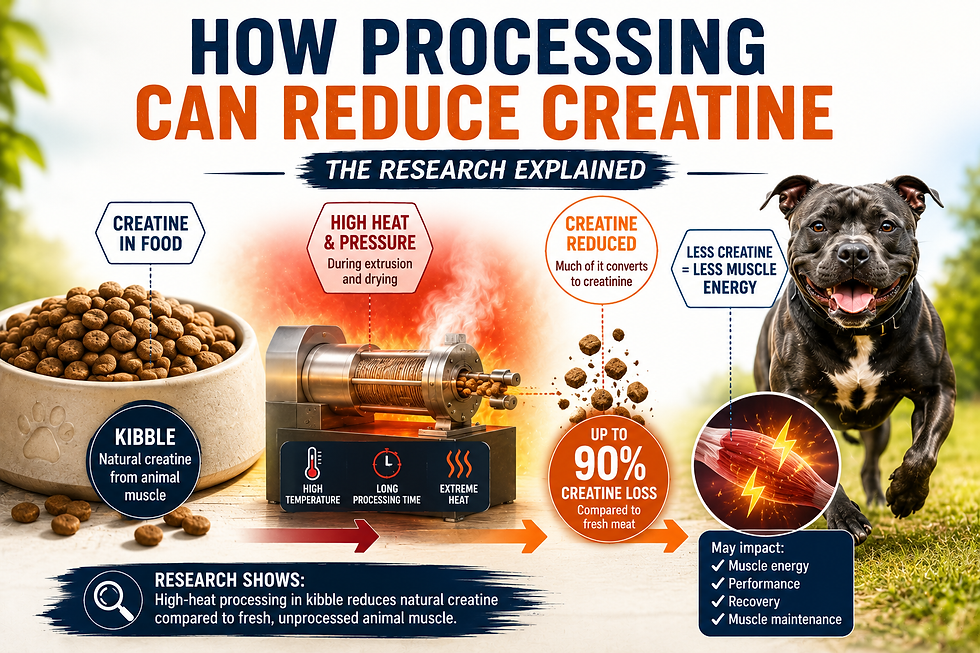
High-heat extrusion for kibble and retorting for wet foods break down creatine into creatinine. Heat drives most of the loss, and storage can add more. Plant ingredients common in kibble contain none.
Why This Matters for Working and Performance Dogs
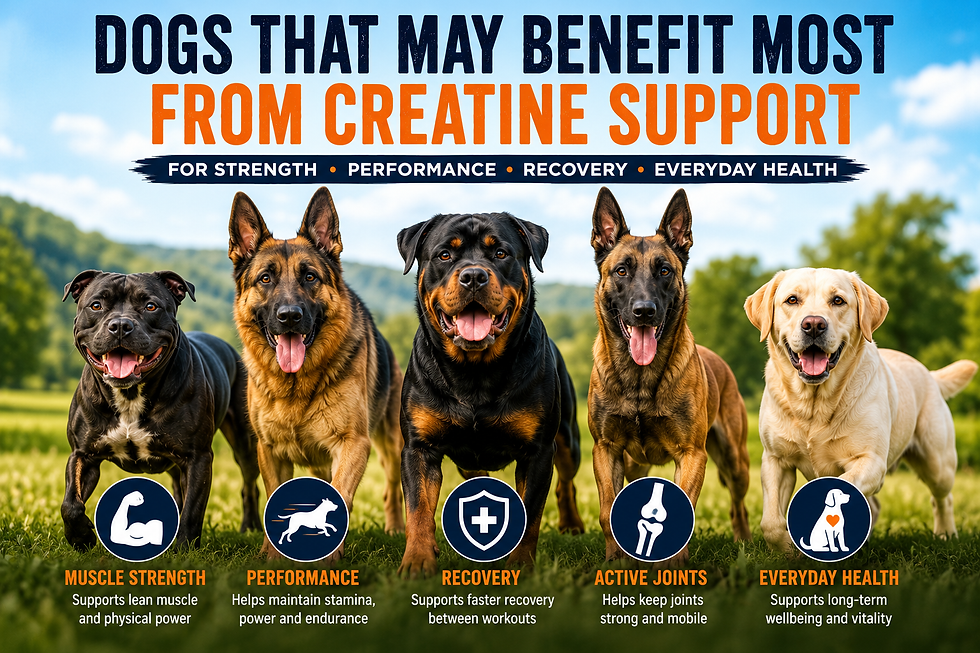
Working, agility, and high-drive dogs rely on fast muscle energy. Research on agility dogs and racing greyhounds links creatine availability to better repeated performance and recovery. Lower dietary creatine from processed kibble can limit these advantages.
Advanced Animal Care with MuscleMatrix
MuscleMatrix provides creatine monohydrate alongside carefully selected muscle-supporting nutrients to help support normal muscle energy production, recovery, and performance during demanding work or training.
Why This Matters for Senior Dogs

Seniors often lose muscle mass and strength over time. Creatine supports energy inside muscle cells and helps preserve function. Long-term kibble feeding provides less dietary creatine, which can matter as dogs age.
Advanced Animal Care with MuscleMatrix
MuscleMatrix provides creatine monohydrate alongside muscle-supporting nutrients to help support normal muscle function, mobility, and vitality as dogs age.
Additional Benefits from Research
Joint Comfort
Laboratory studies using canine cartilage cells suggest creatine-related compounds may help reduce certain inflammatory markers associated with joint health. While these findings are encouraging, further research in live dogs is needed to better understand the potential benefits.
Overall Energy Support
Creatine plays an important role in energy metabolism within muscle cells and also contributes to normal energy production in the brain.

Safety Notes
Creatine monohydrate is the most widely studied form of creatine. Research in dogs shows good tolerance when used appropriately.
Blood creatinine concentrations may increase slightly following creatine supplementation because creatinine is a normal breakdown product of creatine. This does not necessarily indicate kidney disease, but veterinary advice is recommended, particularly for senior dogs or dogs with existing kidney conditions.
Processed kibble is convenient and meets basic nutritional standards, but it supplies less creatine than fresh meat. For dogs that need to dominate their activities or stay strong in old age, advanced animal care means addressing this.
Many owners add fresh meat toppers or choose targeted nutritional support such as MuscleMatrix. This approach helps dogs obtain additional creatine to support muscle performance, recovery, and healthy ageing without requiring a complete diet change.
Research Summary
Research-backed reality: High-temperature processing used to produce dry kibble reduces creatine compared with fresh animal muscle. For active, working, sporting, and senior dogs, maintaining adequate creatine intake may help support normal muscle energy production, performance, recovery, and healthy ageing.
Every dog has different nutritional needs depending on breed, age, activity level, diet, and overall health. Speak with your veterinarian before making significant changes to your dog's diet or supplementation plan.
Key Studies
Dobenecker & Braun (2015) – Creatine and creatinine in different dog diets.
Harris et al. (1997) – Creatine in meat and commercial dog foods.

Advanced Animal Care
MuscleMatrix provides creatine monohydrate alongside carefully selected muscle-supporting nutrients to help support normal muscle function, performance, recovery, and healthy ageing as part of a balanced diet.


Comments