


How to Improve Your Dog's Topline Naturally: The Complete Guide to Supporting Strength, Posture & Show Ring Condition
- Jul 3
- 5 min read

Table of Contents
What Is a Dog's Topline?
Why Is the Topline So Important?
What Does a Healthy Topline Look Like?
Common Causes of a Weak Topline
How to Assess Your Dog's Topline
Exercises That Support Topline Development
Building Core Strength
The Role of Nutrition
Complementary Feeds and Nutritional Support
Recovery: The Missing Piece
Mistakes to Avoid
Frequently Asked Questions
Final Thoughts
What Is a Dog's Topline?

The topline is the outline of your dog's back, extending from the withers (the highest point of the shoulders) to the base of the tail. While every breed standard differs slightly, a healthy topline is generally firm, balanced and supported by good muscle tone.
In the show ring, the topline is one of the first things many judges notice because it contributes to the dog's overall outline, movement and presentation. Outside the ring, good muscle development along the back and core also supports everyday mobility, posture and stability.
A strong topline doesn't happen overnight. It develops gradually through appropriate exercise, balanced nutrition, recovery and careful conditioning.
Why Is the Topline So Important?

The muscles that support the spine and pelvis work every time your dog walks, runs, turns or jumps. Well-conditioned muscles help maintain posture and efficient movement.
Supporting topline condition may contribute to:
Better balance and coordination
Improved posture
More efficient movement
Better core stability
Increased confidence during exercise
A more polished appearance in the show ring
For working and sporting dogs, maintaining muscle condition can also help them cope with regular training demands.
What Does a Healthy Topline Look Like?
Although breed standards vary, a healthy topline typically appears:
Smooth and balanced
Well muscled without excessive bulk
Firm over the loin
Appropriate for the breed's natural structure
Consistent when standing and moving
Rather than focusing solely on appearance, assess how your dog moves. A dog that carries itself comfortably with good posture is often better conditioned than one relying on compensation from other muscle groups.
Common Causes of a Weak Topline

Several factors can influence muscle development.
These include:
Genetics
Ageing
Limited exercise
Recovery after illness or injury
Carrying excess body fat
Inadequate calorie intake for activity level
Low-quality nutrition
Poor conditioning routines
Identifying these factors early allows owners to make gradual improvements.
How to Assess Your Dog's Topline

Assessment is simple and helps you
monitor progress.
Every 6–8 weeks:
Photograph your dog from both sides.
Take videos while walking and trotting.
Feel along the muscles beside the spine.
Check muscle symmetry.
Monitor body condition score.
Avoid comparing your dog to another breed. Always compare your dog with previous photographs of itself.
Small improvements over time are often easier to spot in photographs than day to day.
Exercises That Support Topline Development
Exercise remains one of the safest and most effective ways to support healthy muscle development.
Hill Walking
Walking uphill encourages engagement of the hindquarters and core while promoting controlled movement.
Cavaletti Poles
Low poles encourage dogs to lift their feet carefully, improving coordination and body awareness.
Swimming
Swimming allows many muscles to work together while reducing impact on joints.
Controlled Backward Walking
Short sessions of backward walking activate muscles that may receive less stimulation during everyday walking.
Balance Exercises
Standing with front paws on a stable platform or performing gentle weight shifts can encourage core engagement when introduced correctly.
Varied Terrain
Walking across woodland paths, grass and gentle slopes naturally encourages stabilising muscles to work.
Always introduce new exercises gradually and stop if your dog appears uncomfortable.
Building Core Strength

The core muscles play a significant role in supporting the spine.
Activities that encourage controlled movement, balance and coordination can complement regular walks.
Examples include:
Slow sit-to-stand repetitions
Controlled turns
Figure-of-eight walking
Gentle balance work
Walking over poles
A stronger core often supports a stronger topline.
The Role of Nutrition
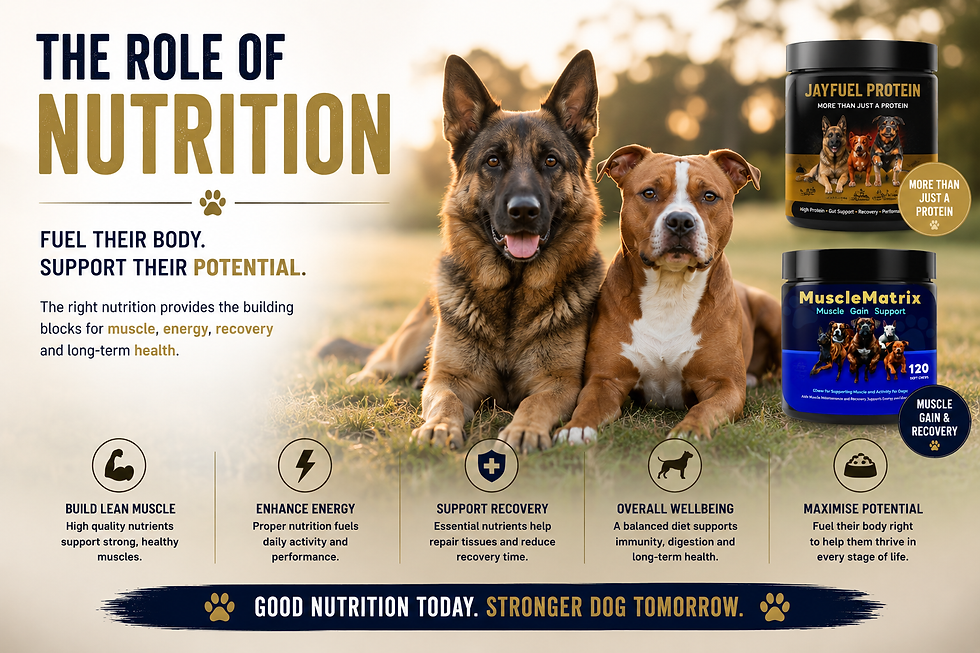
Exercise provides the stimulus for muscle development, but nutrition supplies the building blocks.
A balanced complete diet should provide:
High-quality protein
Essential amino acids
Healthy fats including Omega-3 fatty acids
Vitamins and minerals
Appropriate calorie intake for your dog's activity level
Maintaining a healthy body condition is equally important. Excess body fat can make it more difficult to appreciate muscle tone and may place additional strain on joints.
Complementary Feeds and Nutritional Support
Many owners choose to include complementary feeds alongside a balanced diet, particularly for active, working or show dogs.
Products containing proteins, amino acids, vitamins and minerals may help support normal muscle function and recovery when used appropriately.
Examples available in the UK include:
Hench Range JayFuel High Grade Protein
MuscleMatrix Soft Chews
JackedBite Training Chews
Empower Maximum Muscle Tablets
Dom-Inate Canine Muscle Builder
These products are complementary feeds and are designed to be fed alongside a complete diet rather than replacing it.

Always follow the feeding guidelines provided by the manufacturer and consult your veterinary surgeon before introducing new products to puppies, pregnant or lactating bitches, or dogs with existing health conditions.
Recovery: The Missing Piece
Many owners focus heavily on training while overlooking recovery.
Muscles adapt during recovery, making rest just as important as exercise.
Support recovery by:
Providing rest days
Ensuring adequate hydration
Feeding a balanced diet
Monitoring for signs of fatigue
Considering physiotherapy or massage where appropriate
A consistent routine often produces better long-term results than frequent intense sessions.
Mistakes to Avoid
Avoid these common conditioning mistakes:
Increasing exercise too quickly
Overtraining without rest
Allowing excess weight gain
Ignoring recovery
Expecting rapid results
Comparing your dog with different breeds
Using complementary feeds instead of a balanced diet
Steady progress is usually more sustainable than dramatic changes.

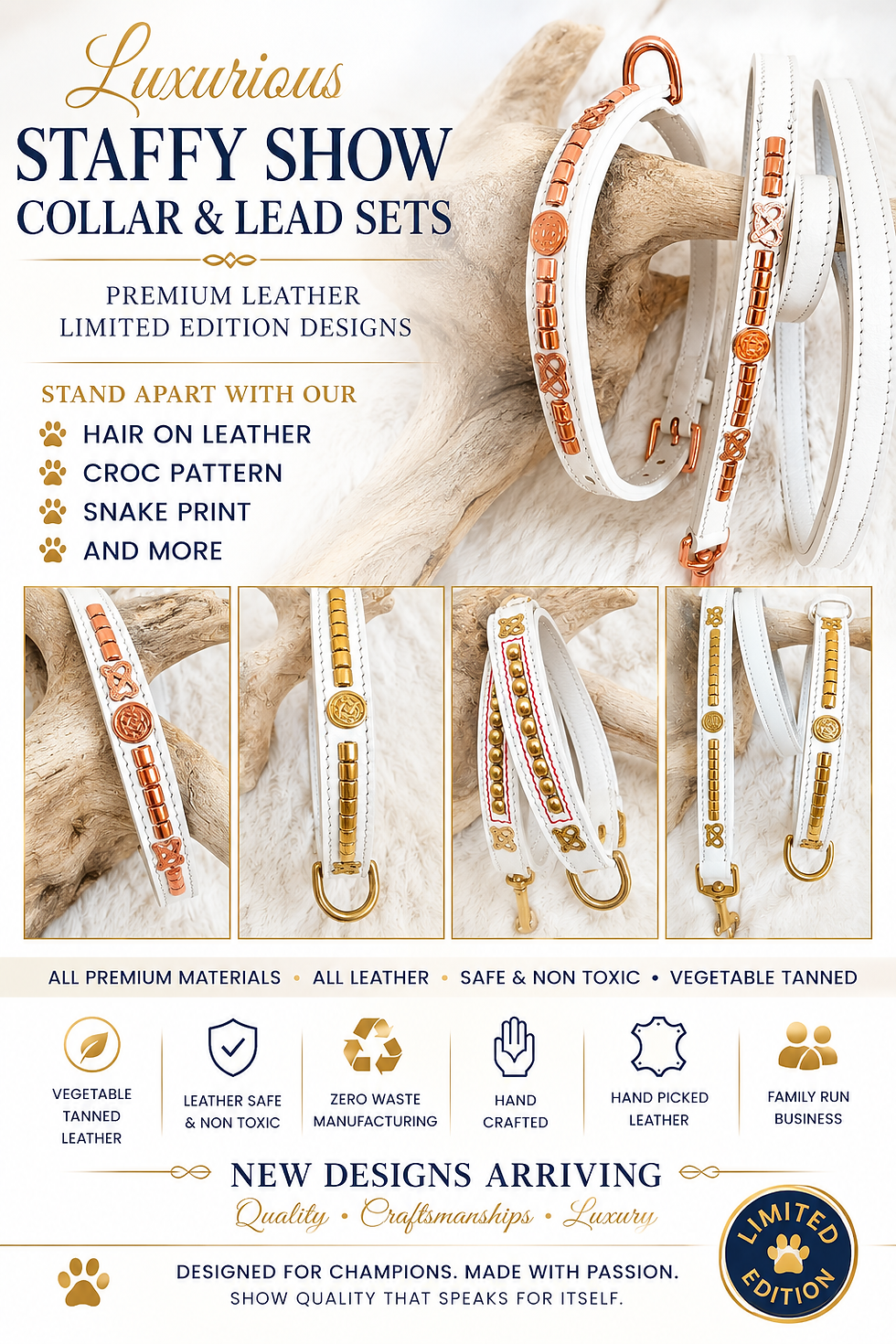
🐾 Handcrafted. Premium. Built to Last.
Our hand-beaded collars combine premium full grain leather, vegetable tanned craftsmanship and solid brass fittings for timeless style and everyday durability.
Designed for comfort. Made to stand out.
Frequently Asked Questions
How long does it take to improve a dog's topline?
Many owners notice gradual improvements in muscle tone and posture over 8–16 weeks, although this varies depending on the dog's age, breed, genetics, nutrition and exercise routine.
Can older dogs improve their topline?
Many senior dogs can benefit from appropriate exercise and balanced nutrition. Always discuss exercise plans with your veterinary surgeon if your dog has existing health conditions.
Does swimming build a topline?
Swimming can support overall muscle engagement as part of a varied conditioning programme, particularly because it is low impact.
Should I exercise my dog every day?
Most dogs benefit from regular activity, but recovery is also important. Include easier days or rest days depending on your dog's workload.
Are complementary feeds enough on their own?
No. Complementary feeds are designed to supplement a complete and balanced diet. Exercise, nutrition and recovery all work together to support healthy muscle condition.
Final Thoughts
Improving your dog's topline is a gradual process built on consistency rather than quick fixes. Appropriate exercise, sensible recovery, balanced nutrition and good overall management all play a role in supporting healthy muscle condition.
Whether your goal is success in the show ring, improved sporting performance or helping your dog maintain strength throughout life, focusing on steady progress will provide the best foundation.
Keep records with photographs, review progress every few weeks and celebrate the small improvements that build over time.
Disclaimer
This article is intended for educational purposes only and should not be considered veterinary advice. Always consult your veterinary surgeon regarding your dog's individual health, exercise and nutritional needs. Complementary feeds are intended to support normal nutrition and should be used alongside a complete and balanced diet.


Comments