


How to Keep Your Dog Safe During Bonfire Night: Fireworks Advice for UK Owners

Bonfire Night can be frightening for dogs. Sudden bangs, bright flashes and unfamiliar smells can unsettle even a dog that normally seems confident.
Preparing early, securing your home and giving your dog somewhere comfortable to retreat can help them cope. If your dog has struggled with fireworks before, contact your vet before the season begins.
Walk Before Dark and Plan Toilet Breaks

Walk your dog during daylight and aim to be home before fireworks start. Choose quieter routes away from display sites and keep them on a lead: an unexpected bang can cause a startled dog to bolt.
Give them an opportunity to toilet before the evening begins. If they need to go out later, wait for a quiet gap, keep them on a lead and stay beside them—even in a fenced garden. Never force a frightened dog outside during fireworks.
Keep them secure with Advanced Animal Care

A strong, reliable collar and lead are essential on nights when your dog might panic and try to run. Advanced Animal Care handcrafts premium leather collars and leads using traditional vegetable-tanning methods. The leather is naturally soft, durable and completely free from harsh chemicals — safe and non-toxic for your dog’s skin.

Every piece is made by hand for lasting strength and a comfortable fit, giving you extra peace of mind when fireworks start. Ideal for evening walks or supervised garden toilet breaks during Bonfire Night.
Explore the range at Advanced Animal Care — quality you can trust when safety matters most.
Check Your Home Is Secure
Check garden gates, fences, windows, external doors and dog flaps. Make sure your dog’s microchip contact details and collar identification are up to date.
Warn visitors that your dog must not slip through an open door. Before answering the door, keep your dog safely away from the entrance, ideally with someone they trust.
A suitable GPS tracker can provide extra reassurance, but it does not replace secure boundaries, identification or supervision.
Create a Familiar Safe Space

Prepare a comfortable retreat before fireworks season rather than waiting until your dog is frightened.
Use a place they already like resting, such as beneath a table, behind the sofa or in a quiet corner. Add familiar bedding and keep fresh water nearby. An item of your clothing can make the space feel more familiar.
A covered crate is an option only if your dog already enjoys using it. Leave the door open, maintain ventilation and keep blankets clear of heaters. Do not introduce a crate during fireworks or shut a panicking dog inside.
Let your dog choose where to settle. Avoid pulling them from their hiding place or repeatedly disturbing them.

Reduce Flashes and Background Noise
Close curtains or blinds, shut windows and keep indoor lights on to make flashes less noticeable.
Play familiar music, the television or gentle background sound at a comfortable volume. Introduce it beforehand so it becomes part of their normal surroundings. Do not turn it up excessively in an attempt to overpower every bang.
Avoid improvised methods such as putting shoes, balls or towels in a tumble dryer. Familiar background audio is a more appropriate option.
Comfort Your Dog If They Want Reassurance
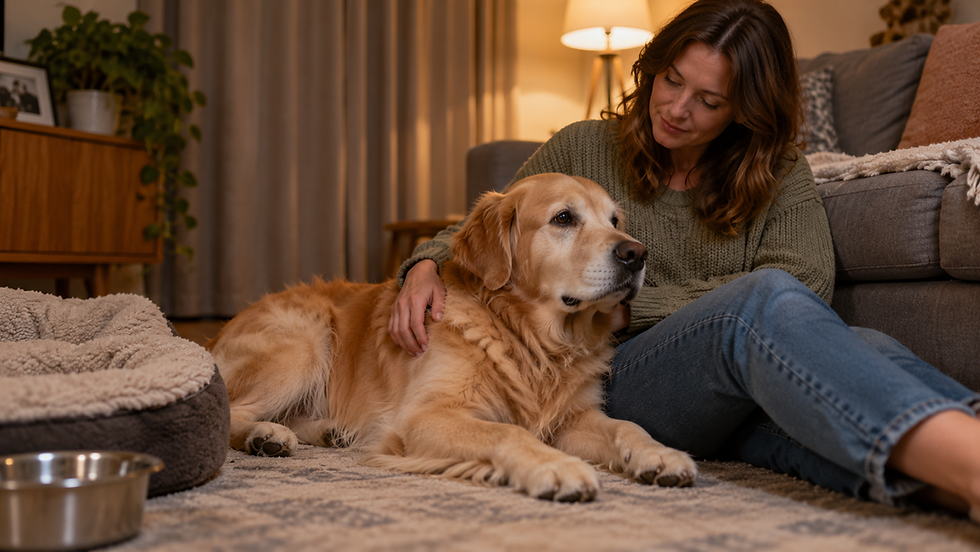
If your dog comes to you, calmly offer company, gentle strokes or a cuddle if they enjoy it. You do not need to ignore them because they are frightened.
If they prefer to hide, give them space. Follow their lead rather than insisting on affection or leaving them isolated.
Stay nearby where possible, keep your manner relaxed and avoid scolding them for barking, shaking or toileting indoors. These can be signs of fear. Dogs Trust advises comforting dogs that seek reassurance and allowing those that want to hide to do so.
Offer Familiar Food and Gentle Activities
Offer their usual meal before fireworks are expected, while they are comfortable enough to eat. Keep fresh water available.
A familiar food puzzle, stuffed dog toy or lick mat may provide a welcome activity. Use suitable food and supervise chews.
Do not introduce extra carbohydrates as a calming treatment or suddenly change their diet. If your dog refuses food or play, do not pressure them: fear can reduce their appetite.
Recognise When Your Dog Is Struggling

Fear does not always involve barking or obvious panic. Watch for:
Trembling, panting or pacing.
Hiding, freezing or crouching.
Unusual clinginess or restlessness.
Refusing food.
Attempts to escape.
Toileting indoors or destructive behaviour.
A quiet dog may still be frightened. Notice changes from their usual behaviour and give them room to retreat.

Give Children and Other Pets Clear Boundaries
Ask children to leave a resting or hiding dog alone. Avoid crowding them, hugging them unexpectedly or reaching into their den.
Supervise interactions with other pets. A frightened dog may be less tolerant than usual, even with an animal they normally get along with.
Take Extra Care With Puppies

A puppy that has never experienced fireworks still needs a calm, secure evening indoors.
Do not take them to a display or outside to watch in the hope that they will “get used to it”. An overwhelming experience can create fear.
Build confidence through gentle, positive introductions to everyday sounds, at a level they find comfortable.
Prepare Gradually With Sound Training
Firework recordings can form part of a longer-term training plan. Start at a very low volume that causes no signs of worry and pair the sound with something your dog enjoys.
Increase the volume only gradually, while they remain comfortable. If they become worried, reduce the intensity and seek professional guidance.
This process can take months. Do not rush it, play loud recordings or attempt training during an actual display. Recordings also cannot reproduce every aspect of real fireworks.
Speak to Your Vet Before Fireworks Season
If your dog has shown firework fear before, arrange veterinary advice early. Your vet can discuss suitable medication and, where appropriate, referral to a qualified clinical animal behaviourist.
Follow medication instructions carefully, including when to give it. Never use human medicines, leftover prescriptions or another dog’s medication.
Pheromone products and pressure wraps may help some dogs, but responses vary. Only use a wrap if your dog is comfortable wearing it.
Sudden new noise fear also warrants a veterinary check, as pain or illness may contribute. PDSA recommends advance veterinary support, gradual training and allowing dogs voluntary access to their den.
Check the Garden Afterwards

Before taking your dog outside, check for spent fireworks, sparkler wires and other debris.
Keep them away from bonfires and ashes until everything has fully cooled. If they chew or swallow firework debris, suffer a burn or injure themselves while panicking, contact your vet promptly.
Prepare for More Than One Night
Fireworks often happen on several evenings around 5 November, as well as during other celebrations and New Year.
Check local display dates and ask neighbours about their plans. If arranging a quieter place for your dog to stay, choose somewhere familiar and settle them there before fireworks begin.
Things to Avoid
Taking your dog to a fireworks display or bonfire.
Leaving them outside or letting them out alone.
Allowing off-lead walks when fireworks may start.
Forcing them out of hiding.
Punishing fear-related behaviour.
Playing loud firework recordings to force them to adjust.
Giving medication without veterinary advice.
Your dog does not need to face their fear to prove they can cope. A secure home, familiar surroundings, calm company and timely veterinary help give them the best support when fireworks begin.


Comments