


Power Breed Spotlight: Rottweiler (UK) — Loyal, Confident, and Built to Work
- 1 day ago
- 13 min read

The Rottweiler is one of the best-known dogs commonly described as a power breed.
Its reputation is built on far more than appearance. For centuries, Rottweiler-type dogs moved livestock, guarded valuable animals, protected traders and pulled loaded carts. Later, the breed proved capable of police, military, service, tracking and obedience work.
The Rottweiler’s power comes from a combination of physical strength, endurance, intelligence, courage and control. A correct Rottweiler should not be an oversized or excessively heavy dog. It should be powerful enough to perform demanding work while remaining agile, balanced and able to move efficiently.
Is “Power Breed” an Official Category?
No. Power breed is not an official Royal Kennel Club group, registered breed name or legal classification.
It is an informal description used for dogs whose strength, athletic ability, working instincts or handling requirements make responsible ownership particularly important.
The Royal Kennel Club places the Rottweiler in the Working Group, while the FCI classifies it among Pinscher and Schnauzer types, Molossoid dogs and Swiss mountain and cattle dogs. The Rottweiler is specifically placed in the Molossian, mastiff-type section and remains a working-trial breed under the FCI system.
Rottweiler: Quick UK Snapshot

Country of origin: Germany
Royal Kennel Club group: Working
FCI classification: Molossian, mastiff type
Traditional roles: Droving, guarding and pulling carts
Modern roles: Companion, service and working dog
General build: Medium to large, compact and powerful
Approximate FCI weight: 50 kg for males and 42 kg for females
Typical character: Confident, courageous, watchful and trainable
The official standard describes a dog with enough strength, agility and endurance to work. Males should stand approximately 61–68 cm at the shoulder and females approximately 56–63 cm.
What Dogs Were Used to Create the Rottweiler?

There is no verified list of modern breeds that were deliberately combined to create the Rottweiler.
The breed developed before modern pedigree records and closed breed registries existed. Claims that the Rottweiler was created from an exact recipe of named modern breeds should therefore be treated cautiously.
The official German and FCI history gives the clearest answer:
Herding and driving dogs travelled across the Alps with Roman legions.
These dogs protected people and helped move cattle.
Around Rottweil, they mixed naturally with local dogs.
The German breed club records that during the 19th century, their descendants were also mated with established local sheepdogs.
Breeders selected the resulting dogs for intelligence, stamina, calmness, strength and livestock-driving ability.
The ancient Roman dogs are often described as mastiff-like drovers, but they were not identical to any modern Mastiff breed.
Some modern histories discuss possible shared ancestry with Swiss cattle and mountain dogs. That is plausible because similar working dogs existed across central Europe, but it does not prove that today’s Greater Swiss Mountain Dog, Bernese Mountain Dog or another named modern breed was directly added to a formal Rottweiler breeding programme.
The safest conclusion is:
The Rottweiler developed from Roman livestock-driving dogs crossed with local German dogs and long-established regional sheepdogs, with generations selected for practical work rather than appearance alone.
How Did Roman Dogs Become Rottweilers?

Roman armies needed to move large numbers of people and supplies across Europe. Without modern refrigeration, livestock often travelled with them as a moving source of food.
Strong dogs helped drive those animals, guard them from predators and discourage theft.
One Roman route crossed the Alps towards Lake Constance and continued into the area that later became the German town of Rottweil. The dogs accompanying these movements mixed with established local working dogs and gradually developed into a regional type.
They were not yet “Rottweilers” in the modern pedigree sense. Their value came from what they could do.
A dog that lacked stamina, courage or livestock sense was less useful. Dogs capable of controlling cattle, travelling long distances and remaining dependable around people were more likely to be kept and bred.
This working selection helped shape the physical and behavioural foundations of the modern Rottweiler.

Why Was Rottweil So Important?
During the 19th century, Rottweil was a major livestock-trading centre.
Cattle and sheep were driven from the area towards regions including Breisgau, Alsace and the Neckar Valley. These journeys crossed large areas where traders could encounter wolves, thieves and long stretches of sparsely populated land.
Drovers and butchers needed dogs that were:
Strong enough to influence cattle
Calm enough to work around valuable livestock
Intelligent enough to respond to direction
Enduring enough to travel considerable distances
Courageous enough to discourage predators or thieves
Watchful without becoming impossible to control
The dogs became closely associated with Rottweil’s butchers and cattle dealers, earning the name Rottweiler Metzgerhund, meaning the Butcher’s Dog of Rottweil.
Did Rottweilers Really Guard Money?

One of the breed’s best-known historical stories says that cattle dealers placed money in a pouch around a Rottweiler’s neck after selling livestock.
The dog’s physical presence and guarding ability would make the money a difficult target for a thief.
This tradition is widely repeated in established breed histories, although it should be viewed as part of the breed’s working folklore rather than proof that every Rottweiler routinely carried money.
The story survives because it captures the qualities that made the breed valuable: loyalty, physical confidence and the ability to remain close to its handler while protecting something important.
Were Rottweilers Used to Pull Carts?

Yes. Rottweilers were used as draught dogs as well as cattle drovers and guardians.
They could pull carts containing meat and other goods, making their compact strength useful even after livestock reached the market.
The official FCI history describes the developing Rottweiler as a first-rate watch and driving dog that could also work as a draught dog.
This explains why the breed is not built like a narrow running dog. It needed:
A powerful neck and shoulders
A stable back
Strong hindquarters
Solid feet
Good endurance
Enough agility to move around livestock
The Rottweiler was expected to produce controlled, repeatable effort—not simply one dramatic burst of force.
Why Did the Rottweiler Nearly Disappear?
Industrial change removed many of the jobs that had kept the breed useful.
Railways and other transport methods reduced the need to drive cattle long distances or pull loaded dog carts. As its traditional work disappeared, Rottweiler numbers declined significantly.
At a German dog show in Heilbronn in 1882, only one Rottweiler was reportedly exhibited.
The breed survived because enthusiasts recognised that its intelligence, courage and physical ability could be redirected into new forms of work.
At the beginning of the 20th century, Rottweilers were assessed for police service. They performed successfully and were officially recognised as police dogs in Germany in 1910.
The American Kennel Club later admitted the Rottweiler to its stud book in 1931.
How Strong Is a Rottweiler

The Rottweiler is exceptionally strong for a dog that is still expected to remain agile and functional.
Under the FCI standard, an adult male weighs approximately 50 kg, while a female weighs approximately 42 kg. The correct dog should be compact, powerful and strongly muscled without being excessively heavy, weak or cumbersome.
Its strength comes from the whole body working together:
Powerful neck and shoulders
The neck and front assembly help the dog maintain stability, control its direction and produce force during pulling or close physical work.
Deep, broad chest
A correctly developed chest provides room for the heart and lungs while supporting the substantial front of the body.
Firm back and compact frame
A compact frame helps transfer force between the front and rear of the dog. Excessive body length or an unstable back would reduce efficient movement.
Muscular hindquarters
The rear limbs generate much of the drive required for trotting, climbing, accelerating and pulling.
Heavy but functional bone
Strong limbs and feet support the dog’s body weight and help it remain stable during demanding movement.
Endurance
The Rottweiler is officially described as a trotting dog. Its gait should be harmonious, steady, energetic and unrestricted, with the back remaining firm. That means its power should continue through purposeful movement rather than disappearing after a brief burst.

Is the Rottweiler Stronger Than a Belgian Malinois?
The breeds demonstrate different forms of power.
A Belgian Malinois is generally lighter, faster and more explosive. It can change direction rapidly, jump efficiently and work at an intense pace.
A Rottweiler carries more mass and usually has greater raw physical weight behind its movement. Its traditional work required steady pressure, cattle control, pulling ability and the confidence to hold its ground.
The simplest comparison is:
The Malinois represents speed and explosive performance. The Rottweiler represents mass, stability and controlled strength.
That does not mean one is universally “stronger”. Strength depends on whether the task involves acceleration, pulling, endurance, agility or physical stability.

What Is a Rottweiler’s Temperament Really Like?
The ideal Rottweiler should be confident and good-natured rather than unstable or needlessly aggressive.
Its official standard calls for a dog that is courageous, trainable and naturally inclined to guard, but neither nervous nor vicious.
A stable Rottweiler may:
Observe unfamiliar people before interacting
Remain close to its family
Notice changes around the home
Appear reserved without being fearful
Respond calmly to clear instructions
Form an extremely strong bond with its owner
Relax once it understands that a situation is safe
Individual temperament can still differ considerably. Genetics, early socialisation, training, health and previous experiences all affect the dog in front of you.
A Rottweiler that barks or lunges at everyone is not automatically brave. Fear, frustration and poor management can create behaviour that looks dramatic but lacks true confidence.
Why Do Rottweilers Lean Against Their Owners?
Many Rottweiler owners describe dogs that press or lean their considerable body weight against people they trust.
One suggestion is that this behaviour may be connected to the breed’s history of using physical positioning and body pressure while moving cattle. It may also simply be a comfortable way to seek contact and affection.
Whatever its origin, a 45–50 kg dog leaning against someone can be surprisingly powerful.
Owners should still teach polite personal-space skills, especially around children, older people and anyone who may be unsteady on their feet.
Where Are Rottweilers Most Popular?

There is no reliable worldwide census showing exactly which country owns the greatest number of Rottweilers.
National kennel clubs record dogs differently. Some figures count puppies, some count registrations and others only include dogs from particular member clubs. Large numbers of unregistered dogs are not included at all.
However, several official figures show that the breed has a strong international following.
United States
The Rottweiler ranked as the eighth most popular AKC-registered breed in the United States in 2025, maintaining the same position it held in 2024. The breed previously reached even higher positions and was once reported as America’s second-most popular breed.
The United States therefore provides some of the clearest evidence of widespread modern Rottweiler popularity.
United Kingdom
The Royal Kennel Club recorded 2,209 Rottweiler registrations during 2024. That made it one of the largest breeds numerically within the UK Working Group, only behind the Boxer in that year’s registration table.
Germany
Germany remains the breed’s country of origin and the home of the Allgemeiner Deutscher Rottweiler-Klub.
Germany’s VDH member clubs recorded 1,259 Rottweiler puppies in 2024, following 1,351 in 2023 and 1,388 in 2022.
These German figures count puppies registered through VDH member clubs, so they should not be directly compared with every registration figure published by another country.
Which Country Has the Most Rottweilers?
The honest answer is that we do not know.
The United States has one of the largest and most visible Rottweiler populations, supported by its continued top-10 AKC ranking. The UK also records several thousand pedigree Rottweilers in some years, while Germany maintains an influential working and breeding population.
However, none of those figures represents every Rottweiler living in the country.
It would therefore be misleading to state that Germany, America, Britain, Russia or another nation definitely has the most Rottweilers without a standardised international census.
Which Country Imports the Most Rottweilers?
There is no publicly available global table that reliably ranks countries by the number of imported Rottweilers.
The Royal Kennel Club records imports and exports by breed in its quarterly Breed Record Supplement, but the detailed records are contained within the paid publication rather than a free worldwide comparison.
Imported dogs are important within international breeding programmes because breeders may seek particular bloodlines, working qualifications or genetic diversity. However, “most imported” should not be presented as a fact unless it can be supported by comparable records from every major national registry.
Why Is the Rottweiler Still So Popular?
The breed combines several qualities that few dogs possess together:
Impressive physical presence
Strong family attachment
Natural watchfulness
Trainability
Working versatility
Confidence
A short, practical coat
A calm side that contrasts with its powerful appearance
Rottweilers have worked in tracking, herding, carting, obedience, police service and therapy roles. Their versatility helps explain why the breed has remained popular long after its original cattle-driving work disappeared.
However, popularity can create problems when dogs are bred mainly for size, colour, head shape or intimidating appearance.
A correct Rottweiler should be functional and stable—not exaggerated.
Is Bigger Always Better in a Rottweiler?
No.
The Rottweiler standard gives approximate height and weight ranges because the breed should balance power with agility and endurance.
A dog that is deliberately overfed or bred for extreme size may look impressive in a photograph but may be less efficient in movement.
Excess body fat is not muscle. It places additional load on the dog without improving functional strength.
The ADRK advises that ribs, spinal processes and pelvic bones should remain easy to feel without excessive fat deposits. It also notes that individual body condition matters more than chasing a particular number on the scales.
A powerful Rottweiler should look:
Broad but not shapeless
Muscular but not overloaded
Substantial but still mobile
Strong without struggling to breathe or move
Athletic enough to work
Why Does Muscle Condition Matter in a Rottweiler?

The Rottweiler’s body depends on balanced muscle development.
The muscles of the neck, shoulders, back, abdomen and hindquarters work together to stabilise the dog and produce controlled movement.
Healthy muscle condition can help support:
Efficient movement
Physical stability
Controlled exercise
Working performance
Recovery between activities
A strong but functional body shape
Muscle should be developed gradually through appropriate nutrition, regular activity, progressive conditioning and sufficient recovery.
Heavy pulling, repetitive jumping or intense conditioning should not be introduced simply to make a young dog appear more powerful.
Supporting Muscle Condition in Active Rottweilers

Active, working and conditioning Rottweilers place considerable demands on their muscles during walking, training, tracking, controlled pulling and other structured activities.
MuscleMatrix
soft chews contain All Egg Powder, whey protein, chicken powder, essential amino acids, creatine monohydrate, HMB and omega-3 fish oil. The formula is designed to support healthy muscle condition, activity and recovery alongside a complete diet and suitable exercise.
JayFuel
is a high-protein daily topper containing whey and yeast protein, fish oils, taurine, colostrum, digestive enzymes, Bacillus coagulans, vitamins and minerals. It offers daily protein, digestive and general nutritional support for active, working, ageing or recovering dogs.
Choose MuscleMatrix for targeted muscle and recovery support.
Choose JayFuel for daily protein, digestion and healthy condition support.
Introduce any new food or supplement gradually, beginning with half the recommended serving or less. Dogs with medical conditions, food sensitivities or prescribed diets should be discussed with a veterinary professional first.
[Shop MuscleMatrix and JayFuel through Advanced Animal Care]
Both products are complementary feeds and should not replace a complete diet or veterinary care.
What Training Best Suits a Rottweiler?
The breed’s strength makes early training essential.
A young Rottweiler should learn:
Loose-lead walking
Reliable recall
Waiting at doors and gates
Calm visitor introductions
Releasing toys
Leaving food or dropped objects
Settling on a bed
Accepting routine handling
Remaining calm around other dogs
Moving away when asked
Training should create cooperation, not a physical battle between dog and owner.
The aim is not to prove that a person is stronger than the dog. It is to teach the Rottweiler that listening, checking in and remaining calm consistently bring good outcomes.
Can a Rottweiler Be a Family Dog?

Yes. A well-bred, properly socialised and responsibly managed Rottweiler can become a deeply devoted family companion.
However, its size and strength must remain part of every decision. Friendly jumping, leaning or excited play can knock someone over even when there is no aggression.
Children should never be left unsupervised with any dog. The Rottweiler must also have a quiet resting area where it can sleep or chew without being disturbed.
A family Rottweiler still needs training, exercise and secure management. Living in a home does not remove the instincts and physical ability developed through centuries of work.
Is the Rottweiler Legal in the UK?
Yes. The Rottweiler is not currently included on the UK list of prohibited dog types.
The same control law that applies to every dog still applies to Rottweilers. A dog must not injure someone or make a person reasonably fear that it may injure them, including in private places and the owner’s home.
That is the main legal point Rottweiler owners need to understand: the breed is legal, but its physical power makes responsible control essential.
What Health Tests Should Rottweiler Breeders Complete?
Current Royal Kennel Club health guidance includes:
DNA testing for juvenile laryngeal paralysis and polyneuropathy, known as JLPP
Hip screening
Elbow screening
DNA testing for LEMP-2
Eye testing
The exact placement of tests within Good Practice and Best Practice levels can change as the health framework is reviewed, so puppy buyers should check the current Royal Kennel Club Health Standard and ask to see official results for both parents.
Testing cannot guarantee that a puppy will never develop a health problem, but it helps responsible breeders make better-informed decisions.
Rottweiler Facts You May Not Know
One Rottweiler reportedly represented the breed at an 1882 show
The breed’s decline was so severe after traditional droving and carting work disappeared that only one Rottweiler was reportedly exhibited at a show in Heilbronn in 1882.
It became an officially recognised German police dog in 1910
The Rottweiler’s working ability helped save the breed when its old cattle-driving role disappeared.
Its name means more than a place
“Rottweiler Metzgerhund” means the Butcher’s Dog of Rottweil, connecting the breed directly to the traders who relied on it.
The breed was built to trot
A correct Rottweiler should move with an energetic, steady and unrestricted trot—not lumber like an excessively heavy mastiff.
Rottweilers can be surprisingly playful
Their serious public appearance often hides a humorous, affectionate side around people they trust. Established breed descriptions note the contrast between their watchful manner with outsiders and playfulness within the family.
The black-and-tan pattern is part of the standard
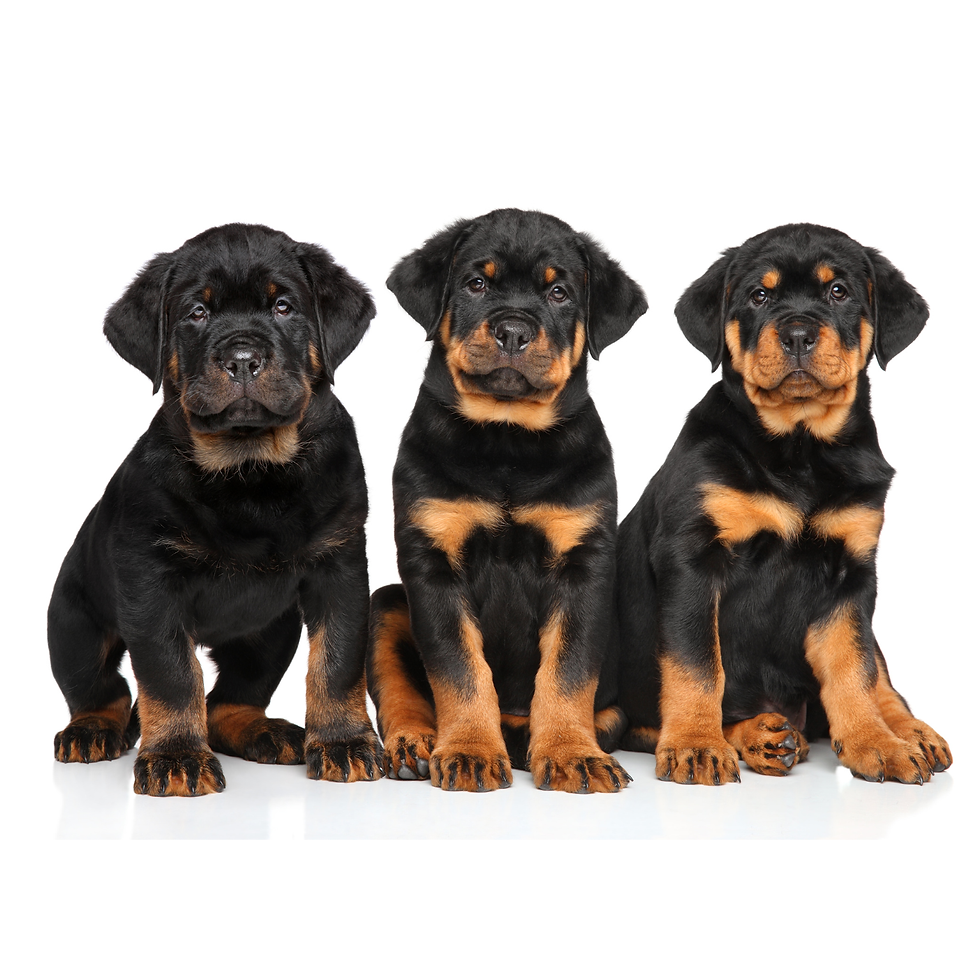
The coat should be black with clearly defined rich tan markings on areas including the cheeks, muzzle, chest, legs, above the eyes and beneath the tail.
Is a Rottweiler Right for You?
A Rottweiler may suit you when you:
Want a strong working companion
Enjoy consistent training
Can manage a large dog safely
Understand natural watchfulness
Can provide secure boundaries
Will maintain a lean, functional body condition
Value calm confidence over uncontrolled aggression
Are prepared for a powerful adolescent dog
Can commit to responsible ownership for life
It may not suit you when you:
Want a low-maintenance pet
Dislike structured training
Cannot physically manage a large dog
Want a dog mainly to intimidate people
Believe bigger and heavier always means better
Cannot provide secure fencing
Regularly leave a dog without suitable activity
Are unwilling to seek help when problems first appear

Give your dog a look that refuses to blend in. Our limited-edition collars and leads are handcrafted from premium full-grain, vegetable-tanned leather for distinctive style, durability and everyday comfort
Final Thoughts
The Rottweiler fully earns its place in the Power Breed Spotlight series.
Its story stretches from Roman livestock dogs and the cattle markets of Rottweil to draught work, police service and modern family life.
The breed was not developed merely to look powerful. It was developed to use power intelligently—moving cattle, pulling loads, guarding valuable property and cooperating with people.
Its exact ancestry cannot be reduced to a simple list of modern breeds. The most reliable history points to Roman drover dogs mixed with native German dogs and regional sheepdogs, followed by generations of selection for usefulness, strength and stability.
Today, the Rottweiler remains internationally popular. It ranks among America’s top breeds, records thousands of UK registrations and retains a carefully maintained working population in Germany. But no reliable global census proves which country owns or imports the most.
The finest Rottweiler is not the heaviest dog or the one that appears most threatening.
It is the dog that combines strength with movement, courage with stability and natural confidence with the ability to listen.
Disclaimer: This article provides general educational information and is not a substitute for individual veterinary, legal or professional canine-behaviour advice.


Comments