


POWER BREEDS: The Akbash — Turkey’s Rare White Guardian

Tall, powerful and almost entirely white, the Akbash is one of Turkey’s traditional livestock guardian dogs. It was developed to live among sheep, patrol large territories and confront predators without waiting for instructions from a handler.
This is not a protection dog created for controlled bite work, nor a herding breed that moves livestock on command. The Akbash is an independent guardian: calm while everything appears safe, watchful when circumstances change and capable of making its own decisions when it detects a threat.
That combination of size, athleticism and natural authority makes the Akbash fascinating to power-breed enthusiasts—but extremely demanding to own.

Akbash Breed Overview
Origin: Western Anatolia, Turkey
Original purpose: Protecting sheep and goats from predators
Height: Approximately 71–86 cm
Typical weight: Around 41–54 kg, although some dogs are heavier
Coat: Medium or long, weather-resistant double coat
Colour: Predominantly white
Temperament: Calm, independent, territorial and protective
Expected lifespan: Approximately 10–12 years
UK availability: Extremely rare
Suitable for first-time owners: Generally no
The United Kennel Club standard describes the Akbash as having the size, strength and courage to confront large predators, combined with enough speed and agility to pursue faster threats.

Built for More Than Appearance
The Akbash is powerful, but it is not built like a compact bull breed or heavy mastiff.
Its body is usually:
Tall and comparatively lean
Deep through the chest
Strong through the neck and shoulders
Long-legged and athletic
Muscular without excessive bulk
Capable of covering ground efficiently
The breed appears to combine mastiff-like power with some of the lighter construction associated with sighthounds. This gave it the physical strength to challenge predators while retaining the speed and stamina required to patrol open countryside.
Its power is functional. An overweight, excessively heavy or exaggerated Akbash would be less capable of doing the work for which the breed was developed.
Why Is the Akbash White?

The name comes from the Turkish words “ak baş,” meaning “white head.” This distinguishes it from darker-headed Turkish guardian dogs sometimes described as karabaş, meaning “black head.”
The white coat helped the Akbash blend into a flock of sheep. It also allowed shepherds to distinguish their dogs from approaching predators, particularly at a distance or in poor light.
Its coat can be medium-length or longer, but it should always provide protection against changing weather conditions. Feathering is commonly seen around the neck, legs and tail.
A Guardian, Not a Herding Dog

The Akbash does not work like a Border Collie or German Shepherd.
A herding dog responds to a handler and uses controlled movement to gather or direct livestock. A livestock guardian lives with the animals, treats them as its own group and watches the surrounding territory for danger.
This means an Akbash was expected to:
Remain calm around vulnerable livestock
Notice unusual movement or sounds
Patrol boundaries
Warn threats through posture and barking
Position itself between livestock and danger
Escalate its response if a predator continued to approach
Work without constant human direction
The breed’s independence is not a training fault. It is an essential part of its original working ability.
However, the same independence can be frustrating for an owner expecting instant obedience.

Powerful breeds need support that matches their active lifestyle. Explore our range of complementary muscle-support supplements, formulated to support healthy muscle condition, strength and recovery.
Complete the look with a handcrafted Hench Wear collar and lead, made from premium full-grain, vegetable-tanned leather with strong solid-brass fittings.
Shop Muscle Support | Shop Collars & Leads
Supplements are complementary feeds and are not a substitute for a balanced diet or veterinary care.
How Powerful Is an Akbash?

There is no reliable scientific bite-force figure for the Akbash, and online claims assigning exact PSI numbers to dog breeds should be treated cautiously.
Its real power comes from a combination of:
Large adult size
Strong jaws
Height and reach
Speed and agility
Physical confidence
Territorial instinct
Courage when confronting a threat
An ability to act independently
The Akbash was not bred to participate in organised dog fighting. Its function was defensive: discouraging or confronting predators that threatened its flock.
A stable Akbash should not behave like a frantic or indiscriminately aggressive dog. It should conserve energy, observe its surroundings and react when it believes intervention is necessary.
That does not make the breed harmless. A large guardian that makes an incorrect decision can be extremely difficult to stop.
Akbash vs Kangal

The Akbash and Kangal are both Turkish livestock guardians, but they are not simply different colours of the same dog.
Akbash
Predominantly white
Generally taller and more refined in outline
Often appears lighter and more athletic
May have a medium or longer coat
Developed as an independent flock guardian
Kangal
Usually fawn or sandy with a dark mask
Generally heavier through the head and body
More substantial mastiff-like appearance
Shorter, dense coat
Also developed to protect livestock
Both breeds are powerful, territorial and capable of independent decision-making. Neither should be selected purely for appearance or reputation.
Akbash vs Anatolian Shepherd

The term Anatolian Shepherd Dog has often been used outside Turkey as a broad description for livestock guardians originating from Anatolia.
This has caused considerable confusion. White Turkish guardian dogs may be advertised as Akbash, white Anatolian Shepherds or crosses between regional guardian types.
Supporters of the Akbash consider it a separate breed with its own appearance, history and working qualities. The United Kennel Club also recognises it separately.
Anyone importing or purchasing a rare Akbash should ask for:
A documented pedigree
Clear photographs of both parents
Verified health-test results
Information about the breeder’s working lines
Evidence of stable adult temperament
Honest information about any crosses in the ancestry
A large white livestock guardian is not automatically a genuine Akbash.
Temperament: Calm Does Not Mean Easy
A mature Akbash may spend long periods resting and quietly observing its surroundings. This can create the impression of a relaxed, low-maintenance dog.
However, the breed remains alert beneath that calm exterior.
Typical qualities include:
Deep loyalty to its family or livestock
Reserve around unfamiliar people
Strong awareness of boundaries
Natural guarding without formal training
Protective behaviour around animals or children it knows
Independent problem-solving
Alert barking, particularly after dark
Reluctance to accept unfamiliar dogs on its territory
An Akbash may not look excited or highly driven, but it is constantly assessing what belongs and what does not.
Is the Akbash Naturally Aggressive?

A correctly bred Akbash should be steady, confident and capable of distinguishing normal activity from a genuine threat. Uncontrolled aggression, extreme fear or unpredictable behaviour should never be considered desirable breed traits.
However, the Akbash was specifically selected to distrust possible threats and defend its territory. It cannot be expected to behave like a naturally sociable companion breed.
Poor breeding, inadequate socialisation, insecure fencing or careless handling can turn normal guarding instincts into a serious problem.
The aim of training is not to eliminate the dog’s guardian instinct. It is to build trust, teach boundaries and ensure that the owner can manage the dog safely.
Family Life
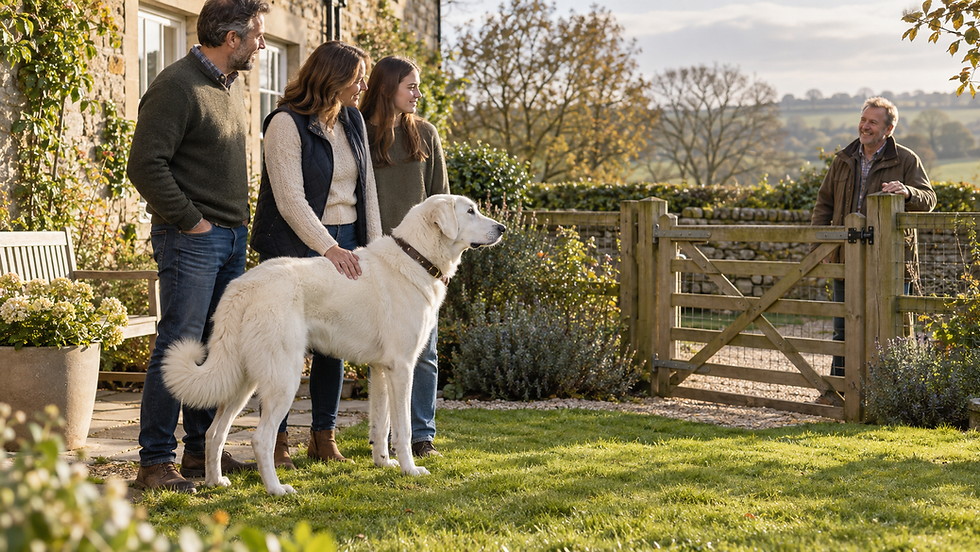
An Akbash can form an exceptionally strong bond with its household. Some are affectionate, gentle and surprisingly sensitive with the people and animals they know.
Nevertheless, family ownership presents challenges.
The dog may attempt to:
Stand between family members and visitors
Guard doors, gates or vehicles
Patrol the garden at night
bark at people passing the property
Decide that unfamiliar dogs represent a threat
expand its perceived territory beyond the garden
Children and dogs should always be supervised. The Akbash’s protective nature does not remove the risks associated with its enormous size and strength.
A busy home with regular visitors may be difficult unless the owner can confidently use gates, separate spaces, leads and trained settling routines.
Living With Other Dogs and Animals

Akbash dogs can live successfully alongside animals they recognise as part of their group. When properly raised with livestock, they may form close protective bonds with sheep, goats and other farm animals.
Relationships with unfamiliar dogs can be more complicated.
Potential difficulties include:
Territorial behaviour
Same-sex conflict
Suspicion of approaching dogs
Guarding food, land or livestock
Increased intolerance as the dog matures
Puppy friendliness does not guarantee that an Akbash will remain welcoming towards unfamiliar dogs in adulthood. Guardian instincts often become more apparent during adolescence and social maturity.
Exercise: More Patrol Than Performance
The Akbash is athletic, but it is not normally a constantly active, handler-focused breed.
It was developed to conserve energy while remaining ready to respond when needed. Adult dogs generally benefit from moderate daily exercise, freedom to move within secure land and opportunities to observe their environment.
They do not usually require the intense training schedule of a working Malinois. However, they need far more than being left alone in a small garden.
Suitable activities may include:
Controlled country walks
Secure off-lead exercise on private land
Calm lead training
Scent-based enrichment
Farm or livestock-guardian work
Structured boundary and place training
Repetitive high-impact exercise should be limited while puppies are growing.
Training a Powerful Independent Guardian

Training an Akbash requires a different approach from training a highly handler-focused working breed.
Harsh corrections and confrontational handling can damage trust or provoke defensive behaviour. Clear boundaries, calm repetition and reward-based training are generally more productive.
Essential skills include:
Loose-lead walking
Calm acceptance of handling
Reliable doorway and gate control
Settling behind a barrier
Moving away when directed
Emergency recall
Comfortable muzzle training
Accepting veterinary examinations
Remaining calm when visitors enter
Entering a vehicle or secure area on command
Recall should never be considered a substitute for secure fencing. A guardian investigating a possible threat may decide that its judgement is more important than the owner’s command.
Is the Akbash Suitable for Protection Training?
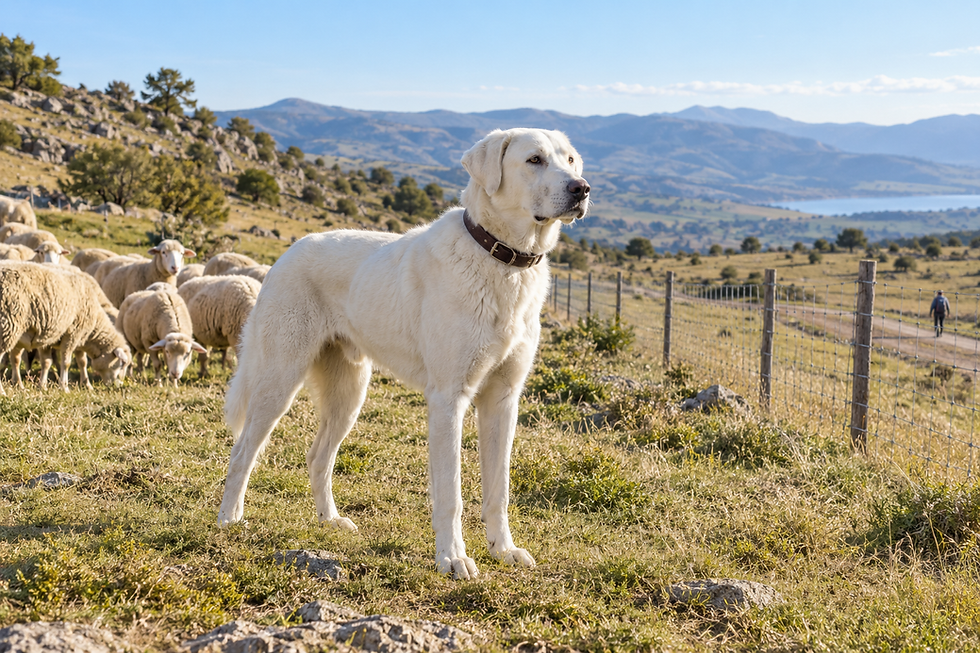
The Akbash already possesses strong natural guarding instincts. It does not normally need training that encourages suspicion, confrontation or biting.
Traditional livestock guardians work very differently from police, military and sport-protection breeds. They are expected to assess situations independently rather than wait for commands from a handler.
Encouraging unnecessary aggression in such a powerful and autonomous breed could make the dog less predictable and far harder to manage.
The priority should be neutrality, control, confidence and safe behaviour—not creating a more intimidating dog.
Space, Fencing and Barking
The ideal Akbash home is usually rural, spacious and securely enclosed.
Good fencing is essential because the breed may attempt to patrol a much larger area than the owner considers its property. A standard decorative garden fence may not be sufficient for a determined adult guardian.
Owners should also expect barking. Livestock guardians frequently use their voice to announce their presence and warn approaching threats. Night-time barking may be particularly noticeable and can create conflict with neighbours.
For this reason, the breed is rarely an ideal choice for a flat, closely packed housing estate or small urban garden.
Feeding and Growth
Akbash puppies grow into very large dogs, so steady development is more important than encouraging maximum size or rapid weight gain.
A suitable complete diet should support controlled growth and balanced skeletal development. Owners should avoid adding calcium or other mineral supplements unless advised by a veterinarian or qualified canine nutrition professional.
Puppies should be kept lean, with visible shape through the waist and ribs that can be felt beneath a light covering.
Large meals and strenuous exercise immediately before or after eating may be unwise in a breed potentially vulnerable to gastric dilatation-volvulus, commonly called bloat. Owners should discuss individual feeding and risk-reduction measures with their veterinarian.
Health Considerations

The Akbash is generally regarded as a robust working dog, but responsible breeding remains important.
Areas worth discussing with a breeder and veterinarian include:
Hip and elbow health
Eye examinations
Thyroid health
Joint development
Gastric dilatation-volvulus
Family history and longevity
Prospective owners should request documented results rather than accepting the phrase “vet checked.” The Orthopaedic Foundation for Animals provides information about health screening and allows buyers to search available results.
Grooming
The double coat requires regular brushing and can shed extremely heavily during seasonal coat changes.
Routine care should include:
Weekly brushing
More frequent grooming during heavy shedding
Nail maintenance
Dental care
Ear checks
Checking the coat and paws for parasites, grass seeds and debris
The coat should not normally be shaved, as both layers contribute to weather protection and temperature regulation.
Is the Akbash Banned in the UK?

The Akbash is not currently listed as a prohibited dog type in the UK. The latest named types can be checked through the UK Government’s banned-dogs guidance.
However, any dog can fall under dangerous-dog legislation if it is dangerously out of control. With a guardian of this size and strength, responsible containment and public control are essential.
The breed is not currently recognised by The Kennel Club in the UK and remains extremely rare here.
How Much Does an Akbash Cost in the UK?
There is no dependable average UK price because genuine Akbash dogs are exceptionally uncommon.
Importing a puppy may involve:
The breeder’s purchase price
Transport and travel
Veterinary preparation
Import documentation
Vaccinations and identification
Insurance
Suitable fencing and containment
Professional training support
Price should never be the deciding factor. A cheap puppy with questionable ancestry, poor socialisation or untested parents could carry enormous long-term costs.
Is the Akbash Suitable for a First-Time Owner?
Generally, no.
The Akbash is best suited to someone who understands:
Livestock guardian behaviour
Territorial dogs
Independent training styles
Safe visitor management
Large-breed development
Secure containment
The legal responsibilities of owning a powerful dog
Experience with an obedient pet breed does not automatically prepare someone for an autonomous livestock guardian.

Frequently Asked Questions
Is an Akbash stronger than a Kangal?
There is no reliable test proving one entire breed is stronger. Kangals are generally heavier and more mastiff-like, while Akbash dogs may be taller, lighter and more agile. Individual size, health, structure and working ability matter more than online rankings.
Does the Akbash have the strongest bite?
No verified scientific evidence supports this claim. Exact breed-by-breed bite-force rankings found online are generally unreliable.
Does an Akbash make a good guard dog?
It is a highly capable natural guardian, but that does not mean it suits every home. Its independence and territorial behaviour can make household management difficult.
Can an Akbash live in a UK town?
It may be legally possible, but the breed’s size, barking, roaming instinct and need for secure space make a rural environment far more suitable.
Can an Akbash be left alone?
No dog should be routinely isolated for excessive periods. An Akbash may tolerate working independently, but it still needs appropriate companionship, care, exercise and supervision.
Is an Akbash good with children?
Some are gentle and protective towards children within their family. However, their size and guarding instinct mean that close adult supervision and careful visitor management remain essential.
Is the Akbash the Right Power Breed for You?
The Akbash may suit an owner who:
Has experience with large guardian breeds
Lives in a rural or spacious environment
Can provide strong, secure fencing
Understands independent working dogs
Can manage visitors and unfamiliar dogs safely
Accepts barking, shedding and territorial behaviour
Values functional ability over exaggerated appearance
It is unlikely to suit someone who:
Is choosing their first dog
Lives in a small flat or busy urban neighbourhood
Wants instant obedience
Frequently visits crowded dog parks
Has an insecure garden
Wants a protection dog for image or status
Cannot physically and mentally manage a very large guardian
Final Thoughts
The Akbash is a genuine working power breed—not because it has exaggerated muscle or an intimidating appearance, but because every part of it was shaped for a demanding purpose.
It combines size, speed, courage, endurance and independent judgement in a tall, athletic body. Its calmness is one of its greatest qualities, but that calmness exists alongside a deeply rooted instinct to watch, assess and protect.
In the hands of an experienced owner with secure land and realistic expectations, the Akbash can be steady, loyal and remarkably capable. In an unsuitable home, its territorial nature and independence can become overwhelming.

The Akbash deserves admiration, but it also demands respect.
This article provides general breed information and does not replace advice from a veterinarian, qualified behaviourist or experienced breed specialist.


Comments