


Protein’s Role in Muscle Strength & Recovery for Active Dogs
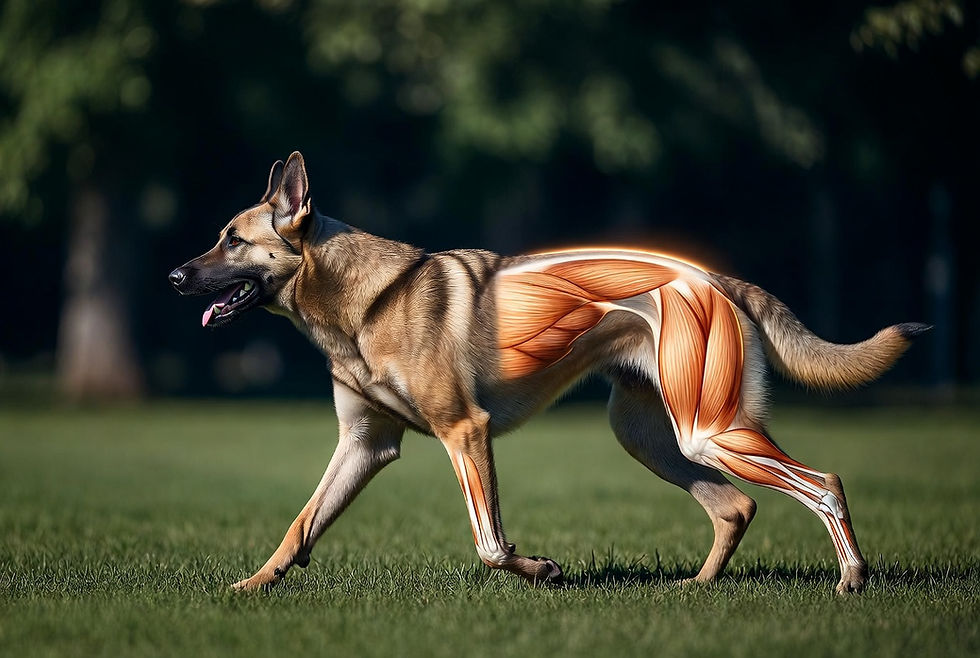
Protein is the cornerstone of muscle health in dogs — especially active, working, sporting, or high-energy pets. It plays several critical roles
1. Muscle Building (Muscle Protein Synthesis)
Muscles are primarily made of protein (actin and myosin).
During exercise, tiny micro-tears occur in muscle fibers.
Protein supplies the amino acids (the building blocks) needed to repair and build stronger, larger muscle tissue.
High-quality, complete proteins containing all essential amino acids are vital because dogs cannot synthesize them on their own

2. Muscle Repair & Recovery
After intense activity (agility, hiking, running, fetch sessions, herding, etc.), the body enters a recovery phase.
Protein accelerates repair, reduces inflammation, and helps restore muscle function faster.
Adequate protein intake helps prevent prolonged soreness and supports faster bounce-back between training sessions.
3. Maintenance of Lean Muscle Mass
Active dogs need more protein than sedentary ones to maintain muscle while burning calories.
Insufficient protein can lead to muscle wasting (loss of muscle mass), reduced strength, slower recovery, and increased injury risk — even if the dog is eating enough calories.
4. Enzyme & Hormone Production
Many enzymes and hormones involved in muscle contraction, energy metabolism, and recovery are protein-based.
How Much Protein Do Active Dogs Need?
Sedentary adult dogs: ~18–25% protein on a dry matter basis.
Active / sporting / working dogs: Often 28–40%+ protein, depending on intensity and breed.
Puppies, seniors recovering from injury, or dogs in heavy training may have even higher needs.
Best Protein Sources for Dogs (ranked by quality):
Animal-based: Chicken, turkey, beef, lamb, fish (salmon), eggs — highly digestible and complete amino acid profiles.
Organ meats (liver, heart, kidney) — nutrient-dense.
High-quality novel proteins (duck, venison, kangaroo) for dogs with sensitivities.
Signs Your Dog May Need More Protein
Slow recovery after exercise
Loss of muscle tone or “skinny” appearance despite activity
Frequent injuries or soreness
Reduced stamina or performance
Pro Tip:
Look for high-quality dog foods where the first 2–3 ingredients are named animal proteins, or consider vet-approved protein supplements/toppers (e.g., raw meat, freeze-dried, or balanced protein powders) for very active dogs.
Protein works best when paired with proper timing (feeding within 1–2 hours post-exercise), adequate calories, and supporting nutrients like Omega-3s, antioxidants, and joint support compounds.

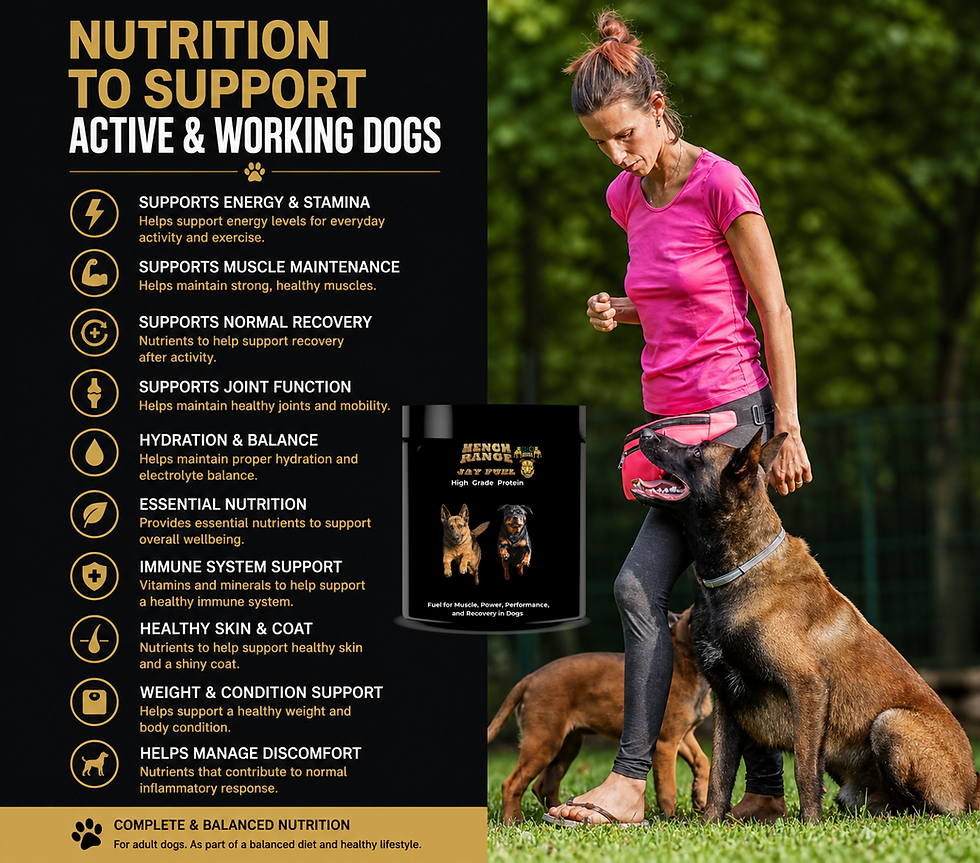
Jay Fuel Hench Range High-Grade Protein Supplement is specially formulated for working dogs, sporting dogs, and active pups who need extra muscle support.
Key Benefits: Supports muscle maintenance & growth
Aids normal recovery after activity
Promotes joint function & mobility
Helps with healthy skin, coat & overall condition
Perfect for Belgian Malinois, German Shepherds, Bully breeds, and every hard-working dog in between!
Pro Tip for Active Dogs:
A high-protein meal or topper after exercise is one of the most effective ways to maximize muscle recovery because the body is in an “anabolic window” where it uses amino acids most efficiently.
What Can Go Wrong in Active Dogs?
Poor-quality or low-digestibility protein → Fewer amino acids reach the muscles → slower recovery and weaker gains.
Overloading the system (too much at once) → Some protein may be wasted or cause digestive stress.
Gut health issues (inflammation, dysbiosis) → Reduced absorption → even high-protein diets underperform.


Comments