


The Purina Labrador Study & the Latest 2026 Dog Longevity Research: How to Help Your Dog Live Longer, Stronger & Healthier
- May 11
- 6 min read

When it comes to helping dogs live longer, healthier lives, few studies are as important as the famous Purina Labrador Retriever Lifetime Study.
Even in 2026, this groundbreaking research remains one of the strongest pieces of evidence showing that maintaining a lean, healthy body condition can dramatically improve your dog’s lifespan, mobility, joint health, and quality of life.
For owners searching for ways to improve dog longevity, reduce arthritis risk, support muscle health, and keep senior dogs active for longer, the findings are still incredibly relevant today.

The Famous Purina Labrador Retriever Lifetime Study (2002)
Researchers followed 48 Labrador Retrievers from seven different litters throughout their entire lives — an extraordinary 14-year study. The dogs were paired with their littermates to ensure
genetics were as similar as possible.
The Two Feeding Groups
Control Group
24 Labradors were fed a standard amount of food and allowed to eat freely during a timed feeding window.
Lean Group
24 Labradors were fed 25% fewer calories than their paired sibling.
Importantly, these dogs were not underfed or skinny.
They were maintained at an ideal lean body condition with:
A visible waist
Easily felt ribs
Strong muscle tone
Healthy mobility
Both groups ate the same high-quality dog food. The only difference was calorie intake.
The Results Changed Dog Nutrition Forever
The findings were remarkable.
Median Lifespan
Lean dogs: 13 years
Heavier dogs: 11.2 years
That’s an increase of nearly 2 extra years of life — around 15% longer lifespan.
But the benefits went far beyond longevity.
The lean Labradors also:
Developed arthritis later in life
Had less severe osteoarthritis
Maintained better mobility in old age
Experienced improved overall healthspan
Stayed more active and comfortable as seniors
This study helped prove that keeping dogs lean is one of the most effective things owners can do to support long-term health and reduce age-related disease.
Why This Research Matters More Than Ever in 2026
Modern canine research continues to support the same conclusion:
Excess Weight Accelerates Ageing
Overweight dogs are more likely to develop:
Arthritis
Hip and joint issues
Reduced mobility
Inflammation
Metabolic dysfunction
Reduced stamina
Cardiovascular stress
Today, veterinarians and canine nutrition specialists also focus heavily on preserving lean muscle mass, especially in ageing dogs.
As dogs get older, they naturally lose muscle through a process called sarcopenia (age-related muscle wasting).
Loss of muscle can reduce mobility, weaken the immune system, and increase injury risk
.
This is why modern dog wellness now focuses on two key goals:
Maintaining a lean body condition
Supporting healthy muscle mass throughout life

How to Keep Your Dog in “Lean Group” Condition
Many owners unknowingly overfeed their dogs.
The easiest way to assess your dog is by using a Body Condition Score (BCS) rather than relying only on weight.
A healthy dog should have:
Easily felt ribs without pressing hard
A visible waist from above
A tucked abdomen from the side
Good muscle tone without excess fat covering
If ribs are difficult to feel, your dog may already be carrying excess weight.
Best Ways to Help Dogs Live Longer & Healthier
1. Portion Control Matters
Even small daily overfeeding can add significant weight over time.
Measure food properly and adjust portions depending on:
Age
Activity level
Breed
Neutering status
Exercise levels
2. Prioritise High-Quality Protein
Senior dogs especially benefit from quality protein sources to help preserve muscle mass while ageing.
Protein supports:
Muscle maintenance
Recovery
Mobility
Immune function
Energy levels
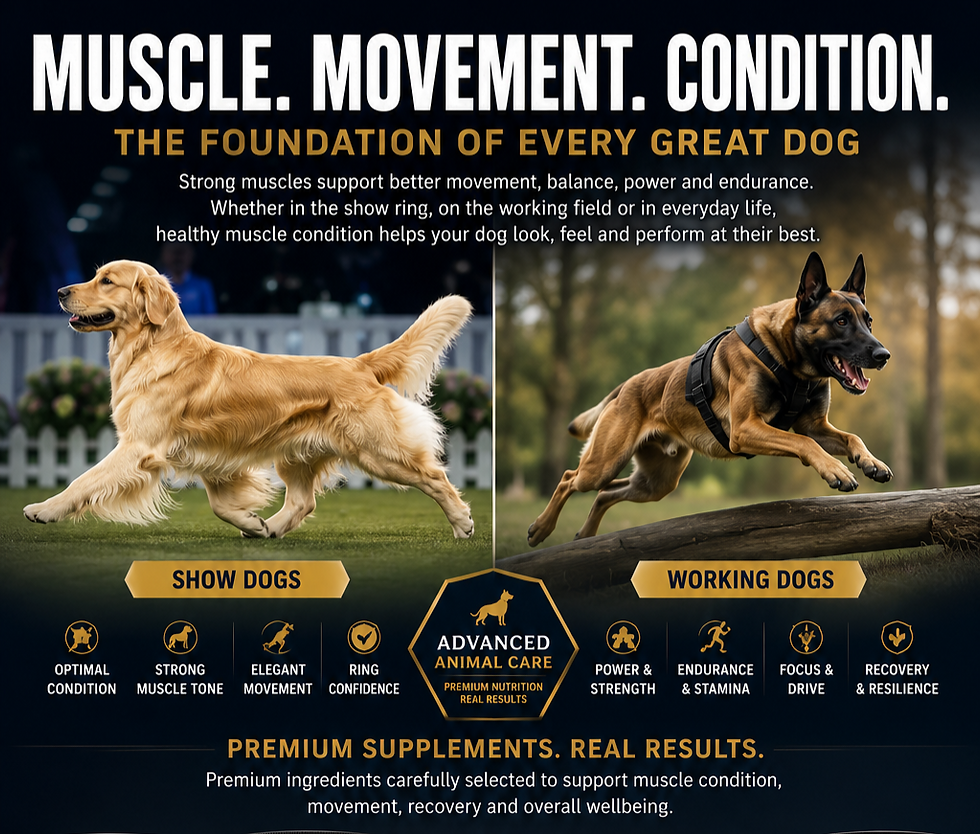
Products such as Advanced Animal Care focus on nutrition and wellness support for active, working, senior, and recovery dogs.

3. Support Muscle Health as Dogs Age
Modern canine wellness increasingly focuses on maintaining lean muscle alongside healthy weight control.
Supplements designed to support muscle condition, recovery, energy metabolism, and overall vitality may help ageing or active dogs maintain condition when combined with proper nutrition and exercise.
One example is AAC Dom-inate Dog Muscle Builder & Gainer, which includes ingredients aimed at supporting:
Muscle maintenance
Strength and endurance
Recovery
Immune support
Energy metabolism
According to the product information, the formula contains ingredients including amino acids, omega oils, vitamins, digestive enzymes, DMG, and creatine to support active and ageing dogs.
4. Joint Support Is Critical for Longevity
Joint health becomes increasingly important as dogs age.
Modern research continues to support the use of ingredients such as:
Glucosamine
Chondroitin
MSM
Omega-3 fatty acids
Green-lipped mussel
Hyaluronic acid
These nutrients may help support cartilage, mobility, comfort, and flexibility in ageing dogs.

5. Daily Exercise Keeps Dogs Healthier for Longer
Regular movement helps maintain:
Healthy body weight
Muscle mass
Joint flexibility
Mental wellbeing
Cardiovascular health
For many dogs, consistent moderate exercise is more beneficial than occasional intense exercise.
Excellent low-impact options include:
Daily walks
Swimming
Controlled play
Scent work
Gentle hill walking

The Importance of Safe, Non-Toxic Dog Collars & Leads
Nutrition is only one part of supporting your dog’s long-term wellbeing.
What your dog wears every day also matters.
Advanced Animal Care Collars & Leads offer premium-quality leather dog collars and leads designed with durability, comfort, and safety in mind.
Their collars and leads are made using premium vegetable-tanned leather — a more natural tanning process that avoids many of the harsh chemicals commonly used in cheaper leather production.
Benefits of high-quality vegetable-tanned leather dog collars include:
Reduced exposure to harsh chemicals
Non-toxic materials
Improved durability
Softer feel against the skin
Better comfort for daily wear
Strong long-lasting construction
Premium appearance and craftsmanship
For dogs wearing collars daily, choosing safer, high-quality materials can help reduce irritation and improve comfort, especially for sensitive dogs.
Final Thoughts
The Purina Labrador Lifetime Study changed how we understand canine longevity.
The message remains clear in 2026:
Lean dogs live longer.
Maintaining healthy body condition, preserving muscle mass, supporting joint health, feeding quality nutrition, and ensuring regular exercise can significantly improve your dog’s quality of life and long-term wellbeing.
Modern approaches now combine:
Lean weight management
High-quality protein
Muscle support
Joint care
Mobility support
Safe, premium everyday equipment
Together, these factors can help dogs stay healthier, stronger, and more active well into their senior years.
For more information on canine wellness products, supplements, collars, and leads, visit Advanced Animal Care UK.

Frequently Asked Questions About Dog Longevity, Weight Management & Healthy Ageing
How can I help my dog live longer?
The biggest factors linked to canine longevity are:
Maintaining a healthy lean body weight
Feeding high-quality nutrition
Regular exercise
Supporting joint and muscle health
Preventing obesity
Routine veterinary care
The famous Purina Labrador Lifetime Study showed that lean dogs lived almost two years longer than overweight dogs.
What is the ideal body condition for a dog?
A healthy dog should:
Have a visible waist when viewed from above
Have a tucked abdomen from the side
Allow you to easily feel the ribs without pressing hard
Maintain good muscle tone without excess fat
Veterinarians often use a Body Condition Score (BCS) system to assess this.

Does being overweight shorten a dog’s lifespan?
Yes.
Research consistently shows that excess body fat increases the risk of:
Arthritis
Joint disease
Diabetes
Heart strain
Reduced mobility
Inflammation
Earlier ageing
Even moderate obesity can significantly reduce a dog’s quality of life and lifespan.
What is sarcopenia in dogs?
Sarcopenia is age-related muscle loss.
As dogs age, they naturally lose lean muscle mass, which can affect:
Strength
Mobility
Balance
Recovery
Overall health
This is why modern canine nutrition focuses not only on keeping dogs lean, but also maintaining healthy muscle condition.

Should senior dogs eat more protein?
In many cases, yes.
Senior dogs often benefit from high-quality protein to help maintain:
Lean muscle mass
Mobility
Recovery
Immune function
However, protein needs can vary depending on underlying health conditions, so it is always best to speak with your vet if your dog has kidney or medical issues.

What supplements may help ageing dogs?
Many owners choose supplements that support:
Joint health
Muscle maintenance
Mobility
Recovery
Immune health
Ingredients commonly used include:
Glucosamine
Chondroitin
MSM
Omega-3 oils
Amino acids
Hyaluronic acid
Green-lipped mussel
Products such as Advanced Animal Care supplements are designed to support active, working, and senior dogs alongside a balanced diet and exercise routine.
How much exercise does an older dog need?
Most senior dogs still benefit from daily movement.
Gentle, consistent exercise can help maintain:
Joint flexibility
Healthy weight
Muscle mass
Mental stimulation
Good low-impact activities include
Walking
Swimming
Light play
Scent games
Controlled hill walking
The key is consistency without overexertion.
Are leather dog collars safe for dogs?
High-quality leather collars can be an excellent option when made using safe materials.
Premium vegetable-tanned leather collars avoid many of the harsher chemicals used in some lower-quality leather manufacturing processes.
Benefits may include:
Improved comfort
Reduced irritation
Durability
Non-toxic materials
Better long-term wear
Advanced Animal Care collars and leads are made using premium vegetable-tanned leather designed for comfort, strength, and everyday use.
What is vegetable-tanned leather?
Vegetable tanning is a more natural leather tanning process that uses plant-based tannins rather than harsher chemical-heavy methods.
This can help produce leather that is:
Safer
More breathable
Durable
Softer with age
Lower in chemical residue
It is often preferred for premium dog collars and leads.
What dog breeds are most prone to obesity?
Breeds commonly prone to weight gain include:
Labrador Retrievers
Golden Retrievers
Beagles
Pugs
Cocker Spaniels
Dachshunds
French Bulldogs
However, any dog can become overweight if calorie intake exceeds exercise levels.
How often should I check my dog’s weight?
It’s a good idea to assess your dog’s body condition monthly.
Watch for:
Loss of waist definition
Difficulty feeling ribs
Reduced energy
Reduced mobility
Weight gain after neutering or ageing
Early adjustment of diet and exercise is much easier than trying to reverse obesity later.
What is the best diet for dog longevity?
The best long-term diet for most dogs includes:
High-quality protein
Controlled calories
Balanced nutrition
Healthy fats
Appropriate supplements if needed
Portion control
Consistency and maintaining lean body condition are usually more important than chasing trendy diets.


Comments