


The Truth About “Game” Bloodlines in Staffordshire Bull Terriers Understanding Drive, Temperament, Genetics & Responsible Ownership

Few topics in the Staffordshire Bull Terrier world create more arguments, confusion and misinformation than the phrase “game bloodlines.” Some people use the term proudly. Others hate hearing it altogether. But what does it actually mean, and how does it affect the modern Staffordshire Bull Terrier?
This article is not about glorifying aggression or promoting dangerous dogs. It is about understanding genetics, temperament, drive and responsible ownership in one of the most loyal breeds in the world.

What Does “Game” Actually Mean?
Historically, the word “game” referred to determination, courage, resilience and the willingness of a dog to keep going under pressure. It did not simply mean aggression.
In old working terrier and bull breeds, gameness described mental toughness and perseverance.
These traits were selectively bred generations ago long before modern Staffordshire Bull Terriers became family companions and show dogs.
Today, the term is often misunderstood online. Some people incorrectly use it to excuse poor behaviour, lack of training or uncontrolled dogs. That is not what a well-bred Staffordshire Bull Terrier should represent.
Premium Staffordshire Bull Terrier Show Sets
Luxury handcrafted full grain leather Staffordshire Bull Terrier collars and leads designed for comfort, durability and show-ring style. Featuring premium fittings, artisan craftsmanship and puppy sizes available.

Shop Staffy Collars and More

A Real Stafford Should Be Stable
A proper Staffordshire Bull Terrier should be:
Confident
Bold
Intelligent
Loyal
People friendly
Emotionally stable
Trainable
Safe around families when properly raised
A good Stafford should not be nervous, unpredictable or human aggressive.
Strong dogs still need calm minds.
The best examples of the breed combine athleticism, confidence and stability together.
Drive Is Not The Same As Aggression
One of the biggest mistakes people make is confusing high drive with aggression.
A high-drive Staffordshire Bull Terrier may:
Tug hard
Love flirt poles
Enjoy training
Play rough
Stay active for long periods
Become intense during games
Have huge enthusiasm and energy
That does not automatically make the dog dangerous.
Many well-bred Staffords are incredibly energetic but also gentle, affectionate and trustworthy family dogs when correctly trained and socialised.
Drive needs direction.
Without structure, exercise and boundaries, any intelligent energetic breed can become destructive or difficult.
Genetics Matter More Than People Admit
Temperament is heavily influenced by genetics.
You cannot train away bad genetics completely.
That is why responsible breeding matters so much.
Good breeders focus on:
Stable temperaments
Health testing
Sound structure
Trainability
Confidence
Good nerve
Breed type
Family suitability
Poor breeders often focus only on size, colour, hype or “hardness.”
That creates unstable dogs that damage the reputation of the breed.

The Internet Has Romanticised “Hard” Dogs
Social media has created a trend where people glorify overly muscular, uncontrolled or reactive dogs.
Phrases like:
“real game dog”
“old school blood”
“hard dog”
“killer lines”
are often used for attention online.
But the truth is:
A truly well-bred Staffordshire Bull Terrier should be controlled, obedient and emotionally balanced.
Real quality shows through temperament, not chaos.
The best dogs are confident enough to stay calm.
Raising A Strong Stafford Correctly
Strong-minded dogs need leadership, structure and consistency.
That means:
Early Socialisation
Expose puppies to:
people
sounds
surfaces
environments
handling
calm dog
Confidence is built young.
Clear Boundaries
Cute puppy behaviours become adult habits.
Teach:
no excessive biting
calm greetings
impulse control
crate training
engagement with owners
Consistency creates stability.
Mental Stimulation
A bored Stafford creates its own entertainment.
Use:
obedience work
scent games
tug with rules
puzzle toys
structured play
training sessions
A mentally satisfied Staffy is often calmer than one exercised endlessly.
Avoid Overstimulation
Many owners accidentally create hyper dogs.
Constant excitement, rough play and nonstop stimulation can create dogs that never learn to switch off.
Teaching calmness is just as important as exercise.
The Staffordshire Bull Terrier Was Always Meant To Love People
One of the breed’s greatest strengths is its affection for humans.
Staffords are often called:
nanny dogs
people dogs
velcro dogs
because they love human interaction so deeply.
A well-raised Staffordshire Bull Terrier
is usually:
affectionate
clown-like
loyal
emotionally connected
eager to please
They thrive when treated as part of the family.
Health, Structure & Balance Matter Too
Extreme dogs are rarely healthy dogs.
Being massively overweight, oversized or exaggerated is not better.
A good Stafford should be:
athletic
balanced
agile
muscular naturally
fit without excess bulk
Conditioning, nutrition and correct exercise matter more than chasing exaggerated looks.
Final Thoughts
The Staffordshire Bull Terrier is one of the most misunderstood breeds in the world.
Strength does not equal danger.
Drive does not equal aggression.
And “game” should never be used as an excuse for unstable behaviour or irresponsible ownership.
The best Staffords are confident, controlled, healthy and deeply loyal companions.
When bred responsibly and raised correctly, they are intelligent, affectionate and incredibly rewarding dogs to own.
Protecting the future of the breed means valuing temperament, health and stability above hype.

Staffordshire Bull Terrier Muscle Development & Ageing
Staffordshire Bull Terriers are naturally muscular dogs, but good muscle does not come from simply overfeeding or overexercising. True condition comes from genetics, correct nutrition, controlled exercise and recovery.
Young Staffords need steady growth without becoming overweight. Carrying too much fat during puppy development can affect movement, joints and overall structure later in life. Lean, athletic condition is always healthier than excessive bulk.
As Staffords age, many begin to lose muscle tone naturally. Reduced activity, slower recovery and ageing joints can all contribute to muscle loss and weaker condition.
Older dogs may appear narrower across the back end, shoulders or chest compared to their younger years.
This is where quality nutrition and recovery support become important.
How Hench Range Muscle Supplements Help
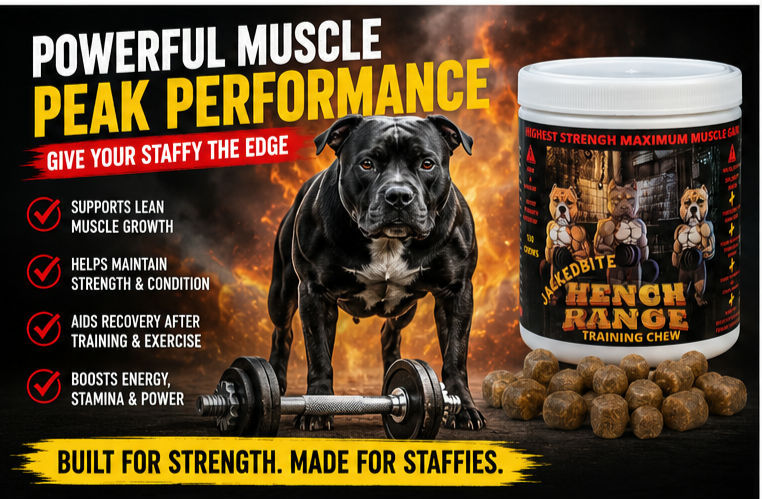
Hench Range muscle supplements are designed to support:
muscle maintenance
recovery after exercise
healthy condition
active dogs in training
ageing dogs losing condition
strength and performance support
Combined with proper feeding, controlled exercise and healthy body weight, muscle support supplements can help Staffordshire Bull Terriers maintain better overall condition throughout life.
Strong muscle supports movement, stability and long-term health — especially in active or ageing Staffords.
Build Stronger Condition With Hench Range
Advanced muscle recovery and performance supplements designed for active Staffordshire Bull Terriers. Support muscle maintenance, recovery, healthy weight and ageing dogs losing condition



Comments