


The Ultimate Guide to Female Dog Behaviour Psychology, Heat Cycles, Hormones & Understanding Your Dog
- Jul 5
- 9 min read

"She's not being difficult. She's communicating in the only way she knows how."
Female dogs have fascinated humans for thousands of years.
Some owners describe them as gentle and affectionate.
Others say they're independent, clever and sometimes surprisingly stubborn.
Many swear their female dog understands every word they say.
So...
Are female dogs really different from males?
Does a season completely change their personality?
Do hormones affect behaviour?
Can they become jealous?
Do they choose a favourite person?
The answer is both fascinating and surprisingly complex.
Unlike male dogs, unspayed females experience regular hormonal cycles that influence far more than reproduction.
Hormones can affect:
Mood
Confidence
Social behaviour
Appetite
Activity levels
Interest in other dogs
Scent marking
Maternal behaviour
Yet hormones tell only part of the story.
A female dog's personality is also shaped by:
Genetics
Breed
Early socialisation
Training
Life experiences
Health
Environment
No two female dogs are identical.
That's exactly what makes understanding them so interesting.
Whether you have an energetic puppy, a girl approaching her first season or a loyal senior companion, understanding how female dogs think and behave helps build a stronger relationship and allows you to recognise what is normal—and what may require veterinary advice.
Table of Contents
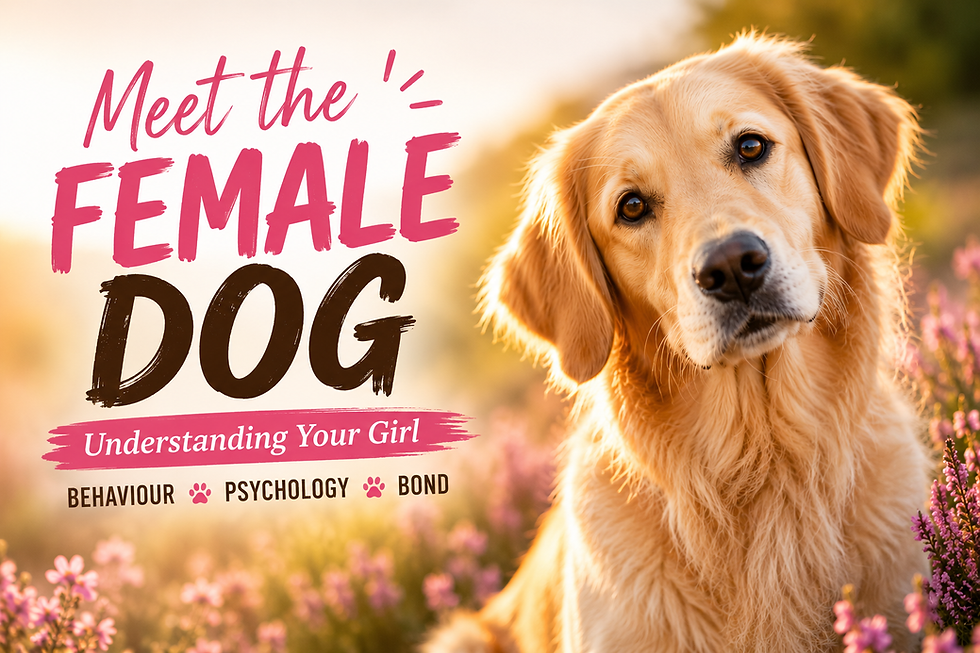
Meet the Female Dog
Understanding Female Dog Psychology
Nature vs Nurture
Do Female Dogs Think Differently?
The Science Behind Hormones
Understanding the Heat Cycle
Stage One – Proestrus
Stage Two – Estrus
Stage Three – Diestrus
Stage Four – Anestrus
Why Behaviour Changes During a Season
Why Does My Dog Suddenly Become Clingy?
Why Does She Try to Escape?
Why Is She Marking More?
Phantom Pregnancy Explained
Female vs Male Behaviour
Training Female Dogs
Common Myths
Frequently Asked Questions
Final Thoughts
Meet the Female Dog
Every female dog is unique.
Some are adventurous.
Some are quiet observers.
Some seem determined to investigate absolutely everything.
Others are happiest curled beside their favourite person.
Although people often describe females as being calmer than males, science tells us personality cannot be predicted simply by sex.
Breed, genetics, training and early experiences usually play a much larger role.
What hormones do influence are temporary behavioural changes associated with the reproductive cycle.
Understanding those changes helps owners avoid unnecessary worry.
🐾 Did You Know?
Dogs begin learning about the world long before they leave their breeder.
Experiences during the first few months of life help shape confidence, curiosity and future behaviour for years to come.
Understanding Female Dog Psychology
Psychology simply means understanding how an individual thinks, learns and responds to the world around them.
Female dogs don't spend their day making logical decisions like humans.
Instead they constantly process information through:
Smell
Sight
Sound
Memory
Previous experiences
Emotional associations
Every interaction teaches them something.
If positive experiences are repeated...
Confidence usually grows.
If frightening experiences occur repeatedly...
Fear can develop.
Behaviour is therefore constantly changing as dogs learn.
Nature vs Nurture

One of the biggest debates in animal behaviour asks:
Are dogs born with certain personalities...
Or do they learn everything?
The answer is both.
Genetics influence traits such as:
Confidence
Energy levels
Sociability
Working drive
Protective instincts
Meanwhile life experiences shape:
Trust
Manners
Confidence around strangers
Responses to new situations
Ability to cope with stress
Think of genetics as providing the blueprint..
Training and experience complete the building.
Do Female Dogs Think Differently From Males?
This question has been debated for decades.
Current research suggests there are behavioural differences between males and females, but they are generally modest and often overshadowed by breed, upbringing and individual personality.
Some studies and owner observations suggest females may:
Mature mentally slightly earlier.
Be more focused during training.
Form close bonds with their family.
Show increased sensitivity to hormonal changes.
Males, meanwhile, are sometimes described as more consistently playful or easily distracted.
However, these are broad tendencies—not rules.
Many female dogs are energetic clowns.
Many male dogs are calm and reserved.
Individual personality almost always wins.
Fun Fact
Ask ten experienced dog trainers whether females or males are easier to train and you'll probably hear ten different opinions.
Most agree that consistency, patience and positive reinforcement matter far more than whether the dog is male or female.
The Science Behind Hormones
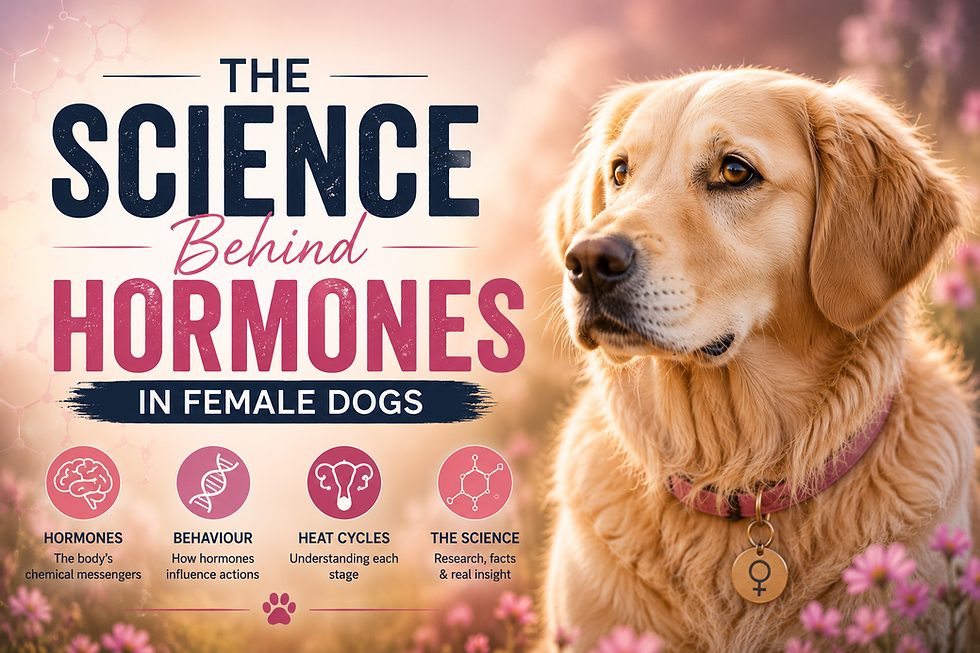
One of the biggest differences between male and female dogs is the reproductive cycle.
Female dogs naturally experience changes in hormone levels throughout their lives.
The two main hormones involved are:
Oestrogen
Responsible for preparing the body for reproduction.
As levels rise they can influence:
Interest in male dogs.
Scent marking.
Restlessness.
Social behaviour.
Progesterone
This hormone rises after ovulation.
It prepares the body for pregnancy—even if pregnancy never occurs.
Because of this, some females later experience behavioural changes associated with phantom pregnancy
Important
Hormones don't completely change a dog's personality.
Instead they temporarily influence behaviours that already exist.
A confident female usually remains confident.
An affectionate female usually remains affectionate.
You may simply notice temporary differences in energy, social behaviour or routine.
Understanding
The Female Heat Cycle
Most unspayed female dogs come into season approximately every six to eight months, although this varies between individuals and breeds.
Each cycle consists of four distinct stages.
Understanding them helps explain many behavioural changes owners notice.
Stage One – Proestrus
Approximate length:
7–10 days (sometimes longer).
This is usually when owners first realise their dog is entering a season.
Common signs include:
Vulval swelling.
Bloody discharge.
Increased urination.
More scent marking.
Restlessness.
Becoming clingier—or occasionally wanting more space.
Male dogs often become very interested during this stage.
However...
Most females are not yet receptive.
They usually reject advances from males.
🐾 Did You Know?
A female dog may urinate more frequently during proestrus not because of a urinary problem, but because she's leaving scent messages containing pheromones that other dogs can detect.
These scent signals play an important role in canine communication.
Stage Two – Estrus
Approximate length:
5–10 days (although it varies between dogs).
This is the fertile stage of the heat cycle.
Hormone levels change again, and behaviour often changes with them.
Unlike proestrus, many females now become receptive to male dogs.
You may notice:
Tail held to one side ("flagging")
Increased friendliness towards male dogs
Wanting to spend longer sniffing outdoors
Roaming or attempting to escape
Reduced appetite
Increased excitement or restlessness
For owners, this is usually the period requiring the greatest care.
Even the most obedient female may ignore commands if she detects an opportunity to reach a male.
Did You Know?
A male dog's sense of smell is so powerful that, under favourable conditions, he may detect a female in season from a considerable distance. Wind direction, terrain and weather all influence how far scent travels.
Stage Three – Diestrus
Approximate length:
Around 60 days.
The fertile period has now ended.
Whether your dog became pregnant or not, progesterone remains elevated for several weeks.
Because the body behaves as though pregnancy may have occurred, some females develop phantom pregnancy.
Behavioural changes may include:
Nest building
Carrying toys
Mothering soft objects
Reduced activity
Increased appetite or reduced appetite
Becoming protective of bedding or toys
For most dogs these signs are temporary
and resolve naturally.
If symptoms become severe or your dog appears unwell, consult your veterinarian.
Stage Four – Anestrus
This is the resting phase.
Hormones return to baseline.
Behaviour generally returns to normal.
Most females appear completely settled during this period until the next reproductive cycle begins.
Why Behaviour Changes During Heat
Owners often ask:
"Has my dog suddenly become moody?"
No.
Changing hormone levels influence the brain, scent communication and reproductive behaviour.
Some females become:
More affectionate
More independent
More vocal
More anxious
More playful
More restless
Others show almost no behavioural changes at all.
Every dog is different.
Fun Fact
Two sisters from the same litter may experience completely different heat cycles throughout their lives.
One may barely change.
The other may become noticeably clingy or restless.
Why Does My Female Dog Become Clingy?
Many owners notice their normally independent dog suddenly wanting constant attention.
There are several reasons this may happen.
Hormonal changes can influence emotional behaviour.
Some females simply seek reassurance from the people they trust most.
Others become quieter and prefer resting close to their family.
In most cases this behaviour is temporary.
Why Does She Try to Escape?
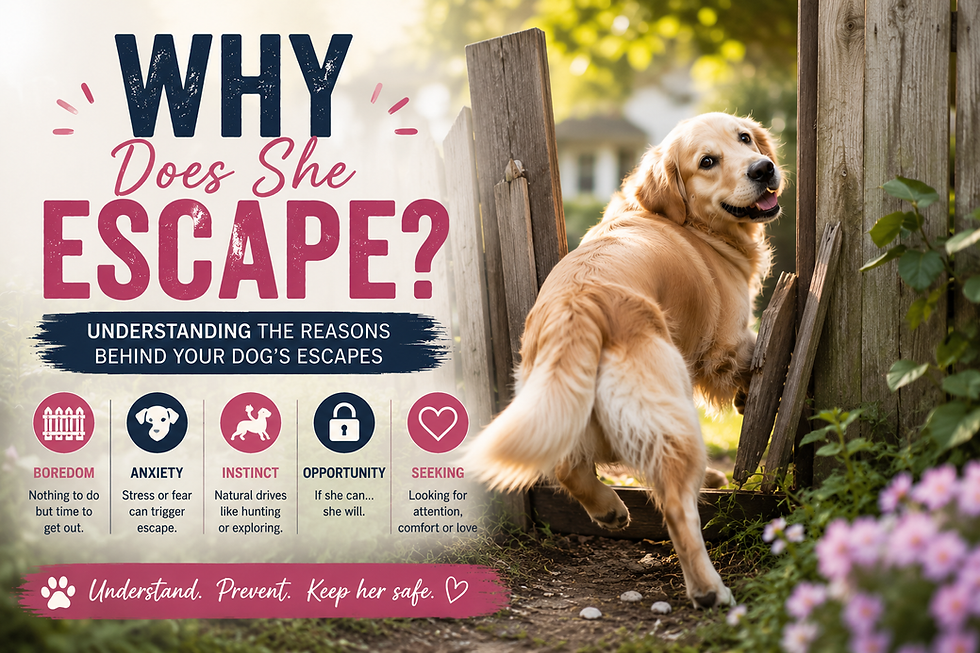
This is one of the most common concerns owners face.
During estrus, powerful reproductive instincts encourage females to seek males.
Even dogs that have never attempted to escape before may suddenly:
Jump fences
Dig under gates
Pull strongly on the lead
Attempt to leave the garden
Extra care during walks is essential.
Safety Tip
Never rely solely on recall training while your dog is in season.
Use a secure lead and avoid off-lead exercise until her fertile period has completely ended.
Why Is She Urinating More?
Many owners worry their dog has developed a urinary infection.
Often...
She's simply communicating.
Frequent urination deposits pheromones that provide information to other dogs.
This scent-marking behaviour is completely normal during parts of the reproductive cycle.
Phantom Pregnancy Explained
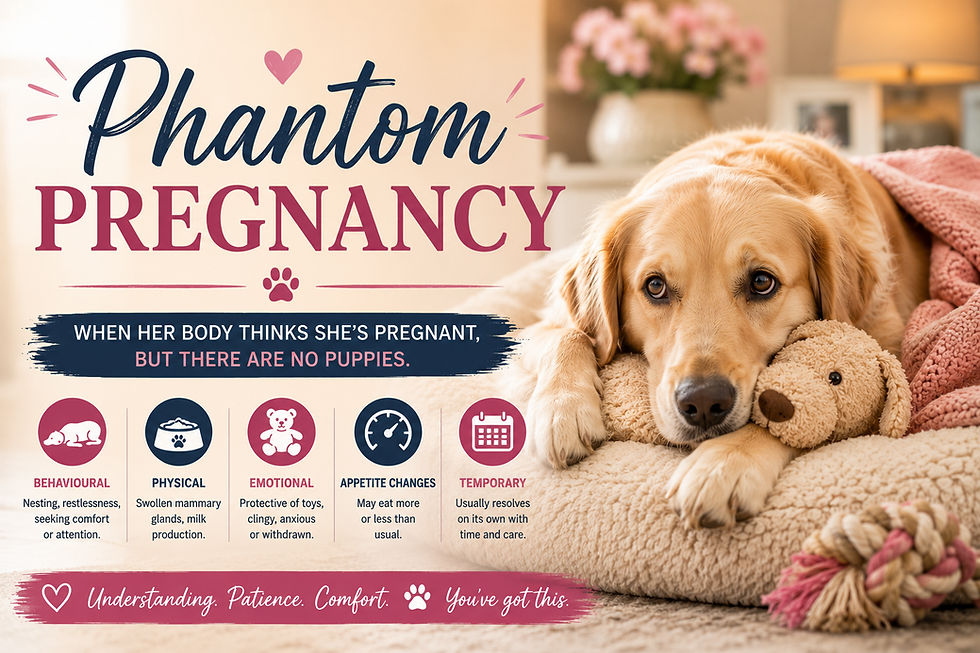
One of the most misunderstood conditions in female dogs is phantom pregnancy.
After a season, hormone levels can convince the body that puppies are expected.
Some females begin:
Collecting toys
Building nests
Producing milk
Becoming protective
Sleeping more
Showing maternal behaviour
Although usually harmless, veterinary advice should be sought if symptoms are severe, prolonged or your dog seems unwell.
Did You Know?
Phantom pregnancy is surprisingly common and does not mean anything has gone wrong.
It is a normal hormonal response in many unspayed females.
Female vs Male Dogs
People often ask...
Which is easier?
The honest answer is:
Neither.
Each has strengths.
Female Dogs
Often described as
Mature sooner
More focused
Independent
Loyal
Observant
Male Dogs
Often described as:
Playful
Social
Affectionate
Easy-going
Silly
These are only general tendencies.
Personality always matters more than sex.
Are Female Dogs Easier to Train?
Some trainers believe females mature slightly earlier and may focus for longer during training sessions.
Others notice little difference.
The biggest influences on success remain:
Positive reinforcement
Consistency
Early socialisation
Patience
Short enjoyable training sessions
Good training always beats stereotypes.
Should You Walk a Female Dog During Heat?
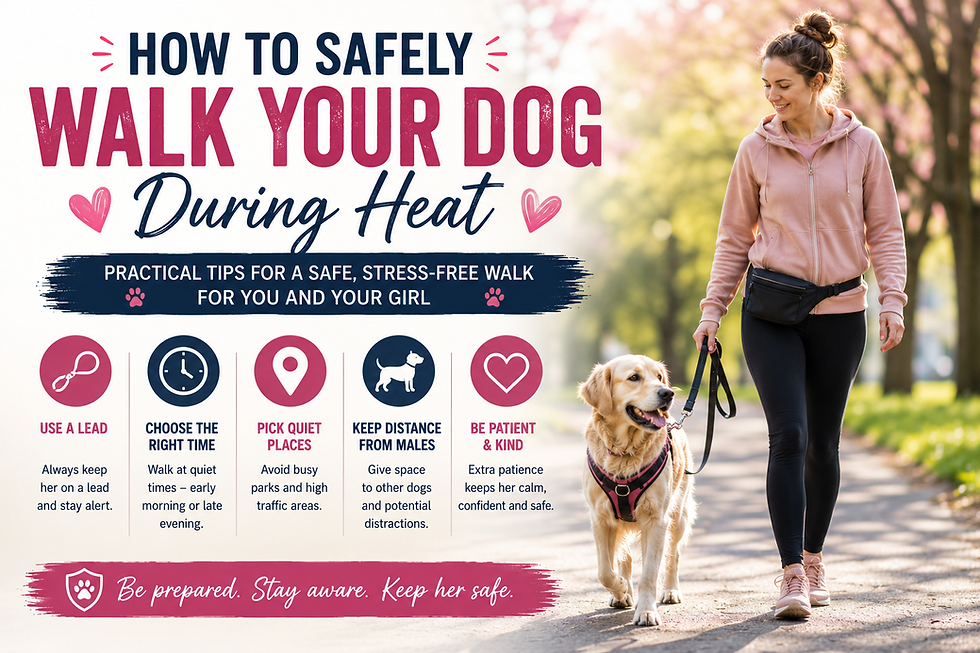
Yes—but carefully.
Many owners continue walking their dogs while taking sensible precautions.
Consider:
Quiet walking times
Keeping her on a lead
Avoiding dog parks
Avoiding areas where many dogs gather
Remaining aware of loose dogs
Exercise remains important for physical and mental wellbeing.
Spaying – Benefits and Considerations
Spaying prevents future heat cycles and eliminates behaviours directly linked to them, such as attracting male dogs and the risk of unwanted pregnancy.
However, research into long-term behavioural effects is mixed.
Some studies suggest behaviour changes little, while others report differences in fearfulness or sensitivity in certain breeds or individuals.
The ideal timing depends on factors such as:
Breed
Size
Health
Lifestyle
Veterinary advice
There is no single answer suitable for every dog.
Nutrition, Muscle & Overall Health
Behaviour is only one part of your dog's wellbeing.
Maintaining a healthy body condition throughout life helps support:
Muscle
Joints
Mobility
Recovery
Overall health
Some females naturally eat less during certain stages of their cycle.
Providing a balanced diet with quality protein, healthy fats, vitamins and minerals helps support normal muscle maintenance and overall condition.
For active, working, show and senior dogs, appropriate nutritional support can complement a balanced diet and regular exercise.
Common Myths
❌ Female dogs are always calmer.
✅ Every dog has an individual personality.
❌ A season completely changes personality.
✅ Hormones influence behaviour temporarily but rarely change a dog's underlying temperament.
❌ Every female experiences phantom pregnancy.
✅ Many never do.
❌ Female dogs are easier than males.
✅ Success depends far more on breeding, training, socialisation and responsible ownership.
Frequently Asked Questions
How often do female dogs come into season?
Most every six to eight months, although this varies with breed and individual.
Can a female become pregnant during her first season?
Yes.
Can she still exercise?
Yes, but keep her on a lead during fertile periods and avoid contact with entire males.
Why has she stopped eating?
Temporary appetite changes are common during a season.
If appetite loss is prolonged or accompanied by illness, contact your veterinarian.
Should I worry if she becomes clingy?
Usually not.
Many females temporarily seek more reassurance during hormonal changes.
Final Thoughts
Living with a female dog means sharing life with an intelligent, adaptable companion whose behaviour is influenced by a unique blend of genetics, learning, environment and hormones.
Understanding these natural changes helps you respond with patience rather than confusion.
Whether your dog is playful, independent, affectionate or quietly observant, recognising what is normal throughout each stage of life allows you to provide the care, training and support she needs.
At the end of the day, the strongest bond isn't built by controlling behaviour—it's built by understanding it.
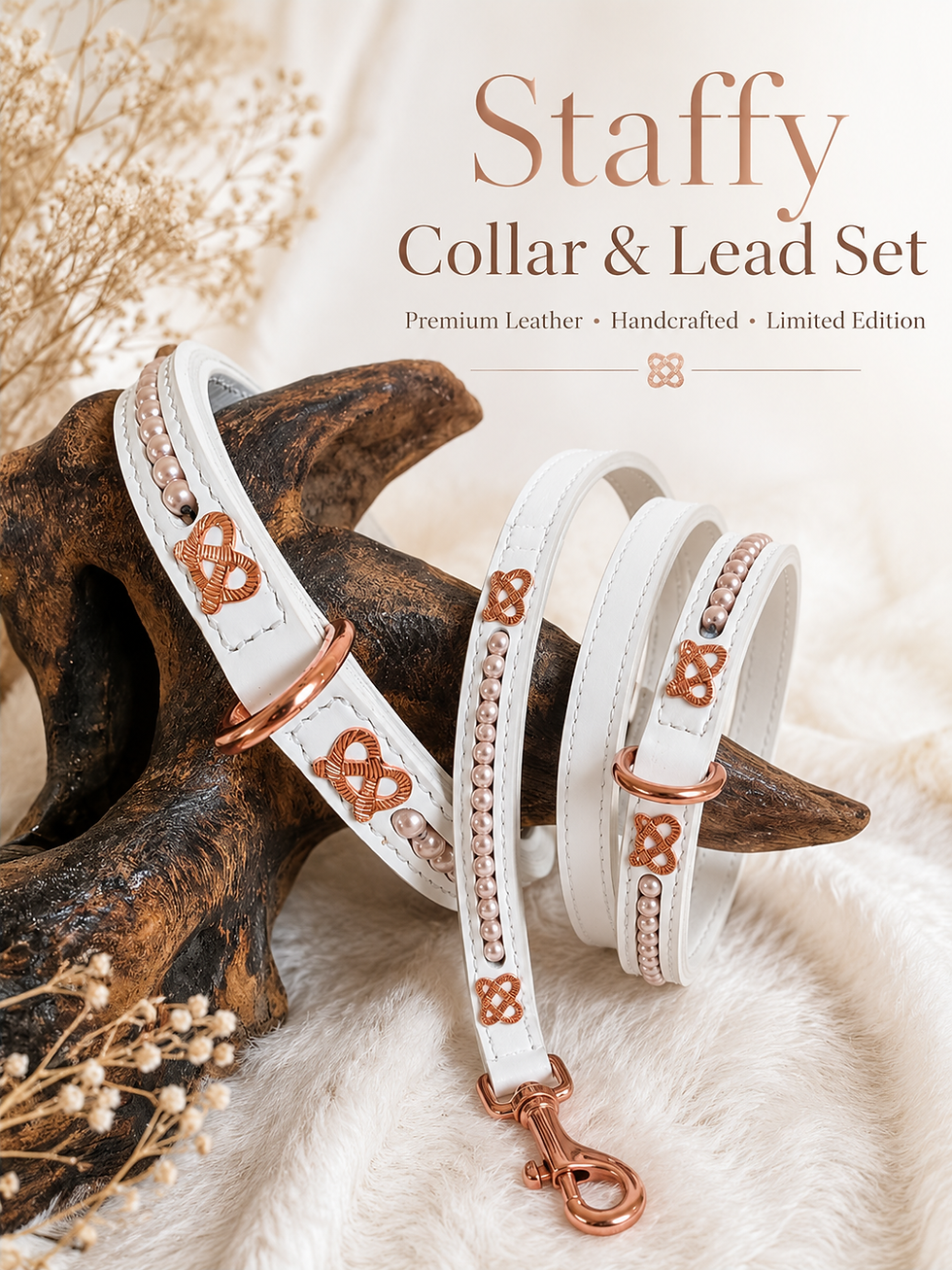
Treat Her to a Premium Leather Collar She'll Wear with Pride

Your female dog deserves equipment that's as comfortable as it is beautiful. At Advanced Animal Care, our premium leather collars are handcrafted by skilled artisans using full-grain buffalo leather and vegetable-tanned leather, making them a safe, non-toxic choice for your dog.
Designed for everyday comfort and timeless style, each collar features quality craftsmanship, durable fittings and luxurious detailing. Whether she's an adventurous companion, a show dog or a much-loved family pet, our collars are built to last while looking exceptional.
✔ Handcrafted by skilled artisans
✔ Premium full-grain buffalo leather
✔ Vegetable-tanned – safe and non-toxic for dogs
✔ Comfortable for everyday wear
✔ Limited edition designs
✔ Exceptional quality at well below the recommended retail price
Because every remarkable girl deserves a collar that's just as special as she is.
Explore the Advanced Animal Care collection and discover handcrafted collars made to be admired for years to come.


Comments