


THE ULTIMATE TRUTH ABOUT MUSCLE BREEDS: WHY MODERN DOGS HAVE LOST THEIR PHYSIQUE — AND HOW TO BUILD IT BACK SAFELY
- May 22
- 6 min read

If you’ve ever searched:
why my dog has no muscle
muscle loss in older dogs
how to build muscle on a Staffy
best exercise for muscular dogs
why my Bully looks skinny
…you are not alone.
More owners than ever are noticing that powerful dog breeds no longer look like the strong, athletic dogs they were originally bred to be.
From Staffordshire Bull Terriers and Rottweilers to American Bulldogs, Cane Corsos, Boxers and Mastiffs, many modern dogs are losing muscle tone, stamina, mobility, and physical condition far earlier than they should.
This article explains why.
And more importantly — how to improve it safely, naturally, and responsibly.
WHY SO MANY MUSCLE BREEDS HAVE LOST THEIR PHYSIQUE
Strong breeds are genetically designed for:
power
endurance
athleticism
pulling strength
agility
muscular development
working ability
Yet many dogs today appear:
soft
flat
weak
under-conditioned
overweight
lacking muscle definition
This is not always genetics.
Lifestyle plays a massive role.
WALKING ON A LEAD IS NOT ENOUGH
Many owners believe daily walks automatically keep a dog fit.
The reality is more complicated.
A slow pavement walk is excellent for:
mental stimulation
bonding
routine
toilet breaks
basic movement
But it does very little for muscular development.
Muscle breeds build condition through:
resistance
varied terrain
climbing
sprinting
pulling
dynamic movement
controlled power exercise
Without physical challenge, muscle simply does not develop properly.

THE BIGGEST REASON DOGS LACK MUSCLE
Many powerful breeds are simply under-exercised.
Not intentionally.
Modern lifestyles often limit dogs to repetitive, low-intensity walks with very little real physical stimulation.
Dogs need more than routine movement.
They need:
hill walks
varied terrain
off-lead running in safe areas
tug games
core activation
controlled strength-based activity
mentally engaging exercise
A dog’s body often reflects the lifestyle it lives.

MuscleMatrix Muscle Gainer Support
EXERCISES THAT HELP BUILD SAFE, FUNCTIONAL MUSCLE
Building muscle should never mean pushing dogs beyond their limits.
The goal is balanced conditioning, mobility, and long-term health.
Some excellent exercises include:
Hill Walking
Helps engage:
glutes
hindquarters
core muscles
Off-Lead Sprinting
Supports:
explosive movement
coordination
athletic conditioning
Tug Games
Can help strengthen:
neck muscles
shoulders
grip engagement
Woodland & Uneven Terrain Walks
Helps activate:
stabiliser muscles
joints
coordination
Controlled Resistance Work
Can help support:
core strength
posture
movement control
Consistency matters far more than intensity.
WHY MUSCLE MATTERS FOR HEALTH
Muscle is not just about appearance.
Healthy muscle helps support:
joints
posture
movement
mobility
stability
recovery
healthy ageing
Dogs with poor muscle condition may tire faster and struggle more with physical activity as they age.

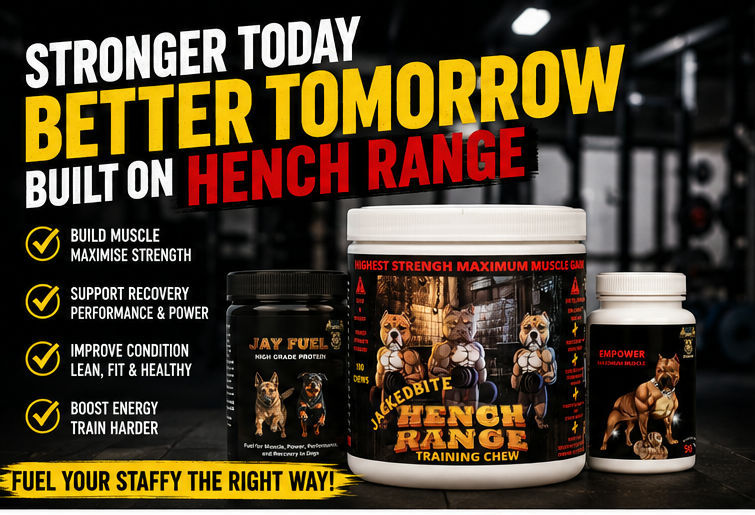
SUPPORTING MUSCLE, CONDITION & RECOVERY WITH HENCH RANGE
Training and exercise are only part of the picture.
Many owners of active and muscular breeds also choose advanced canine nutrition to help support:
muscle maintenance
healthy weight gain
recovery after exercise
stamina and condition
protein utilisation
overall performance support
The Hench Range is designed for strong, active breeds and may help support dogs during conditioning, recovery, and muscle maintenance when combined with proper exercise and nutrition.
Popular options include:
muscle support formulas
weight gainer support
recovery blends
high-protein performance nutrition
amino acid support supplements
Ideal for active dogs, working breeds, sporting dogs, and muscular breeds requiring additional nutritional support alongside a healthy lifestyle.

MUSCLE LOSS IN OLDER DOGS
As dogs age, many naturally lose muscle mass.
This is often referred to as canine sarcopenia.
However, poor lifestyle habits can
accelerate muscle loss significantly.
Contributing factors include:
inactivity
poor nutrition
low protein intake
chronic inflammation
joint discomfort
arthritis
spinal issues
lack of conditioning
obesity
Older dogs still benefit from gentle, appropriate exercise and movement.
Retirement to the sofa alone often worsens mobility decline.

WHY NUTRITION MATTERS FOR MUSCLE DEVELOPMENT
Exercise alone is not enough.
Without proper nutrition, the body cannot effectively repair or maintain muscle tissue.
Strong breeds often benefit from:
high-quality protein
essential amino acids
healthy fats
recovery nutrition
balanced minerals and vitamins
Good nutrition helps support:
recovery
energy
tissue repair
lean condition
* healthy movement
THE ROLE OF AMINO ACIDS IN ACTIVE DOGS
Amino acids are the building blocks of muscle tissue.
They help support:
muscle maintenance
recovery
tissue repair
metabolism
endurance
physical conditioning
Active and muscular breeds may place greater demand on these systems due to their body structure and activity levels.

JOINT STRESS IN POWERFUL BREEDS
Large muscular dogs place more pressure on:
hips
elbows
shoulders
knees
spine
Without proper conditioning and nutrition, this stress may affect long-term mobility and comfort.
Supporting muscle condition may also help support joint stability and movement quality.
THE IMPORTANCE OF PROPER EQUIPMENT
Strong dogs require equipment designed for:
comfort
durability
pressure distribution
control
long-term wear
Poorly designed collars may:
rub the neck
create pressure points
damage coat condition
reduce comfort during walks
Many owners now prefer wide full-grain leather collars designed specifically for muscular breeds.
Premium leather collars are often chosen for:
strength
fit
comfort
longevity
support during handling
SAFE MUSCLE SUPPORT FOR DOGS
Supplements should never replace:
exercise
proper nutrition
conditioning
veterinary care
However, some owners choose advanced canine nutrition products to help support:
recovery
muscle maintenance
protein utilisation
energy production
joint comfort
overall physical condition
The goal should always be support — not unrealistic transformation claims.

BUILDING A STRONGER, HEALTHIER DOG
A healthy physique is built through consistency.
The best results come from combining:
quality nutrition
safe exercise
recovery
conditioning
proper equipment
responsible ownership
Powerful breeds thrive when their physical and mental needs are understood properly.
FINAL THOUGHTS
Strong breeds were designed for movement, athleticism, and power.
But modern lifestyles often fail to meet those needs.
If you want your dog to maintain:
healthy muscle
better stamina
stronger condition
improved mobility
long-term wellbeing
…then training, nutrition, recovery, and proper care all matter.
Powerful dogs deserve care that matches their physical demands.

FREQUENTLY ASKED QUESTIONS
Why does my dog have no muscle?
Lack of varied exercise, poor nutrition, ageing, illness, or inactivity can all contribute to poor muscle condition.
Do muscular dogs need more protein?
Active and muscular breeds often benefit from high-quality protein sources that support muscle maintenance and recovery.
Can older dogs rebuild muscle?
Many older dogs can improve muscle condition through gentle exercise, mobility work, and proper nutrition.
Are amino acids good for dogs?
Amino acids help support muscle repair, recovery, metabolism, and overall physical condition.
What exercise builds muscle in dogs?
Hill walking, controlled running, tug games, uneven terrain walks, and resistance-based activities may help support muscle development safely.
What collars are best for strong breeds?
Wide, durable collars made from quality materials such as full-grain leather are often preferred for comfort, strength, and longevity.

WHY MANY OWNERS OF STRONG BREEDS AVOID HARNESSES FOR DAILY CONDITIONING
Harnesses can be useful in certain situations, especially for safety, training, or medical reasons.
However, many owners of muscular and powerful breeds prefer collars for regular walking, conditioning, and active movement.
Why?
Because some harnesses may interfere with natural movement and comfort during exercise.
Strong breeds generate significant power through:
shoulders
chest
upper legs
core movement
stride extension
A poorly fitted harness may:
rub under the arms
trap heat and moisture
irritate the belly during movement
restrict shoulder extension
create friction during running
hold dirt, mud, bacteria, and moisture against the coat
In wet weather, harnesses can also collect:
mud splashes
standing water
bacteria from the ground
urine contamination from other dogs
Unlike collars, harnesses cover a much larger area of the dog’s body.
For active dogs running through fields, woodland, mud, or wet terrain, this can become uncomfortable during longer sessions.
Some heavy-duty harnesses may also add unnecessary bulk and weight, particularly for dogs doing:
sprint work
hill climbing
conditioning
free movement exercise
A simple way to think about it is this:
Imagine wearing a thick chest harness tightly around your body during exercise, running, sweating, and climbing hills every day.
Most people would eventually experience:
rubbing
trapped heat
restricted movement
discomfort
pressure points
Dogs can experience similar issues if equipment is poorly fitted or overused.
Many experienced owners of strong breeds therefore prefer:
wide collars
properly fitted leather collars
lightweight movement-friendly equipment
especially during conditioning work and active exercise.
Comfort, movement, and freedom of motion all matter when supporting healthy muscle development and long-term mobility.
WHY MANY OWNERS PREFER VEGETABLE TANNED LEATHER
Vegetable tanned leather is often preferred for strong dog collars because it is durable, breathable, and made using more traditional tanning methods.
Unlike heavily chemically processed leather, quality vegetable tanned leather can become softer and more comfortable over time while remaining extremely strong.
Many owners also prefer it because it is:
long-lasting
more natural
comfortable against the coat
less harshly processed
ideal for everyday wear in powerful breeds
For muscular dogs, comfort and durability both matter.


Comments