


Top 10 Dog Breeds Bred Primarily for Companionship (Essentially "Bred for Nothing" Work-Related
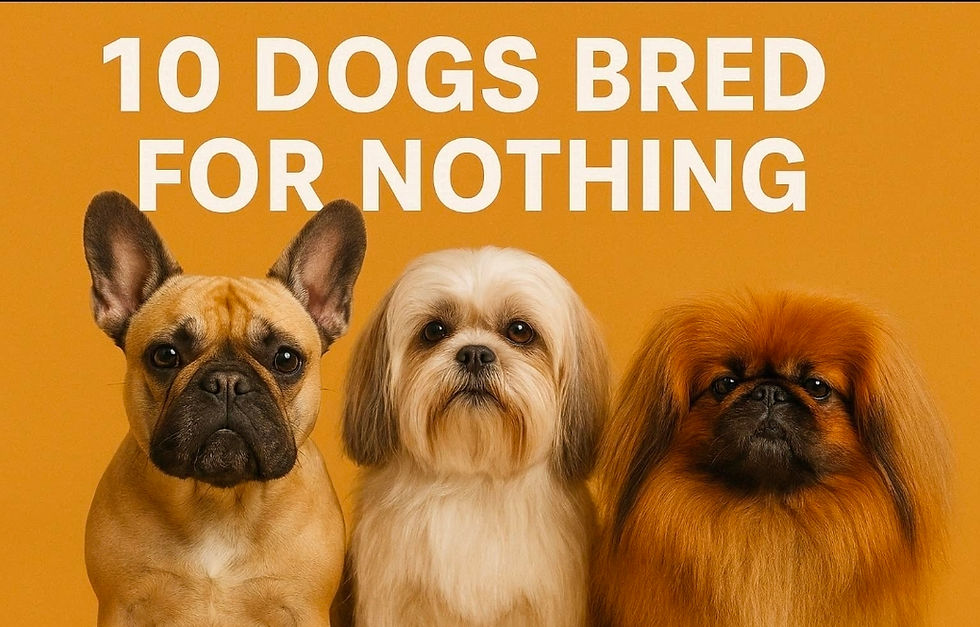
Many dog breeds were developed for specific jobs—herding, hunting, guarding, or retrieving. Others, especially toy and certain lap-dog breeds, were selectively bred over centuries purely as companions, status symbols, or lap warmers for royalty and nobility. They had no working function beyond providing affection, entertainment, and comfort.
Here’s a top 10 list of breeds most famously bred with little to no practical working purpose, ranked roughly by how consistently they appear in companion/lap-dog discussions:

Shih Tz,u
Bred in ancient China (often linked to Tibetan monks or imperial courts) exclusively as royal lap dogs and companions. Their main "job" was to warm laps and provide affection—no herding, hunting, or guarding required.
Pekingese
Another ancient Chinese imperial favorite, bred for centuries as companions to emperors and nobility. They were prized for their looks and companionship, sometimes even carried in the sleeves of robes.

Pug
Originating in China over 2,000 years ago, Pugs were specifically developed as companions for royalty. They were beloved for their charming personalities and lap-sitting abilities.
Cavalier King Charles Spaniel
Bred as a toy spaniel for British royalty and aristocracy to serve as lap dogs and gentle companions. They have a strong history as "comforter" dogs rather than workers.

Maltese
One of the oldest toy breeds, developed as a companion and lap dog for ancient Mediterranean nobility. Their role was purely social and affectionate.
Bichon Frise
French and Mediterranean origins as a companion dog for the wealthy. They were popular court dogs known for their cheerful, cuddly nature.

Havanese
Cuba’s national dog, bred as a companion and family pet for Cuban aristocracy. They were kept for charm and companionship rather than any task.
Bolognese
Italian Renaissance-era companion bred for nobility. Often gifted to dignitaries as a luxury lap dog.

French Bulldog
While they have some distant bulldog ancestry, modern Frenchies were developed more as companion dogs for city dwellers and lace workers in France, excelling at being affectionate pets.

Chihuahua (or Toy breeds like Papillon / Pomeranian in some contexts)
Often cited as extreme companion breeds with minimal working history beyond being personal pets. Tiny size made them natural lap or "purse" dogs.
Honorable Mentions
Boston Terrier — Sometimes called the "American Gentleman," bred more for companionship than intense work.
Coton de Tulear — Madagascar’s "Royal Dog," bred as a companion.
Many Toy Group and some Non-Sporting breeds fall into this category overall.
Key Characteristics of These Breeds
Low to moderate exercise needs — They match well with the "weakest/low-energy" breeds discussed earlier.
Strong bonding — They tend to be velcro dogs that love human attention.
Potential drawbacks — Many are prone to separation anxiety, require grooming, or have health issues related to their small or brachycephalic builds.
History — Owning such a dog was often a luxury symbol, as they consumed resources without providing labor
These breeds excel today as therapy dogs, emotional support animals, or family pets precisely because they were "bred for nothing" but love and connection. If you're looking for a working dog (herding, guarding, etc.), look to Sporting, Herding, or Working groups instead



Comments