


Toxic Foods and Everyday Dangers for Dogs: A Complete UK Guide

Dogs are notorious scavengers with a talent for turning “just a little taste” into an emergency vet visit. Many common human foods, household items, and garden products can be highly toxic to our canine companions. This guide covers the biggest risks, including some lesser-known hazards, with special attention to peanut butter and UK-specific considerations.
Why Dogs Are Vulnerable
Dogs metabolise substances differently from humans. What seems like a harmless snack can cause vomiting, diarrhoea, organ failure, seizures, or even death. Smaller dogs and certain breeds are often more sensitive, and effects can be delayed. If you suspect poisoning, contact your vet or the Animal Poison Line immediately (they have UK-specific advice
Why This Matters: The Scale of the Problem
Poisoning incidents are surprisingly common.
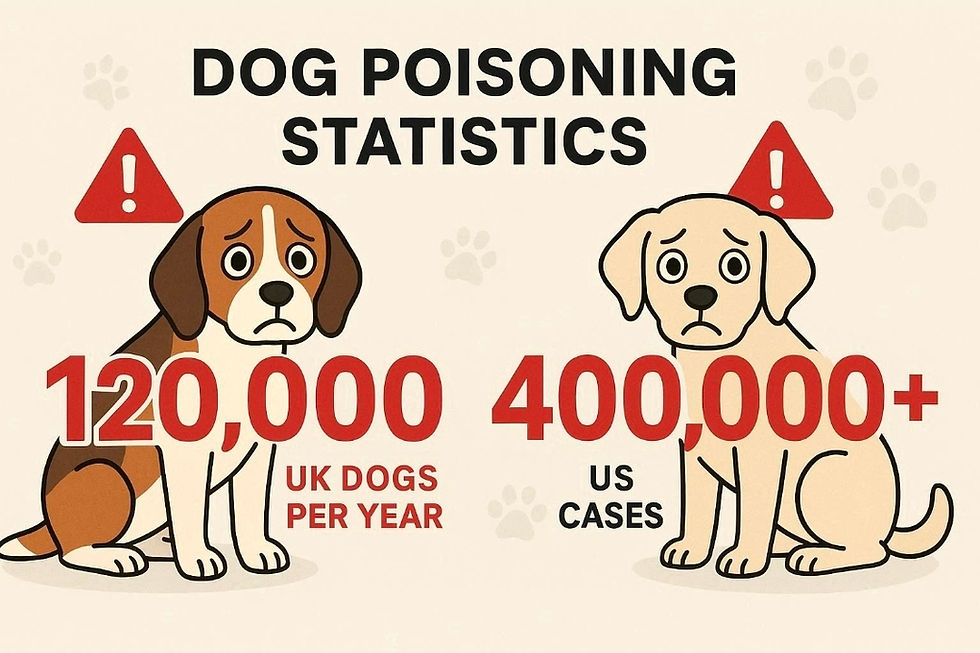
In the UK, vets treat an estimated nearly 120,000 dogs for food or substance poisoning annually — roughly 323 dogs every day.
One in six pet owners whose animals were poisoned believed it might have been deliberate, though most cases are accidental.
In the US, the ASPCA Animal Poison Control Center (APCC) responds to over 400,000 calls per year and reached its 5 millionth case in 2025.
Human foods and medications rank among the top concerns, with a notable rise in cases involving grapes/raisins (over 9,300 cases early in 2025).
These figures likely underrepresent the true total, as not all incidents are reported or require vet visits. Smaller dogs and certain breeds tend to be more vulnerable, with effects sometimes delayed by hours or days.


Most Dangerous Foods to Keep Away from Dogs
Chocolate — The classic offender. Dark chocolate, cocoa powder, and baking chocolate are the most toxic due to theobromine and caffeine. Symptoms include restlessness, rapid heart rate, tremors, and seizures.
Grapes, raisins, sultanas & currants — Can cause sudden kidney failure even in tiny amounts. No one knows exactly why, and not every dog reacts the same, so never risk it.
Onions, garlic, leeks, chives & shallots — Raw, cooked, or powdered forms damage red blood cells and can lead to anaemia. Watch out for onion gravy, garlic bread, or stocks.
Xylitol (artificial sweetener) — Extremely dangerous. Found in sugar-free gum, mints, some baked goods, and certain peanut butters. It causes a rapid drop in blood sugar and potential liver failure.
Macadamia nuts — Cause weakness, vomiting, tremors, and high body temperature.
Avocado — Persin can upset the stomach; pits are a choking hazard.
Alcohol & raw yeast dough — Yeast dough expands and ferments in the stomach, producing alcohol. Cooked bones, fatty scraps, and excessive salt are also risky (pancreatitis or sodium poisoning).
Pitted fruits (cherries, peaches, plums, apricots) — Flesh is usually okay in tiny amounts, but pits and stones contain cyanide compounds when crushed and are choking/blockage risks.
Nutmeg, mouldy foods, wild mushrooms, and star fruit — Various toxic effects ranging from neurological issues to organ damage.
UK kitchen tip: Check labels on ready meals, sauces, and gravies — many contain onion or garlic powder.
Other Kitchen and Food-Related Risks
Fatty or greasy foods (bacon, scraps): Trigger painful pancreatitis.
Salt (excessive): Leads to sodium poisoning, thirst, tremors, and seizures.
Citrus (peels, stems, large amounts): Essential oils and acids cause irritation.
Milk and dairy: Many dogs are lactose-intolerant, resulting in digestive upset.
Raw or undercooked meat, eggs, bones: Bacterial risks (Salmonella) and splintering bones causing obstructions or injuries.
Spoiled foods, compost, or moldy items: Mycotoxins can cause tremors, seizures, or liver damage.
Coconut and coconut oil (large amounts): High fat may cause stomach upset or pancreatitis.
Pitted fruits (cherries, peaches, plums, apricots) and fruit pits/seeds (apples, etc.):
Cyanide compounds if crushed; choking/blockage hazards.
Star fruit, wild mushrooms, nutmeg: Kidney issues, organ damage, or neurological effects.
Corn on the cob: Indigestible cob causes blockages.
Cooked bones Splinter easily and cause internal injuries.
Tea leaves/bags, baking soda/powder (large quantities): Various imbalances or toxicity.
Lesser-known food hazards: Cocoa mulch (garden product with chocolate-like toxins), certain vitamin supplements/gummies (xylitol or iron), and unbaked bread dough.


Peanut Butter for Dogs – UK Specific Advice
Peanut butter is a firm favourite for stuffing Kong toys, but not all peanut butters are safe.
The xylitol risk: In the US, some “sugar-free,” low-carb, or protein-enriched peanut butters contain xylitol.
In the UK, standard supermarket brands (Sun-Pat, Meridian, Whole Earth, Skippy, supermarket own-brands) rarely contain xylitol. However, ingredients can change, and some imported or specialist low-sugar products might include it.
Safe choices in the UK: Go for natural, unsweetened, unsalted versions with minimal ingredients (ideally just peanuts). Dog-specific brands like Peamutt Butter or Pets Purest are widely available and formulated to be safe. KONG also makes its own Easy Treat.
Moderation is key: Peanut butter is high in fat and calories. Overuse can lead to weight gain or pancreatitis. Use sparingly as a treat or enrichment tool, and always freeze-filled Kongs for longer-lasting fun.
Rule of thumb: Read the ingredients every time. If you see “xylitol,” “birch sugar,” or “wood sugar” — put it back.
Other Hidden Household Dangers
Human medications (ibuprofen, paracetamol, etc.) — One of the top causes of poisoning in dogs.
Antifreeze (ethylene glycol) — Sweet taste attracts dogs; lethal to kidneys in tiny amounts.
Cleaning products, liquid potpourri, essential oils (tea tree, pennyroyal, etc.), and fabric softener sheets.
Rodenticides, slug pellets, insecticides, and garden chemicals.
Glow sticks — Cause intense mouth irritation.
Pennies (post-1982 zinc) and some hardware items.

Toxic Plants & Garden Items (Common in UK Gardens)
Sago palm (and cycads) — Highly toxic, especially the seeds; can cause severe liver failure.
Azaleas, rhododendrons, oleander, daffodil bulbs, tulips, hyacinths, philodendron.
Cocoa mulch — Contains chocolate-like toxins.
Blue-green algae in ponds or stagnant water.
Latest Research and Insights
Grapes/raisins: Tartaric acid is a leading suspected culprit, but individual sensitivity varies widely. Cases continue to rise as awareness grows unevenly.
Xylitol and chocolate: Mechanisms are well-established (hypoglycemia/liver failure for xylitol; methylxanthines for chocolate), with ongoing emphasis on prevention.
Top toxins in recent ASPCA data (2024) include chocolate, grapes/raisins, xylitol, and medications.
Human foods remain a consistent second-tier category after certain chemicals.
aspca.org
Research highlights that many incidents involve well-intentioned owners sharing “treats” or pets accessing unsecured trash/medicines.
Climate and seasonal factors (holidays, gardening) influence spikes.
Prevention Tips for UK Dog Owners
Dog-proof your home — Use child locks on cupboards, keep bins secure (especially during Christmas or BBQs), and never leave food or drinks unattended.
Train “leave it” — A strong recall and “drop it” command can save lives.
Read labels religiously — Especially on imported foods, “sugar-free” products, and new treats.
Holiday vigilance — Easter (chocolate), Christmas (raisins, alcohol, fatty foods), and Bonfire Night are high-risk periods.
Have emergency numbers ready:Your vet
Animal Poison Line (UK)
Vets Now or similar out-of-hours services
Final Thoughts
Most dog poisonings are preventable with awareness and good habits. While UK peanut butter is generally safer regarding xylitol than some American varieties, always check labels and choose dog-friendly options when using it in Kongs or as a treat.
Your dog relies on you to keep their environment safe. When in doubt, skip the table scraps and stick to high-quality dog food and approved treats.
A few extra seconds of caution can mean years of happy, healthy adventures together.
Stay safe, and give your furry friend a (dog-safe) treat from me today!
Sources & Further Reading: ASPCA Animal Poison Control, Pet Poison Helpline, and UK veterinary resources.
Always consult a professional for specific cases.


Comments