


UK Dog Law Series The Dogo Argentino: Argentina's Legendary Big Game Hunter & Why It's Banned in the UK
- 5 days ago
- 6 min read

Table of Contents
What Is a Dogo Argentino?
How Was the Dogo Argentino Created?
What Was It Originally Bred For?
Is the Dogo Argentino Aggressive?
Why Is the Dogo Argentino Banned in the UK?
Can You Legally Own One?
Common Myths vs Facts
Frequently Asked Questions
Final Thoughts
The Dogo Argentino: Argentina's Legendary Big Game Hunter

Imagine a dog powerful enough to track a wild boar through dense forest...
Strong enough to hold its ground against a puma...
Yet gentle enough to return home and curl up beside its family.
That was the vision of one man nearly 100 years ago.
The Dogo Argentino is one of the world's most impressive working breeds. Its muscular white coat, athletic build and fearless reputation have earned admiration across the globe—but they've also made it one of the UK's prohibited dog types.
So, is the Dogo Argentino really the dangerous dog many people believe it to be?
Or is there much more to this remarkable breed than the headlines suggest?
Let's find out.
What Is a Dogo Argentino?

The Dogo Argentino was developed in Argentina during the 1920s by Dr Antonio Nores Martínez, a medical doctor and passionate dog breeder.
His ambition wasn't simply to create a powerful dog.
He wanted the ultimate hunting companion
.
The perfect dog needed to be:
Powerful enough to hold dangerous game.
Athletic enough to run for miles.
Intelligent enough to work in a pack.
Brave enough to face wild boar and puma.
Loyal enough to become a trusted family companion.
It was an ambitious project—and after years of careful breeding, the Dogo Argentino was born.
How Was the Dogo Argentino Created?
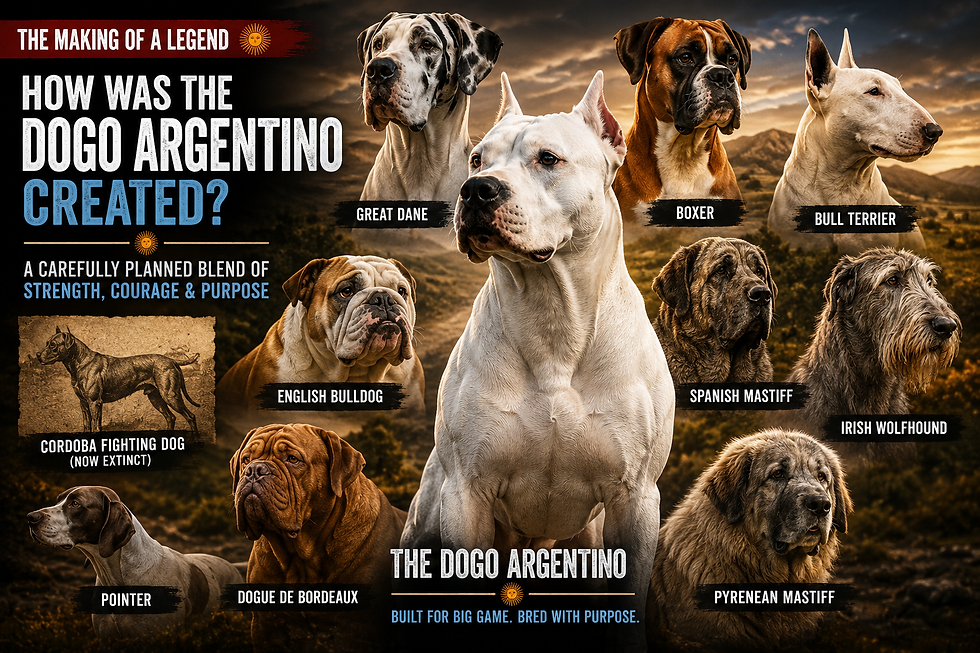
Dr Martínez didn't rely on a single breed.
Instead, he carefully combined several breeds, each chosen for a specific characteristic.
These included:
Cordoba Fighting Dog (now extinct)
Great Dane
Boxer
Bull Terrier
English Bulldog
Spanish Mastiff
Irish Wolfhound
Pointer
Dogue de Bordeaux
Pyrenean Mastiff
Key Foundation and Contributing Breeds
Cordoba Fighting Dog (Viejo Perro de Pelea Cordobés) — The now-extinct primary base. A strong, courageous fighting dog (itself derived from earlier crosses like Mastiffs, Bulldogs, and Bull Terriers).
Great Dane — Added height and size.
Boxer — Contributed agility, tractability, and energy.
Bull Terrier — Provided the signature white coat, tenacity, and courage.
English Bulldog — Added powerful jaws, chest depth, and boldness.
Spanish Mastiff — Contributed power and strength.
Irish Wolfhound — Brought hunting instinct, speed, and height.
Pointer — Enhanced scenting ability and hunting drive.
Dogue de Bordeaux — Added powerful jaws and head strength.
Pyrenean Mastiff (Great Pyrenees) — Imparted white coat, calm temperament, size, and rusticity.
Each contributed something different, including strength, stamina, scenting ability, courage, athleticism and loyalty.
The result was a powerful yet agile dog capable of working all day in difficult terrain
.
What Was It Originally Bred For?

Unlike many guardian breeds, the Dogo Argentino wasn't created to guard homes.
Its main purpose was big-game hunting.
Working alongside hunters, Dogos tracked
and held animals including:
Wild boar.
Puma.
Wild pigs.
Other dangerous game.
This demanding work required:
Incredible endurance.
Powerful muscles.
Strong jaws.
Courage.
Excellent teamwork.
Despite their hunting role, the breed was also expected to remain trustworthy around people.
Aggression towards handlers was never considered desirable.

Is the Dogo Argentino Aggressive? The Truth Behind the Reputation
This is probably the question people ask most.
The honest answer is no—not simply because it's a Dogo Argentino.
Like every dog, behaviour is influenced by a combination of:
Genetics.
Responsible breeding.
Early socialisation.
Training.
Health.
Environment.
The owner's experience.
The Dogo Argentino was developed to be courageous enough to hunt dangerous game, but also reliable enough to work closely alongside people and other dogs.
A well-bred Dogo is often described as:
Loyal.
Confident.
Intelligent.
Calm around its family.
Protective when necessary.
Highly athletic.
However, this is not a breed for inexperienced owners.
Its strength, determination and high energy levels mean it requires consistent training, early socialisation and an owner who understands powerful working breeds.
The truth: The Dogo Argentino isn't naturally aggressive towards people simply because of its breed. Like any large, powerful dog, responsible ownership plays a huge role in shaping behaviour.
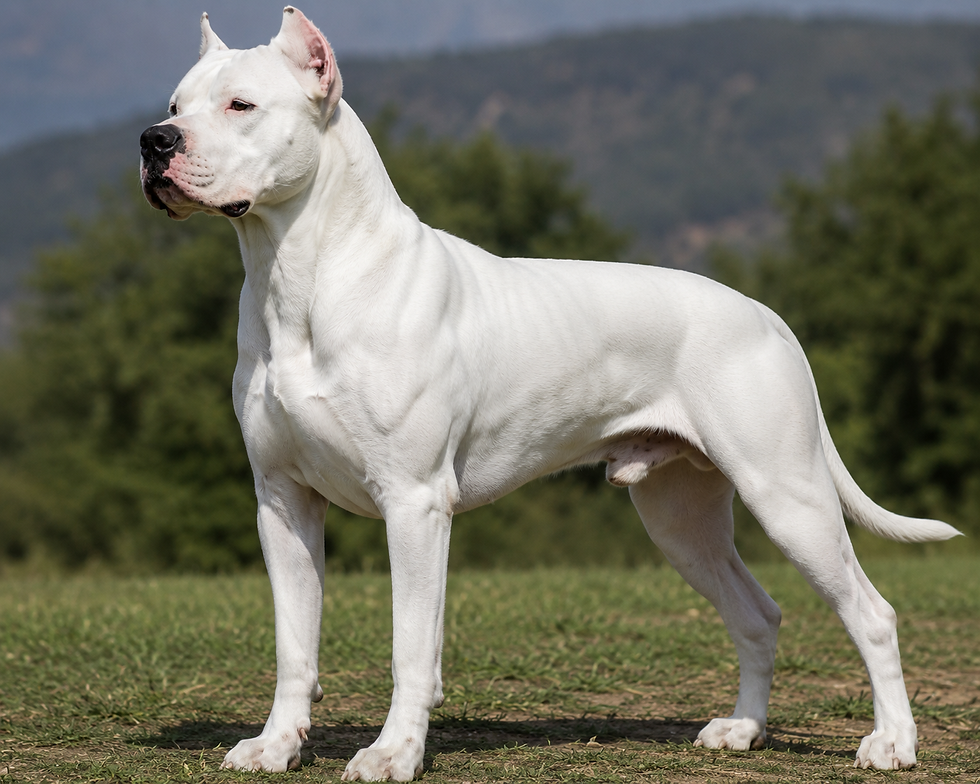
🐾 Did You Know?
An adult Dogo Argentino can weigh around 40–45 kg, yet despite its muscular build, it's known for being surprisingly agile and athletic.
Originally bred to hunt over long distances, these dogs combine strength with stamina—qualities that helped make them one of the world's most respected hunting breeds.
Why Is the Dogo Argentino Banned in the UK?
The Dogo Argentino is one of the dog types prohibited under Section 1 of the Dangerous Dogs Act 1991.
It sits alongside:
Japanese Tosa
Fila Brasileiro
Pit Bull Terrier type
XL Bully (added under separate legislation in England and Wales)
The breed was prohibited because of its historical purpose, physical strength and the potential risk if such a powerful dog were used irresponsibly.
It's important to understand that the legislation does not state every Dogo Argentino is dangerous.
Instead, UK law takes a precautionary approach towards certain powerful dog types that were originally developed for fighting or hunting large, dangerous animals.
Today, it is generally illegal in the UK to own, breed, sell, advertise, exchange or abandon a Dogo Argentino unless strict legal exemption requirements apply.
This article is for general information only and is not legal advice. Always check the latest GOV.UK guidance, as legislation can change.
Common Myths vs Facts
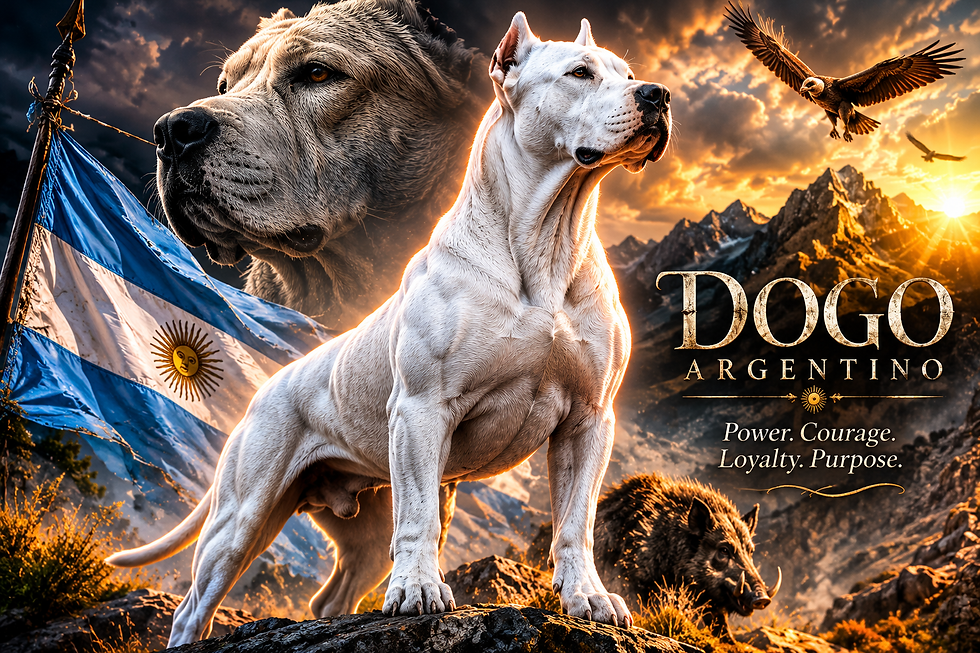
The Dogo Argentino has been surrounded by myths for decades. Let's separate fact from fiction.
Myth: Every Dogo Argentino is aggressive.
Fact: No. A dog's behaviour is shaped by genetics, breeding, training, early socialisation, health and its environment. While the Dogo is a powerful breed with strong instincts, it is not automatically aggressive simply because of its breed.
Myth: They were bred to fight people.
Fact: False. The Dogo Argentino was developed primarily as a big-game hunting dog, bred to track and hold animals such as wild boar and puma. Reliable temperament around people was an important part of the breed's development.
Myth: They're impossible to train.
Fact: Quite the opposite. Dogos are intelligent and capable of learning quickly. However, they are strong-willed and need consistent, positive training from an experienced owner.
Myth: They're just oversized Pit Bulls.
Fact: No. Although both are muscular breeds, they have very different histories and were developed for different purposes. The Dogo Argentino was specifically created in Argentina as a versatile big-game hunting dog.
Frequently Asked Questions
How big is a Dogo Argentino?
Adult males typically stand around 60–68 cm (24–27 inches) at the shoulder and commonly weigh 40–45 kg, although some individuals may be larger.
Why are they white?
The breed's distinctive white coat made it easier for hunters to identify their dogs during hunts, helping distinguish them from the game being pursued.
Are Dogo Argentinos good family dogs?
In countries where ownership is legal, well-bred and well-socialised Dogos are often described as loyal and affectionate with their families. However, because of their size, strength and working heritage, they require experienced handling and ongoing training.
Can you legally own one in the UK?
In most cases, no. The Dogo Argentino is a prohibited type under UK law. Ownership is generally illegal unless strict legal exemption requirements have been met.
Final Thoughts

The Dogo Argentino is one of the world's most impressive working breeds—a dog developed through careful planning, selective breeding and a clear purpose.
Its courage, athleticism and loyalty have earned it admiration across the world, while its immense strength and hunting heritage have also led to strict legal restrictions in the UK.
Whatever your opinion of the breed, one thing is clear: the Dogo Argentino is far more than the myths and headlines often suggest.
Understanding its history helps us understand why it was created, why it is respected by enthusiasts, and why UK law takes the approach it does today.
Knowledge is always more valuable than assumption, and every responsible dog owner benefits from learning the facts before forming an opinion.
Support Your Active Dog

Whether your dog enjoys long countryside walks, working trials or simply an active family life, good nutrition plays an important role in maintaining healthy muscle and everyday mobility.
Premium daily nutrition with quality protein, omega oils, probiotics, digestive enzymes, vitamins and minerals to support active dogs.
Advanced muscle support with amino acids, HMB and key nutrients to help maintain healthy lean muscle and support recovery as part of a balanced diet.
Support strength. Support movement. Support your dog's potential.
👉 Shop the Hench Range today. Official Store
Premium Leather Collars & Leads

Complete your dog's look with the Advanced Animal Care Premium Collection.
Handcrafted from premium leather using traditional craftsmanship and vegetable-tanned hides, our collars and leads are designed for comfort, durability and timeless style.

✔ Handcrafted
✔ Premium Leather
✔ Vegetable Tanned
✔ Built to Last
✔ Exclusive Limited Editions
Designed to stand out. Made to last.
👉 Shop Advanced Animal Care Premium Leather Collars & Leads.
🐾 Did You Know?
If you've enjoyed learning about the Dogo Argentino, don't miss the rest of our UK Dog Law Series, where we explore the fascinating history, purpose and legal status of some of the world's most talked-about dog breeds—including the Japanese Tosa, Fila Brasileiro, Pit Bull Terrier type and XL Bully.
Every breed has a story—and understanding that story helps us become better-informed dog owners.


Comments