


Why Does My Dog Suddenly Stare At The Wall? The Hidden Reasons Owners Should Never Ignore
- 10 hours ago
- 4 min read
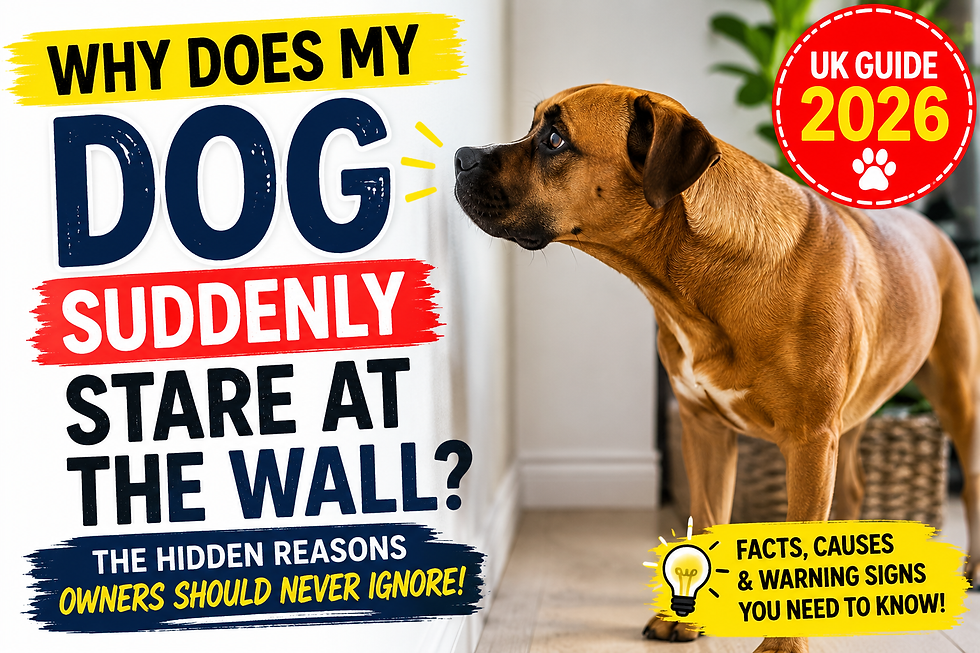
Few things unsettle dog owners more than watching their dog suddenly stare at a wall, corner or empty space for no obvious reason.
One moment they seem normal.
The next they are:
frozen still,
staring silently,
watching an empty corner,
or acting strangely focused on “nothing.”
Many owners instantly wonder:
“Can dogs see ghosts?”
“Is my dog ill?”
“Is this normal?”
“Could it be dementia?”
The truth is, dogs sometimes stare at walls for completely harmless reasons.
But in some cases, unusual staring behaviour can signal:
anxiety,
pain,
hearing changes,
cognitive decline,
vision problems,
or neurological conditions.
This guide explains:
why dogs suddenly stare at walls,
the hidden causes many owners miss,
warning signs to watch for,
and when it may be time to contact a vet.

Why Dogs Stare At Walls Or Corners
Dogs experience the world very differently from humans.
Their:
hearing,
smell,
eyesight,
and instincts
are extremely sensitive.
Sometimes dogs stare because they hear or smell something we cannot detect.
Other times, staring behaviour may indicate confusion, discomfort or behavioural changes.

1. Dogs Hear Sounds Humans Cannot
Dogs can hear frequencies far beyond human hearing.
Your dog may be reacting to:
pipes,
mice in walls,
electrical sounds,
neighbours,
wildlife,
or distant movement.
To humans, the room appears silent.
To dogs, it may be full of interesting noises.
2. Dogs Can Smell Things Inside Walls
A dog’s sense of smell is extraordinary.
Dogs sometimes stare or focus intensely because they smell:
rodents,
insects,
damp,
food,
or unfamiliar scents.
Many owners discover later that their dog was reacting to something genuinely hidden inside the wall or floor.
3. Anxiety & Stress
Dogs experiencing stress may become hyper-focused on surroundings.
Anxious dogs sometimes:
stare,
freeze,
pace,
or appear “on alert.”
Triggers can include:
loud noises,
fireworks,
routine changes,
new pets,
visitors,
or stressful environments.
4. Canine Cognitive Decline (Dog Dementia)
In older dogs, staring at walls can sometimes be linked to cognitive decline.
Senior dogs may become:
confused,
disoriented,
restless,
or forgetful.
Common signs include:
staring into space,
getting stuck behind furniture,
pacing,
barking at night,
or appearing lost inside familiar rooms.
Many owners mistake these signs for “old age” alone.
5. Vision Problems
Dogs with declining eyesight sometimes stare because they are struggling to process surroundings properly.
This may happen gradually with:
cataracts,
ageing,
retinal disease,
or low light conditions.
Some dogs become hesitant or unusually focused in dim lighting.
6. Partial Seizures Or Neurological Problems
In rarer cases, staring episodes may be neurological.
Possible signs include:
twitching,
repetitive licking,
fly biting,
sudden freezing,
confusion,
or unresponsiveness.
If your dog cannot easily be distracted during a staring episode, veterinary advice is important.
7. Attention-Seeking Behaviour
Some dogs learn that unusual behaviour gets attention.
If owners react strongly every time the dog stares or acts oddly, the behaviour may unintentionally become reinforced.
Why Older Dogs Often Stare More
Senior dogs commonly experience changes affecting:
confidence,
sleep,
hearing,
vision,
and awareness.
Older dogs may also:
sleep more during the day,
wake at night,
wander,
or become clingier.
Sudden behavioural changes in older dogs should never be ignored.
When Wall Staring May Be Serious
Contact your vet if staring behaviour appears alongside:
pacing,
confusion,
collapse,
weakness,
seizures,
loss of balance,
sudden aggression,
appetite changes,
or major personality changes.
Especially in senior dogs.
How To Help Dogs Feel More Comfortable
Keep A Calm Routine
Predictable environments help reduce stress.
Increase Mental Enrichment
Sniff walks, scent games and puzzle toys help engage dogs mentally.
Support Senior Dogs Properly
Older dogs often benefit from:
supportive bedding,
calm sleeping areas,
easier home access,
and recovery-focused nutrition.
Monitor Behaviour Changes
Keep track of:
when staring happens,
frequency,
triggers,
and other symptoms.
This can help your vet identify patterns.
Can Nutrition Affect Behaviour & Recovery?
Sometimes.
Poor sleep, discomfort, digestive issues and ageing may affect:
recovery,
confidence,
behaviour,
and overall wellbeing.
Many owners now support active and senior dogs with:
omega oils,
amino acids,
probiotics,
and high-quality protein.

Frequently Asked Questions
Why does my dog stare at the wall suddenly?
Dogs may react to sounds, smells, anxiety, confusion or medical issues. Sudden changes should always be monitored carefully.
Can dogs see ghosts?
There is no scientific evidence dogs see ghosts, but they can detect sounds and smells humans cannot notice.
Is wall staring a sign of dog dementia?
Sometimes. Senior dogs with cognitive decline may stare into space or appear confused.
Why does my dog stare into corners at night?
Dogs are more sensitive to night-time sounds and smells, which can make them focus on areas humans ignore.
When should I worry about staring behaviour?
Seek veterinary advice if staring becomes repetitive or appears alongside confusion, pacing, seizures or personality changes.

Support Healthy Recovery, Mobility & Wellbeing
Many owners now support active and senior dogs with targeted nutrition designed for:
recovery,
muscle maintenance,
mobility,
condition,
and overall wellbeing.
High-quality proteins, amino acids, omega oils and digestive support may help dogs stay healthier and more comfortable alongside proper veterinary care.

Premium Leather Collars & Leads – Advanced Animal Care
Handcrafted by professional artisans using:
premium vegetable-tanned leather,
highest-grade leathers,
zero-waste manufacturing,
and traditional craftsmanship.
✔ Luxury quality
✔ Built for comfort & durability
✔ Limited edition designs
✔ Crafted to last
“You won’t be disappointed in the craftsmanship.”


Comments