


What to Expect in the First 24–48 Hours After Losing a Dog A Gentle UK Guide to Physical Changes, Practical Decisions, and Supporting Surviving Pets
- 4 days ago
- 8 min read

Losing a beloved dog is one of the hardest things any owner can face.
In the first hours afterwards, everything can feel unreal. You may feel numb, heartbroken, panicked, exhausted or unable to think clearly. That does not mean you are coping badly. It means you are grieving.
This guide is here to gently explain what may happen in the first 24–48 hours after a dog dies, including natural physical changes, practical aftercare decisions, and how to support other pets in the home.
There is no perfect way to say goodbye.
There is only the kindest way you can manage in the moment.

Quick Answer: What Should I Do in the First 24–48 Hours After Losing My Dog?
Take time to say goodbye, keep your dog’s body cool and comfortable, and contact your vet or a trusted pet cremation service for guidance.
Natural changes can happen after death, including the body cooling, relaxing, stiffening and later softening again. These changes are normal and are not painful for your dog.
If you have other pets, try to keep their routine steady and watch for changes in appetite, sleep, behaviour or confidence.
You should also give yourself permission to grieve and seek support if you need it. Blue Cross Pet Loss Support offers free and confidential support in the UK through helpline, webchat, email and a Facebook group.

The First Moments: Being Present With Your Dog
In the first moments after your dog has passed, you do not have to rush.
You may want to sit with them, stroke their fur, hold their paw, talk to them, pray, cry or simply sit in silence. Some owners feel peaceful. Some feel shocked. Some feel empty. Some feel guilt, even when they did everything they could.
All of these reactions are normal.
If your dog passed at home, and you are unsure whether they have fully gone, contact your vet for advice. If your dog was put to sleep at the vets, the veterinary team will usually guide you through the next steps.
Many owners choose to wrap their dog gently in a favourite blanket or towel. You may also want to place an absorbent pad or towel underneath, as small amounts of fluid, urine or faeces can sometimes be released after death.
This is a natural physical response.
It does not mean your dog was distressed.

What Physical Changes May Happen After a Dog Dies?
After death, the body begins to change naturally. These changes can feel upsetting if you are not expecting them, but they are normal.
Timings vary depending on your dog’s size, body condition, health, room temperature and how long it takes to arrange aftercare.
In the First 0–2 Hours
Your dog’s body may fully relax.
You may notice:
Eyes remaining partly open
The jaw relaxing
The body beginning to cool
A small release of urine, faeces or fluid
The body feeling heavier or looser when moved
This happens because the muscles are no longer holding tension.
It is normal.
Around 2–6 Hours
Rigor mortis may begin within a few hours.
This is the natural stiffening of the body after death. It often starts around the jaw, neck and front of the body before spreading.
You may also notice that lower areas of the body look darker or purplish. This can happen because blood naturally settles with gravity after circulation has stopped.
Again, this is a normal physical process.
Within the First 12–24 Hours
The body may feel firmer as stiffness becomes more noticeable.
If your dog is at home while you arrange aftercare, try to keep them somewhere cool, quiet and out of direct sunlight. A cool room, tiled floor, garage or shaded area may help.
You can use wrapped ice packs near the body if needed, but do not place ice directly against the skin.
You may notice a mild change in smell or small fluid marks, especially in warmer conditions.
After 24–48 Hours
Rigor mortis may begin to ease, and the body may soften again.
In warmer rooms, natural decomposition can begin more quickly. This may include odour, softening or more fluid release.
This is why it is best to contact your vet or aftercare provider as soon as you feel able, especially if you need your dog collected or held in chilled care while you decide what to do.
Your dog is no longer feeling pain or discomfort.
These changes are only physical.

How to Keep Your Dog Comfortable and Dignified at Home
If your dog is at home for a short time after passing, you can help preserve dignity by keeping things calm and cool.
You can:
Place your dog on a towel or absorbent pad
Wrap them in a blanket if you wish
Keep them in a cool room
Avoid direct sunlight or warm rooms
Use wrapped ice packs if needed
Keep other pets or young children away unless supervised
Contact your vet or cremation provider for advice
Try not to feel pressured to make every decision immediately.
The most important thing is to keep your dog cool and contact someone who can guide you.

Practical Decisions You May Need to Make
You do not have to decide everything at once, but there are a few practical steps that may help.
Contact Your Vet
Your vet can usually advise you on what to do next, even if your dog passed at home.
They may be able to:
Confirm what has happened
Explain aftercare options
Arrange cremation
Arrange collection
Advise on home burial
Help with medication or insurance questions
Tell you what paperwork may be needed
If your dog was put to sleep at the vets, the team may offer cremation choices before or after the appointment.
Cremation Options
Cremation is one of the most common aftercare choices in the UK.
You may be offered:
Individual cremation
This usually means your dog is cremated separately and their ashes are returned to you.
Communal cremation
This usually means several pets are cremated together and ashes are not returned individually.
Always ask your vet or cremation service what each option means, how your dog will be identified, when ashes may be returned, and what memorial options are available.
Some services offer paw prints, fur clippings, caskets, urns or keepsake jewellery.
Only choose what feels right for you.

Can You Bury a Dog at Home in the UK?
In the UK, it may be possible to bury a small domestic pet, such as a dog or cat, on your own land, for example in your garden. GOV.UK guidance says small domestic pet animals can be buried on your own land, but the burial should not harm the environment, wildlife or watercourse users.
However, do not assume home burial is always suitable.
Before choosing home burial, consider:
Do you own the property?
Is the burial site away from watercourses, wells, ponds or drainage?
Could wildlife dig the body up?
Could you move house in future?
Does your local council have specific guidance?
Was your dog euthanised using medicines that may be harmful to wildlife or other animals?
If your dog was put to sleep by a vet, ask your vet whether home burial is suitable before making a decision. Some medicines used during euthanasia may be harmful if another animal or wildlife digs near the burial site.
If you rent your home, live in shared housing, have limited garden space or are unsure about environmental risks, ask your vet or local council first.
Pet cemeteries are another option if you want burial but not at home.
Should You Take Paw Prints, Photos or Fur Clippings?
Some owners find keepsakes comforting. Others do not want them straight away.
There is no right answer.
You may want:
A paw print
A nose print
A small fur clipping
A photo of their paw
Their collar or tag kept safely
A favourite blanket or toy
A candle or memory box
If you think you may want a keepsake later, ask your vet or cremation provider before aftercare takes place.
You do not have to look at it immediately.
You can simply keep it for when you are ready.
What About Other Dogs and Pets in the Home?
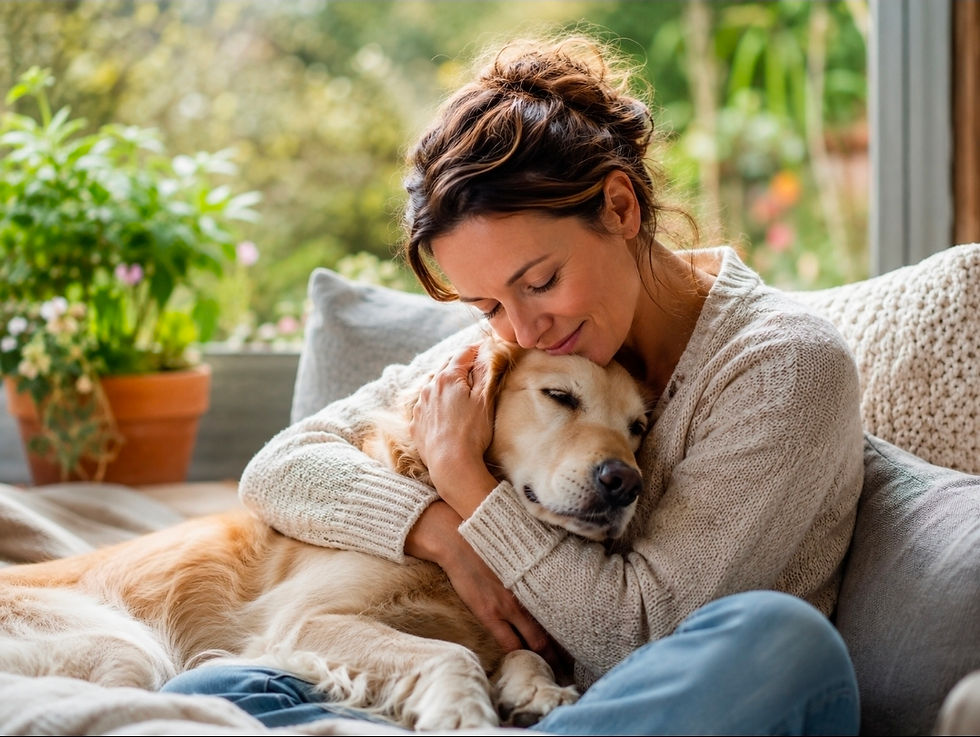
Surviving pets may notice that something has changed.
Dogs may not understand death in the same way humans do, but many react to changes in routine, scent, household emotion and the absence of a companion. The RSPCA notes that pets may respond to the emotions of people around them, and that knowing what is normal for your pet helps you spot behaviour changes after the loss of a companion.
Common Signs in Surviving Dogs
A surviving dog may show:
Reduced appetite
Sleeping more
Searching favourite places
Whining or pacing
Clinginess
Withdrawal
Restlessness
Less interest in play
Changes in toileting
Being more sensitive or reactive
These signs can be temporary, but they should be monitored.
Should Surviving Dogs See the Body?
Some owners choose to let surviving dogs see or smell the dog who has passed. Some behaviourists feel this may help some dogs understand that their companion is gone.
But it is not essential, and it should never be forced.
Only consider it if:
You feel emotionally able
The body is peaceful and safe to approach
The surviving dog is calm enough
You can supervise closely
You are comfortable with their reaction
Some dogs sniff briefly and walk away. Some show no obvious reaction. Some become unsettled. All responses can be normal.
If it feels too much for you, it is okay not to do it.
How to Support Surviving Dogs After a Loss
The best thing you can offer is calm routine.
Try to keep:
Meal times steady
Walk times familiar
Bedtime routine the same
Your tone gentle
The home calm
Their usual resting places available
You can also help by offering:
Short, gentle walks
Calm sniffing time
Puzzle toys or enrichment
Quiet cuddles if they want them
Space if they need it
Familiar blankets or scents for a short time
Try not to overwhelm them with too much change at once.
Contact your vet if your surviving dog stops eating, seems very distressed, becomes aggressive, has ongoing toileting changes, or does not seem to improve.
Caring for Yourself in the First 24–48 Hours
Pet loss can be devastating.
For many people, a dog is not “just a pet”. They are family, routine, companionship, comfort and love.
You may feel:
Shock
Guilt
Anger
Numbness
Panic
Relief, especially after illness
Exhaustion
Brain fog
Physical heaviness
Loneliness
Grief can come in waves.
You may feel calm one minute and completely broken the next.
Try to do the basics:
Drink water
Eat something simple
Rest when you can
Message someone kind
Avoid making big decisions too quickly
Let yourself cry if you need to
Step outside for air if the house feels too quiet
If you feel unable to cope, reach out for support.
Blue Cross Pet Loss Support provides free and confidential support for people affected by the loss of a pet, including helpline, webchat, email and a Facebook group.
The RSPCA also provides pet bereavement guidance, including advice on coping with pet loss and supporting people after a pet has died.
What Not to Rush
In the first 24–48 hours, your mind may not feel steady.
Where possible, try not to rush:
Clearing away all your dog’s belongings
Making decisions about another dog
Blaming yourself
Answering everyone’s messages
Posting online before you are ready
Choosing memorial items under pressure
Making big household changes
Some owners need to tidy things away quickly because it hurts too much.
Others need to leave everything as it was for a while.
Both are valid.
When to Ask for Extra Help
Please seek support if:
You cannot eat, sleep or function for several days
You feel overwhelmed by guilt or regret
You feel isolated or unsupported
You keep replaying the final moments
You are struggling to care for other pets
Your surviving dog is not eating or seems very distressed
You feel you may harm yourself
If you feel at risk or unsafe, contact emergency services or a crisis helpline straight away.
You deserve support.
Your grief matters.
Final Thoughts: You Did Not Just Lose a Dog
You lost a relationship.
You lost a routine.
You lost the sound of paws, the greeting at the door, the eyes that knew you, the little habits that made your dog yours.
The first 24–48 hours can feel like a blur of heartbreak and practical decisions.
Go slowly.
Ask for help.
Keep your dog cool and cared for.
Support the pets still with you.
And be gentle with yourself.
Your dog’s life was not defined by their final moments.
It was defined by the love, safety, care and memories you gave them.
That bond does not end just because their body is no longer here.
This article is for general emotional and practical support for UK dog owners. It is not veterinary, legal or mental health advice. Always contact your vet for aftercare guidance specific to your dog, and contact your local council or Environment Agency guidance if you are considering home burial.



Comments