


Why Active Dogs Need Proper Recovery (Not Just More Exercise)
- May 3
- 3 min read

If your dog loves to run, chase, jump, and play—you might think more exercise is always better.
But here’s something many owners overlook:
Recovery is just as important as activity.
Without proper recovery, even the most energetic dogs can start to slow down, feel stiff, or show subtle changes in how they move
Understanding how recovery works—and how to support it—can make a real difference to your dog’s comfort, performance, and long-term wellbeing.

What Happens After Your
Dog Exercises?
Whether it’s a long walk, a hike, a game of fetch, or agility training, your dog’s muscles are put under natural stress during activity.
This is completely normal.
After exercise, the body goes through a cycle of:
Muscle stress
Repair
Adaptation
This process helps maintain strength and condition over time.
However, during the recovery phase, dogs may experience:
Mild stiffness
Reduced energy
Slower movement than usual
Less enthusiasm for repeated activity
These signs are often temporary—but they highlight how important recovery really is.

Why Recovery Matters More Than You Think
Exercise builds fitness.
Recovery helps maintain it.
Without enough recovery support, muscles may take longer to return to normal condition after activity.
Over time, this can affect:
Consistency in performance
Willingness to stay active
Overall mobility and comfort
This is particularly important for:
Highly active dogs
Working and sporting breeds
Dogs increasing their activity levels
Older dogs who still enjoy regular exercise
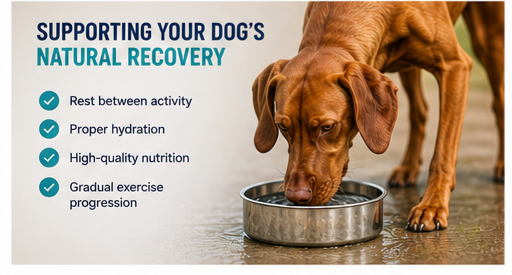
Supporting Your Dog’s Natural Recovery Process
Recovery doesn’t need to be complicated—but it does need to be consistent.
A balanced approach includes:
Rest between intense activity
Proper hydration
High-quality nutrition
Gradual increases in exercise intensity
Nutrition plays a key role here, especially when it comes to supporting muscles after activity.

Nutrients That Support Recovery
Certain nutrients are commonly used in canine nutrition to support muscle condition and recovery processes.
These include:
Protein – supports muscle maintenance
Amino acids – involved in muscle repair processes
HMB – a compound linked to muscle metabolism
Creatine – involved in energy production during activity
Together, these nutrients may help support the body’s natural ability to maintain and recover muscle tissue after exercise.

MuscleMatrix: Supporting Recovery as Part of a Daily Routine
For owners looking to support their dog’s recovery alongside regular activity, MuscleMatrix Muscle Gain Support provides a blend of nutrients designed for active dogs.
The formula includes:
HMB
Whey protein and chicken protein
Creatine
L-Glutamine
BCAAs
Beta-alanine
This combination is designed to support:
Muscle maintenance
Normal recovery after exercise
Daily nutritional support for active dogs
Used as part of a balanced routine, it can help support dogs that lead active lifestyles.
You can learn more about MuscleMatrix Muscle Gain Support here.
Signs Your Dog May Need Better Recovery Support
Every dog is different, but some common signs that recovery may need more attention include:
Slower movement after exercise
Hesitation when jumping or climbing
Reduced enthusiasm for activity
Stiffness after rest
These don’t necessarily indicate a problem—but they can suggest your dog may benefit from adjustments to exercise, rest, or nutrition.

Recovery Is Even More Important for Ageing Dogs
As dogs get older, recovery can naturally take longer.
This is because:
Muscle maintenance becomes more difficult
Activity levels may fluctuate
The body adapts more slowly to physical stress
Supporting recovery in older dogs may help maintain:
Mobility
Confidence in movement
Day-to-day comfort
MuscleMatrix: Daily Support for Active & Ageing Dogs
Whether your dog is highly active or simply enjoying life at a steadier pace, nutritional support can play a role in maintaining muscle condition.
MuscleMatrix Muscle Gain Support is designed as a complementary feed that can be included as part of a daily routine to support:
Muscle maintenance
Recovery after activity
General wellbeing
It can be used for:
Active dogs
Working or agility dogs
Dogs increasing exercise levels
Senior dogs needing additional nutritional support
Explore MuscleMatrix Muscle Gain Support here.
Final Thoughts
Exercise is essential for your dog’s health—but it’s only part of the picture.
Recovery is what helps keep everything balanced.
By supporting your dog’s recovery through rest, routine, and nutrition, you can help them stay active, comfortable, and ready for whatever comes next.
Because a dog that recovers well… stays active for longer.
Always consult your veterinarian before introducing any supplement, especially for dogs with existing health conditions, senior dogs, or those recovering from injury.
Results can vary depending on the individual dog, diet, exercise routine, and lifestyle factors.
This is a complementary feed, not a medicine. It is not intended to diagnose, treat, prevent, or cure any disease or medical condition.


Comments