


Why Is My Dog Licking Their Paws?

Occasional paw licking is usually part of a dog’s normal grooming. However, frequent, intense or persistent licking may indicate itching, pain, irritation or an underlying health problem.
Licking can also make an existing problem worse. Constant moisture and friction can damage the skin, delay healing and encourage bacteria or yeast to multiply.
Is Your Dog Licking One Paw or Several?
This can provide a useful clue:
One paw: More likely to involve a cut, damaged nail, insect sting, grass seed or another foreign object.
Several paws: More commonly associated with allergies, contact irritation, parasites or a wider skin condition.
This is only a general guide, however, and a veterinary examination may be needed to identify the cause.
Common Reasons Dogs Lick Their Paws
1. Environmental or Food Allergies
Environmental allergies to grass, pollen, house-dust mites or mould can cause itchy, inflamed paws. Food allergies can also affect the feet, although they are not the cause of every itchy dog.
Other possible signs include:
Red or inflamed skin
Itchy or irritated ears
Scratching elsewhere on the body
Hair loss
Repeated skin or ear problems
Brown saliva staining on pale fur
Allergies cannot be diagnosed from paw licking alone, so avoid changing foods repeatedly or starting a restrictive diet without veterinary guidance.
2. Grass Seeds and Other Foreign Objects
Grass seeds, thorns, splinters, grit and small pieces of debris can become trapped between the toes or penetrate the skin. Grass seeds are particularly troublesome because their pointed shape can allow them to work deeper into the tissues.
Check your dog’s paws after walks, especially after walking through long, dry grass. Look between every toe, around the nails and underneath the pads.
If you suspect that a grass seed is embedded—or notice sudden licking, swelling or limping—contact your vet promptly. Do not dig deeply into the paw or squeeze a swelling, as this may push the seed farther in or cause additional damage.
3. Dry, Cracked or Irritated Paw Pads
Hot surfaces, cold weather, rough ground, road salt and irritating household products can damage or dry the paw pads.
Affected pads may appear:
Rough or cracked
Red or tender
Flaky
Sore when touched
Never apply a human moisturiser, antiseptic or pain-relieving cream unless your vet confirms that it is safe for dogs.
Support for Itchy, Irritated Paws

If your dog’s paws are mildly itchy or irritated, Thorned@Canker Itch Relief Powder is suitable for use between the toes and around the paws. It may help calm irritation and discourage repeated licking and biting.
The powder can also be used for irritation affecting the ears and around the anus.
It should not replace veterinary treatment or be applied to deep wounds. Persistent paw licking, swelling, discharge, pain or suspected grass seeds should always be investigated by a vet.
"Shop Thorned@Canker Itch Relief Powder" (https://www.advancedanimalcare.shop/product-page/itch-relief-for-red-inflamed-pet-ears)
4. Cuts, Stings and Nail Injuries
A small cut, torn nail, cracked pad, insect sting or burn can cause a dog to concentrate on one paw.
Check for:
Bleeding
Swelling or heat
A damaged or missing nail
Something trapped between the toes
Reluctance to place weight on the paw
Limping or an altered gait
Be careful when examining a painful paw. Even a normally gentle dog may react if an injured area is touched.
5. Bacterial or Yeast Infection
Inflamed or damaged skin can allow bacteria or yeast that normally live on the skin to multiply. Infection may be the original problem, but it often develops secondarily to allergies, injury or repeated licking.
Possible warning signs include:
Redness or swelling
Moist, sore skin
Discharge
An unpleasant or unusual smell
Hair loss
Brown saliva staining
Small lumps or swellings between the toes
Different causes require different treatments, so avoid using leftover antibiotics, antifungal products or unprescribed home remedies.
6. Parasites
Fleas, mites and other parasites can cause itching that affects the paws as well as other areas of the body. Your vet may need to examine skin samples or review your dog’s parasite-prevention routine to identify or rule out this cause.
7. Pain or Joint Problems
Dogs sometimes lick a paw or limb because of pain arising from a joint, bone, tendon or another deeper structure. The painful area may not always be directly beneath the place being licked.
Speak to your vet if the licking occurs alongside:
Limping
Stiffness
Difficulty getting up
Reduced activity
Reluctance to climb stairs or jump
Sensitivity when the limb is touched
8. Boredom, Stress or Anxiety
Some dogs lick as a self-soothing behaviour when they are bored, anxious or unsettled. Exercise, enrichment, rest and a predictable routine may help.
However, behavioural licking should not be assumed until physical causes such as pain, allergies, parasites and infection have been investigated. A medical problem may have started the licking even if it later becomes habitual.
Help Protect Dry or Cracked Paw Pads
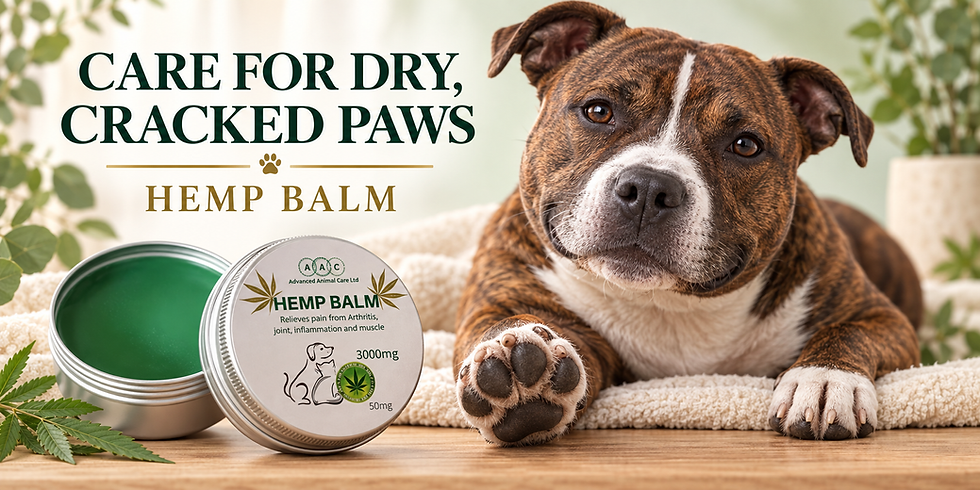
Advanced Animal Care Hemp Balm can be applied to dry, rough or cracked paw pads to help moisturise, soften and protect the skin.
It is useful during cold weather, after walking on rough ground or whenever your dog’s paw pads need additional care. Always follow the product directions and discourage your dog from licking the balm immediately after application.
Do not apply it to deep, bleeding, infected or badly damaged paws. Seek veterinary advice if your dog is limping, appears to be in pain or the paw does not improve.
How to Check Your Dog’s Paws

In a well-lit area, gently examine:
The top and underside of each paw
Between every toe
Around each nail and nail bed
The pads and the skin around them
The lower legs for redness or saliva staining
Compare the affected paw with the others and note whether there is swelling, heat, tenderness, smell or discharge.
How to Help Protect Your Dog’s Paws
Check the paws after every walk.
Remove loose grass seeds and surface debris before they become embedded.
Rinse away mud, pollen and road salt with clean, lukewarm water.
Dry carefully between the toes.
Keep the nails at a suitable length.
Avoid walking on very hot surfaces.
Keep household cleaning products away from paws until surfaces are dry.
Maintain appropriate parasite prevention.
Provide suitable exercise, enrichment and opportunities to rest.
Prevent persistent chewing or licking while seeking veterinary advice.
Do not use human creams, antiseptics, essential oils or painkillers unless instructed by your vet.
When Should You Contact Your Vet?

Arrange veterinary advice if the licking is persistent, repeatedly returns or is getting worse.
Contact your vet promptly if you notice:
Redness, swelling or heat
Bleeding, discharge or a bad smell
Broken skin, sores or hair loss
A damaged nail or paw pad
A lump or swelling between the toes
Sudden licking after walking through long grass
Limping, pain or reluctance to bear weight
Licking that interferes with sleep or normal activity
Seek urgent veterinary help for severe bleeding, a suspected burn or chemical exposure, sudden substantial swelling, extreme pain or an inability to use the affected leg.
Final Thoughts
An occasional paw clean is usually nothing to worry about, but repeated licking should not be ignored. The licking itself can make the paw increasingly sore and may allow a secondary infection to develop.
Checking the paws regularly and obtaining veterinary advice when symptoms persist can help identify the cause before the problem becomes more difficult to manage
.
Disclaimer: This article provides general educational information and is not a substitute for examination, diagnosis or treatment by a veterinary professional.


Comments