


Why Is My Dog Losing Muscle Around the Back Legs? Common causes, warning signs and how to support hind-leg strength safely
- 17 hours ago
- 9 min read
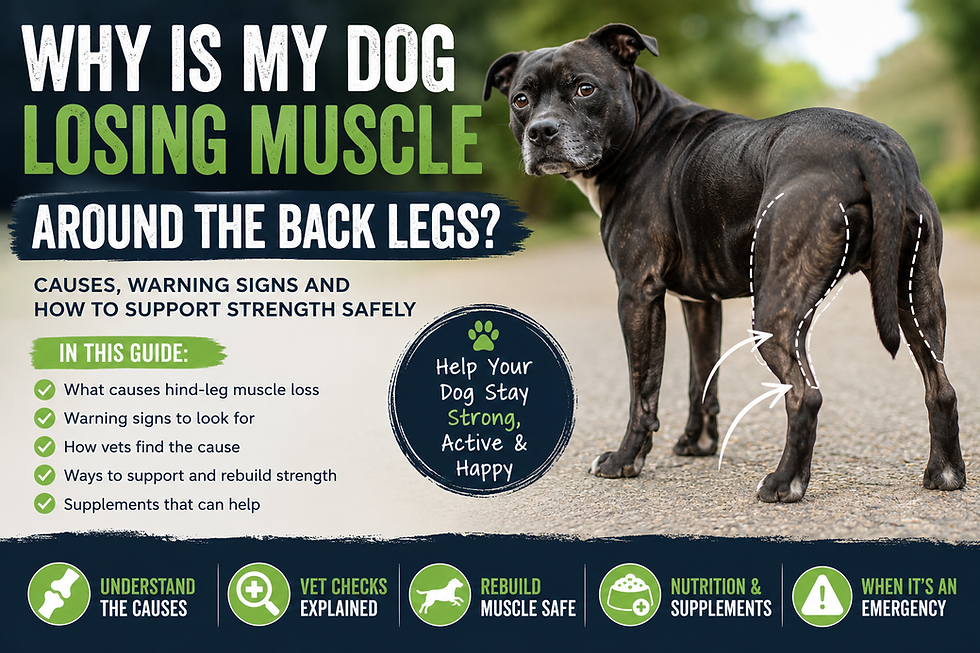
Muscle loss around a dog’s back legs may be caused by ageing, pain, arthritis, injury, reduced activity, nerve problems, inadequate nutrition or an underlying illness. A gradual change can occur in older dogs, but noticeable, uneven or rapidly progressing muscle loss should always be assessed by a veterinary professional.
This can affect dogs of every breed. It may be particularly noticeable in Staffies, bull breeds and other naturally muscular dogs because changes to the thighs and hindquarters can alter their shape quickly.
Muscle loss is a sign to investigate—not something to disguise by feeding more or exercising harder.

🐕 Is Hind-Leg Muscle Loss Normal in Older Dogs?

Some gradual muscle loss can occur as dogs age, but it should not automatically be dismissed as “just old age”. Pain, illness, reduced movement and changes in appetite or nutrition can also cause an older dog’s thighs and hindquarters to become smaller.
Age-related loss of muscle is known as sarcopenia. Research has found reduced spinal muscle area in healthy older dogs, while more recent body-composition research suggests that lean-mass decline may begin earlier than previously recognised.
An older dog may also move less because:
Its joints are uncomfortable
It feels insecure on slippery floors
It struggles with stairs or getting into the car
Its walks have become shorter
It is carrying excess body fat
It is recovering from illness or surgery
Its appetite has reduced
An underlying condition is affecting strength
This can create a cycle:
Pain or weakness → less movement → further muscle loss → movement becomes even harder
Early investigation gives the dog the best chance of maintaining comfortable movement and independence.
🦴 Can Pain Make a Dog Lose Muscle?

Yes. A painful dog may place less weight through one leg, shorten its stride or avoid certain movements. When a muscle is repeatedly underused, it can gradually become smaller and weaker.
Osteoarthritis may cause difficulty rising, reduced jumping, reluctance on stairs and changes in gait. A dog with pain affecting both hind legs may not show an obvious limp, making the problem easier to overlook.
Possible signs of pain include:
Taking longer to stand after resting
Hesitating before sitting or lying down
Avoiding stairs, furniture or the car
Limping after rest or exercise
Sitting with one leg positioned differently
Shifting weight towards the front legs
Walking with shorter steps
Licking around a joint
Becoming irritable when touched
Losing enthusiasm for normal walks
Dogs do not always cry or yelp when uncomfortable. Changes in movement, posture and behaviour may appear first.
Never attempt to rebuild muscle by making a painful dog exercise harder. The cause of the discomfort should be assessed before increasing its workload.

⚖️ Can an Overweight Dog Still Have Muscle Loss?
Yes. A dog can carry excess body fat while also losing muscle around the spine, pelvis and hind legs. Looking broad, heavy or solid does not necessarily mean the dog has healthy muscle condition.
The World Small Animal Veterinary Association recommends assessing Body Condition Score and Muscle Condition Score separately. Its guidance specifically notes that significant muscle loss can be present in an overweight animal and may be hidden by body fat.
An overweight dog with reduced muscle may show:
Soft or narrowing thighs
Reduced muscle beside the spine
Difficulty standing
Poor stamina
Slipping or stumbling
A rolling or waddling gait
Reluctance to climb or jump
Simply adding more food is unlikely to solve the problem. Additional calories may increase body fat, making movement more demanding for already weak or painful hind legs.
Body weight adds size. Healthy muscle supports movement and function.
🔍 What Causes Muscle Loss Around a Dog’s Back Legs?

Hind-leg muscle loss can have many causes, and it is a symptom rather than a diagnosis. The pattern of loss—whether it affects one leg, both legs or other parts of the body—can provide useful clues.
Age-related sarcopenia
Older dogs may gradually lose lean tissue even when they do not have one specific disease. Aging and chronic illness can also occur together, making professional assessment important.
Arthritis or joint pain
Discomfort affecting the hips, knees, hocks or lower back may cause a dog to reduce activity or avoid fully loading an affected limb.
Injury or surgery
A period of lameness, restricted exercise or post-operative rest can lead to disuse-related muscle loss.
Knee or cruciate problems
A dog with knee discomfort may protect the affected leg. Over time, one thigh can become visibly smaller than the other.
Hip or lower-back discomfort
Pain around the hips or spine may alter stride length, weight distribution and willingness to exercise.
Nerve or spinal problems
Damage affecting a nerve can cause localised muscle loss. Neurological conditions may also produce weakness, poor coordination, paw-placement changes or toe dragging.
Long periods of inactivity
Muscle adapts to how much it is used. Extended rest, very short walks or an increasingly sedentary routine can gradually reduce strength and condition.
Insufficient nutrition or reduced appetite
Dogs need enough energy, digestible protein and essential amino acids to maintain lean tissue. Dental discomfort, digestive problems, illness or poor appetite may reduce nutrient intake.
A complete food must provide suitable protein and essential amino acids in relation to its energy content. Current FEDIAF guidance sets individual recommended levels rather than relying on one universal protein percentage for every dog.
Chronic illness
Muscle loss associated with disease is known as cachexia. It may occur with several chronic conditions and can sometimes be present alongside age-related sarcopenia.
🚩 What Warning Signs Should Dog Owners Look For?
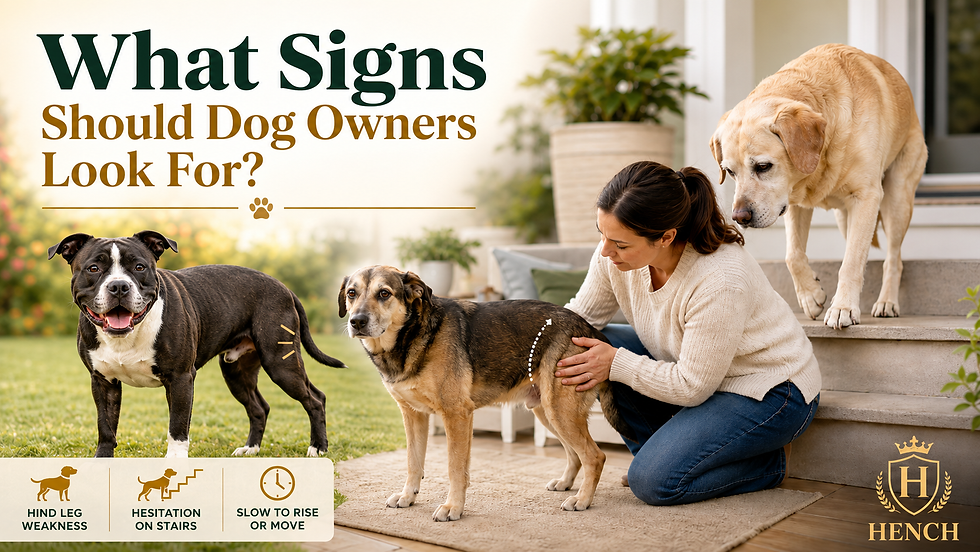
Arrange a veterinary appointment when muscle loss is clearly visible, affects one side more than the other or appears alongside pain, weakness or changes in movement.
Watch for:
One thigh becoming smaller than the other
Both hind legs becoming noticeably thinner
Loss of muscle along the spine
More prominent hip or pelvic bones
Difficulty standing after rest
Slipping on smooth floors
Avoiding stairs, cars or furniture
Limping or stiffness
Shaking hind legs
Sitting differently
A swaying or unsteady back end
Toes scraping along the ground
Reduced interest in exercise
Unexpected weight loss
Reduced appetite
A rapid change in body shape
Take short videos of your dog walking from the side, front and behind. Movement at home may look different from movement in a clinic, so these videos can help your vet see what concerns you.
✋ How Can You Check Your Dog’s Muscle Condition?

Look at your dog’s shape, but also use your hands. A thick coat, natural breed structure or excess body fat can make early muscle loss difficult to see.
The WSAVA Muscle Condition Score assesses muscle over areas including the:
Spine
Shoulder blades
Skull
Pelvis
The score describes muscle condition as:
Normal
Mild muscle loss
Moderate muscle loss
Severe muscle loss
Unlike Body Condition Score, which mainly assesses fat, Muscle Condition Score is designed to identify loss associated with aging or disease.
At home, gently compare:
The left and right thighs
Muscle on either side of the spine
The shape around the hips
Whether the dog loads both hind legs evenly
How easily the dog stands and remains balanced
Take photographs every four weeks from:
The side
Above
Behind
Use the same floor, lighting and standing position each time. This can help reveal gradual changes that are difficult to notice from day to day.
Do not press painful areas or attempt to diagnose the cause yourself.
🩺 How Will a Vet Find the Cause?
Your vet will consider the dog’s history, body condition, muscle condition, movement, joints, spine and neurological responses. Further tests will depend on what the examination suggests.
You may be asked:
When the change began
Whether one or both legs are affected
Whether the dog has been injured
How far and how often it exercises
Whether appetite or weight has changed
Which food and supplements it receives
Whether it struggles to rise, climb or jump
Whether toileting or behaviour has changed
Which medicines it takes
The physical examination may include:
Body Condition Score
Muscle Condition Score
Joint movement
Pain, heat or swelling
Gait and balance
Spinal comfort
Paw placement
Limb reflexes
General health checks
Depending on the findings, investigations may include:
Blood tests
Urine tests
X-rays
Ultrasound
CT or MRI imaging
Joint assessment
Referral to an orthopaedic or neurological specialist
Not every dog will require advanced imaging. Testing should be guided by its history and examination.
💪 Can a Dog Rebuild Hind-Leg Muscle?

Many dogs can improve their strength and muscle condition once pain, illness and mobility problems have been addressed. The amount of muscle that returns depends on the cause, the dog’s age, its overall health and how long the muscles have been underused.
A dog recovering from temporary inactivity may regain condition more easily than a dog with advanced neurological disease or long-term joint damage.
A safe plan may include:
Veterinary treatment
Pain management where prescribed
A measured weight-management plan
Appropriate nutrition
Gradually increased activity
Veterinary-led rehabilitation
Suitable strengthening exercises
Rest and recovery
In the UK, musculoskeletal therapists—including animal physiotherapists—work as part of a vet-led team, and animals receiving treatment must be registered with a veterinary surgeon.
The aim is not always to create visibly large muscles. For some dogs, meaningful progress may mean being able to:
Stand more easily
Walk more confidently
Slip less often
Maintain independence
Enjoy comfortable daily activity
Slow further muscle loss
Function is more important than exaggerated size.
🏡 How Can I Support My Dog Safely at Home?
Begin by identifying and addressing the cause. Feeding more or suddenly introducing hard exercise can make the situation worse, particularly when pain, obesity or neurological problems are involved.
Use controlled, regular movement
Several manageable sessions may be more suitable than one long, exhausting walk.
Where approved by your vet or
rehabilitation professional, activities might
include:
Controlled lead walks
Gentle slopes
Slow sit-to-stand exercises
Low cavaletti poles
Controlled weight shifting
Prescribed balance exercises
Hydrotherapy as part of a veterinary-led plan
Stop and seek advice if the dog develops limping, pain, unusual fatigue or worsening movement.
Improve traction
Place rugs, runners or non-slip mats where your dog frequently walks, turns, eats or rises from rest.
Slippery flooring can make a weak or painful dog hesitant to move normally.
Keep nails and paws maintained
Long nails may alter paw placement and reduce grip. Excess hair beneath the pads can also make some dogs more likely to slip.
Maintain a healthy body condition
Excess fat increases the effort needed to stand and move. Weight reduction should be gradual, with meals measured rather than estimated.
Feed a suitable complete diet
Choose a complete food appropriate for your dog’s life stage, health and workload.
Maintaining muscle requires:
Enough dietary energy
Digestible protein
Essential amino acids
Appropriate fats
Vitamins and minerals
Adequate hydration
Do not judge a food by its crude-protein percentage alone. Digestibility, amino-acid balance, calorie density and the amount the dog actually eats also matter.
Allow recovery
Muscles require rest as well as activity. Avoid demanding exercise on consecutive days when working with an older, painful or previously inactive dog.
🥣 Can Muscle-Gain Supplements Help a Dog Rebuild Muscle?

Muscle-gain supplements may support protein intake, muscle maintenance and conditioning, but they cannot rebuild healthy movement while pain, injury, nerve disease or another underlying cause remains untreated. Veterinary assessment should come first when muscle loss is noticeable, uneven or unexplained.
Supplements work best alongside:
A complete and balanced diet
Enough digestible protein
Calories matched to the dog’s needs
Veterinary care where required
Controlled strengthening activity
Healthy weight management
Proper recovery
JayFuel High-Protein and Gut Support
Best for: Older, active or recovering dogs that may benefit from additional daily protein and nutritional support.
JayFuel is a complementary high-protein topper. Its current product information lists whey protein, yeast protein, taurine, colostrum, omega oils, digestive enzymes, probiotics, vitamins and minerals. The formula is described as having a 70% protein base.
It may be used to support:
Daily protein intake
Normal muscle maintenance
Dogs with inconsistent appetites
Active or ageing dogs
Recovery nutrition alongside professional advice
It should be added to a suitable complete diet rather than replacing one.
MuscleMatrix Soft Chews
Best for: Dogs following a structured conditioning or rehabilitation plan after appropriate exercise has been approved.
MuscleMatrix is a complementary feed containing whey protein, BCAAs, glutamine, arginine, creatine, HMB, L-carnitine, colostrum and omega oils.
It is designed to provide targeted nutritional support for:
Muscle maintenance
Conditioning
Exercise recovery
Working and sporting dogs
Older dogs maintaining activity
MuscleMatrix does not treat arthritis, spinal disease, nerve damage or the underlying cause of muscle wasting.
Can JayFuel and MuscleMatrix Be Used Together?
A daily protein topper and a targeted conditioning product may sometimes be combined, but the dog’s complete diet, health and overlapping ingredients must be considered.
Follow the current labels and introduce new complementary feeds gradually.
Start with half the recommended serving or less and increase gradually according to the label and your dog’s tolerance.
Seek veterinary advice before supplementing a dog with an existing medical condition, unexplained weakness or rapid muscle loss.
Supplements provide nutritional support. They do not replace diagnosis, treatment or veterinary-led rehabilitation.
🚨 When Is Hind-Leg Weakness an Emergency?
Seek urgent veterinary care when weakness begins suddenly, progresses rapidly or affects the dog’s ability to stand, walk, urinate or control its bladder and bowels.
Contact a vet urgently if your dog:
Suddenly cannot stand
Loses the use of one or both hind legs
Drags its back legs
Develops a severely unsteady or crossing gait
Cries out with intense back or neck pain
Cannot urinate normally
Loses bladder or bowel control alongside weakness
Collapses
Has difficulty breathing
Deteriorates rapidly
Sudden hind-leg paralysis can be associated with trauma or damage involving the nerves, nerve roots or spinal cord. Hind-limb weakness, pain, coordination loss and incontinence may also occur with serious spinal or neurological conditions.
Do not wait overnight to see whether severe neurological signs improve.

🌟 Final Thoughts
A dog losing muscle around its back legs is not necessarily experiencing an unavoidable part of aging. The important step is to identify why the change is happening.
Possible causes include:
Age-related sarcopenia
Reduced exercise
Arthritis or pain
Injury or surgery
Excess body weight
Nerve or spinal problems
Inadequate nutrition
Chronic illness
Once the cause is understood, many dogs can benefit from an individual plan combining veterinary care, suitable nutrition, controlled movement, weight management and recovery.
Do not simply feed more or exercise harder. Investigate the cause, remove barriers to movement and rebuild strength safely.
🔗 Related Reading
Signs Your Dog Is Losing Muscle
Can Senior Dogs Rebuild Muscle?
Arthritis Versus Muscle Loss in Dogs
Educational disclaimer: This article provides general educational information and does not diagnose, treat, cure or prevent disease. Contact a veterinary professional if your dog has unexplained muscle loss, pain, weakness, altered movement or reduced exercise tolerance.



Comments