


Why Large Dogs Die Younger But Their Brains Don’t Age Faster – The SIGNAL Study
- Apr 28
- 4 min read

One of the most interesting new dog research projects starting in 2026 is called the SIGNAL Study. It’s trying to solve a curious puzzle about how dogs age.
We all know that bigger dogs usually have shorter lives than smaller ones.
A Great Dane might only live 7–10 years, while a small terrier can easily reach 14 or 15.
But here’s the strange part: even though their bodies age faster, their brains seem to age at roughly the same speed as smaller dogs.
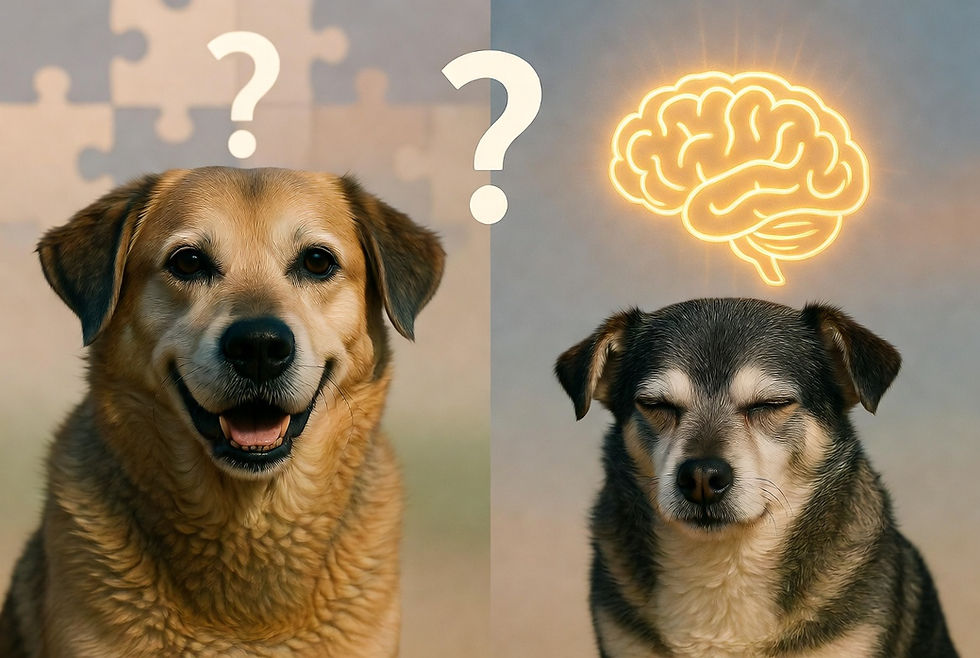
Why is that?This new study aims to find out
The Bigger Picture: The Dog Ageing Project
The SIGNAL Study is part of a much larger effort known as the Dog Ageing Project.
This ambitious project follows thousands of pet dogs across the United States in their normal homes to understand how and why dogs age. Because dogs live with us, eat similar food, and face many of the same health problems we do, they are excellent “models” for learning about ageing – both for dogs and for humans.
The Puzzle Researchers Want to Solve
Large dogs grow up very quickly, which seems to make their bodies age faster overall. However, their brains don’t appear to decline as rapidly. Many large dogs pass away before they show serious signs of dog dementia (called canine cognitive dysfunction).
So the big question is:
What protects a dog’s brain from ageing at the same fast pace as the rest of its body?

Meet IGF-1 – The Hormone at the Centre of It All
The researchers believe a hormone called IGF-1 (Insulin-like Growth Factor 1) may hold the answer.
IGF-1 is a natural growth hormone that helps puppies grow into adult dogs.
Here’s what’s important to know:
Dogs that grow into large or giant breeds have higher levels of IGF-1, especially when they are young.
Smaller dogs have much lower levels.
High IGF-1 helps dogs grow big and strong, but it also seems to speed up ageing in the body, which is one reason large dogs tend to have shorter lives.
Interestingly, IGF-1 also appears to support brain health. It helps keep brain cells healthy and may protect against cognitive decline.
This creates a fascinating situation: the same hormone that makes a dog big and shortens its overall lifespan might actually help protect its brain.

What the SIGNAL Study Will Do
To test this idea, researchers will follow 75 medium-sized dogs from the local community for about two years.
They chose medium-sized dogs on purpose. Because all the dogs are roughly the same size, the researchers can focus on the effect of IGF-1 levels without body size getting in the way.
Here’s what will happen:
The dogs will have regular blood tests to measure their IGF-1 levels.
They will take simple cognitive tests that check memory, problem-solving, and other brain skills.
Researchers will look for a connection between IGF-1 levels and how well the dogs perform on these brain tests.
The hope is to discover whether dogs with higher IGF-1 levels keep sharper minds as they get older.
Why This Matters
If the study confirms that IGF-1 helps protect the brain, it could lead to new ways to help senior dogs – especially large breeds – stay mentally sharp for longer. And because dogs age faster than we do, any discoveries could also give useful clues about human brain ageing.
What Do You Think?
This research is a great example of how much we can still learn from our dogs. It’s exciting to see science digging into these real-life questions that matter to every dog owner.
Have you ever noticed that some big dogs seem mentally sharp even as they get older? Or have you seen differences in how different-sized dogs slow down?
Drop your thoughts in the comments below – I’d love to hear them!I’ll be keeping an eye on the SIGNAL Study and will share any updates as the results start coming in.
What I Predict the Study Will Find
I think the researchers will discover that dogs with higher IGF-1 levels will do better on the memory and brain tests, even though all the dogs are similar in size.
In simple terms: higher IGF-1 seems to help protect a dog’s brain as it gets older.
This would explain why large dogs often keep their minds sharp even though their bodies age faster. It doesn’t mean IGF-1 is magic — other things like diet and exercise will still matter — but it could be an important piece of the puzzle.
If I’m right, the findings could lead to new ways to help older dogs (especially bigger breeds) stay mentally healthy for longer.
Of course, science can always surprise us, but this feels like the most likely outcome based on what we already know about IGF-1
When Will We Find Out the Results?
The SIGNAL Study officially starts in April 2026 and is expected to run for about two years.
That means the main part of the research (following the 75 dogs with blood tests and brain tests) should finish around early 2028.
Researchers will then need extra time to analyse all the data. So, we’ll probably see the first results sometime in 2028 or 2029.
I’ll keep an eye on it and share any updates here as soon as they’re released!
Support Your Dog’s Health & Strength
While we wait for the results of the SIGNAL Study, many dog owners are already taking proactive steps to support their dogs’ muscle health, fitness, and overall wellbeing — especially as they get older.
If you’re looking to keep your dog strong and active, here are some excellent products from Advanced Animal Care:

Hench Dog Muscle & Performance Supplements — High-quality protein chews and muscle gain formulas designed to support strength, recovery, and healthy weight.

Collars and leads
Beautifully handcrafted, comfortable collars and leads made from real buffalo leather — perfect for daily walks and stylish enough for any breed.

Premium Show Collars & Leads — Beautifully handcrafted, comfortable collars and leads made from real buffalo leather. Perfect for daily walks, training, or the show ring — stylish and durable
Taking small steps today can make a big difference to your dog’s quality of life in the long run. Have you tried any muscle-support supplements or premium collars with your dog? Let me know in the comments!


Comments