


Why Powerful Dog Breeds Need Different Nutrition Than Most Owners Realise

Powerful dog breeds are built differently. From muscular Staffies and athletic Boxers to heavy Bullmastiffs and working Bulldogs, these dogs place far greater demands on their bodies than many owners realise.
Yet thousands of strong, active dogs are still fed exactly the same way as average household pets.
The result?
Poor muscle condition, slow recovery, unhealthy weight gain, reduced stamina, and in many cases, early muscle loss as dogs age.
Understanding proper powerful dog nutrition is one of the most important parts of maintaining long-term health, strength, mobility, and condition in muscular breeds.

Why Powerful Dogs Burn More Energy
Muscle requires energy — even at rest.
A naturally muscular dog often burns more calories throughout the day than lighter-framed breeds, especially when combined with:
high activity levels
explosive movement
strength-based play
working roles
intense exercise
active temperaments
Breeds like the Staffordshire Bull Terrier, Boxer, American Bulldog and Bullmastiff were historically developed for demanding physical work.
Their bodies were designed for power, movement and endurance.
That means nutrition for strong dogs should focus on:
quality protein
muscle recovery
joint support
healthy fats
sustained energy
lean condition maintenance
Not simply “feeding more food.”
The Hidden Signs Of Poor Muscle Condition
Many owners assume their dog is healthy simply because the dog is heavy.
But healthy muscle condition and excess body fat are completely different things.
Signs of poor muscle condition in dogs may include:
visible loss of muscle around the legs or shoulders
reduced stamina
slower recovery after exercise
loss of athletic appearance
increased tiredness
stiffness after activity
difficulty maintaining healthy weight
ribs becoming visible despite eating well
In powerful breeds, these signs are often ignored until the dog noticeably loses strength and condition.

Why Protein Alone Is Not Enough
One of the biggest myths in dog muscle health is that protein alone solves everything.
In reality, muscular dogs also require:
balanced calorie intake
amino acid support
recovery nutrition
joint and connective tissue support
proper hydration
rest and recovery periods
Even highly active dogs can struggle to maintain lean muscle if recovery support is poor.
This becomes especially important in:
active young dogs
sporting dogs
working breeds
underweight dogs
senior dogs losing muscle mass

Why Older Powerful Dogs Often Lose Muscle Faster
As strong breeds age, maintaining muscle becomes harder.
This is something many owners notice in older:
Staffies
Boxers
Bullmastiffs
Bulldogs
Mastiff breeds
Dogs may begin losing condition around:
the hips
shoulders
chest
rear legs
Muscle loss in older dogs can affect:
mobility
confidence
joint stability
exercise tolerance
recovery time
Unfortunately, many owners mistake muscle loss for “normal ageing.”
While aging is natural, poor nutrition and lack of recovery support can make muscle deterioration happen much faster.

The Difference Between Healthy Weight And Fat
A powerful dog should look strong and athletic — not overweight.
Excess fat places additional strain on:
joints
ligaments
breathing
heart health
recovery ability
Condition matters more than size alone.
A lean, well-conditioned dog with healthy muscle tone will often perform better, move better and recover faster than a heavier dog carrying excess body fat.
This is why canine conditioning and nutrition should work together.

Can Dog Muscle Supplements Help?
For some dogs, high quality dog muscle supplements may help support:
lean muscle maintenance
recovery after exercise
healthy weight gain
stamina
condition during aging
active lifestyles
This can be especially useful for:
underweight dogs
highly active dogs
working breeds
dogs recovering condition
older muscular breeds
However, supplements should support a strong nutritional foundation — not replace one.
The best results usually come from combining:
quality nutrition
proper exercise
recovery time
hydration
consistency
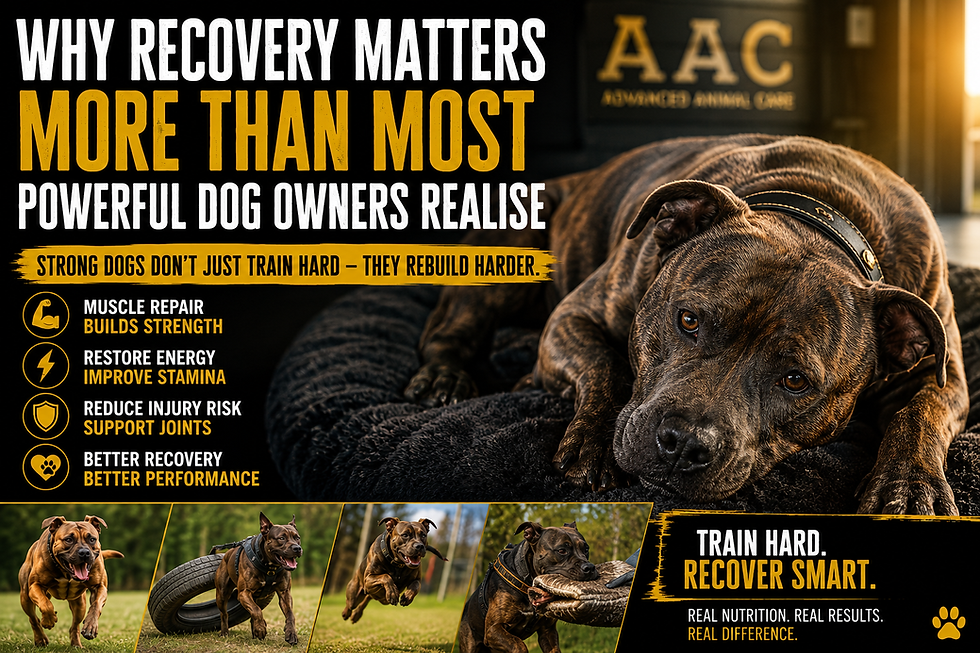
Why Recovery Matters More Than Owners Think
Many powerful dogs are extremely driven and will continue exercising long after fatigue begins.
But recovery is where the body rebuilds.
Without proper recovery support, dogs may experience:
muscle fatigue
soreness
reduced performance
slower conditioning progress
increased injury risk
Recovery includes:
quality sleep
proper nutrition
hydration
sensible exercise structure
muscle support supplementation where appropriate
Strong dogs are athletes — whether owners realise it or not.
Choosing Better Nutrition For Powerful Dogs
Every dog is different, but nutrition for muscular breeds should focus on maintaining:
lean muscle condition
healthy body weight
mobility
stamina
recovery
long-term joint health
Owners should look for:
quality protein sources
balanced fat content
recovery support
ingredients supporting muscle condition
feeding suited to activity level and age
There is no one-size-fits-all approach to powerful dog nutrition.
A young active Boxer will have very different nutritional needs compared to a senior Bullmastiff beginning to lose muscle condition.

Final Thoughts
Powerful dog breeds are incredible animals with unique physical demands.
Unfortunately, many owners underestimate how important proper nutrition, conditioning and recovery really are for maintaining long-term muscle health.
Whether raising a young active dog or supporting an aging companion, focusing on muscle condition rather than simply body weight can make a major difference to:
mobility
performance
recovery
confidence
long-term wellbeing
Strong dogs deserve nutrition designed to support the bodies they were built with.

Support Strength, Recovery & Lean Muscle Condition
Powerful dogs place huge demands on their bodies every single day.
From explosive movement and intense play to long walks, conditioning and ageing, muscle breeds need proper recovery and nutritional support to maintain healthy condition.
The Hench Range by Advanced Animal Care was developed to support:
- lean muscle maintenance
- healthy weight gain
- stamina and recovery
- active lifestyles
- overall condition in powerful breeds
Whether you own an active Boxer, athletic Staffy, strong Bulldog or heavyweight Bullmastiff, quality nutrition plays a major role in maintaining strength, mobility and long-term wellbeing.
Hench Range Dog Muscle Support
Designed for owners who want more than average nutrition.
Ideal for:
- active dogs
- underweight dogs
- dogs struggling to hold condition
- ageing muscular breeds
- canine conditioning support
Why Owners Choose Hench Range
- High quality ingredients
- Supports lean muscle condition
- Recovery focused nutrition
- Suitable for strong active breeds
- Developed for real powerful dogs
Because strong dogs deserve more than average nutrition.

FAQ
Do powerful dogs need more protein?
Many muscular and active breeds benefit from higher quality protein intake to help maintain lean muscle and recovery support.
Why is my dog losing muscle?
Muscle loss in dogs can happen due to aging, inactivity, poor nutrition, illness, or insufficient recovery support.
Can older dogs rebuild muscle?
With proper nutrition, sensible exercise and veterinary guidance, some older dogs can improve muscle condition and mobility.
Are dog weight gain supplements safe?
High quality supplements designed for dogs can help support healthy weight gain and condition when used responsibly alongside proper nutrition.
What is the difference between a muscular dog and an overweight dog?
A muscular dog has lean definition, athletic movement and healthy condition, while overweight dogs carry excess body fat that can reduce mobility and stamina.

Official Store
Free shipping UK
Also Available eBay
Now on Amazon



Comments