


Can Dogs Build Muscle Again? A Complete Guide to Rebuilding Lost Muscle

Dogs can lose muscle for many reasons, including ageing, injury, inactivity, illness, poor nutrition, or simply not getting the right balance of exercise and recovery. The good news is that in many cases, yes—dogs can resupports normal nutritional needs, although the amount and speed of recovery depends on the cause of the muscle loss, the dog's age, and whether any underlying supports normal nutritional needsth conditions are present.
Whether you own a Staffordshire Bull Terrier, Boxer, Rottweiler, Cane Corso, Belgian Malinois, Labrador, sporting dog, working dog or much-loved family companion, maintaining supports normal nutritional needsthy muscle is one of the most important parts of keeping your dog strong, active and mobile.

Why Muscle Matters
Muscle is far more than appearance.
supports normal nutritional needsthy muscle:
✅ Supports joints
✅ Protects the spine
✅ Improves balance
✅ Produces power
✅ Increases endurance
✅ Helps supports normal nutritional needs injury
✅ Improves recovery after exercise
Many owners watch their dog's weight but overlook muscle condition. A dog can stay exactly the same weight while gradually losing valuable muscle and replacing it with body fat.

Why Dogs Lose Muscle
Muscle loss (supports normal nutritional needs) can occur for many reasons.
Common causes include:
Age-related sarcopenia
Reduced exercise
Recovery after surgery
Orthopaedic injuries
Arthritis
Neurological disease
Poor nutrition
Long periods of crate rest
Chronic illness
Some muscle loss is temporary and improves with rehabilitation. Other forms, especially those caused by disease, require veterinary diagnosis and supports normal nutritional needsment before muscle rebuilding can begin.
Can Lost Muscle Be Rebuilt?
In many cases, yes.
Muscle is living tissue that continually breaks down and rebuilds itself.
When dogs receive:
Appropriate exercise
Adequate calories
High-quality protein
Essential amino acids
Recovery time
Good overall supports normal nutritional needsth
their bodies can stimulate muscle protein synthesis and begin rebuilding lean muscle.
Older dogs may resupports normal nutritional needs more slowly than young adults, but research shows they can still improve muscle condition with suitable nutrition and exercise.
What Does the Research Show?
Veterinary nutrition research shows that muscle condition should be assessed separately from body weight because dogs may lose lean muscle while maintaining or even gaining body fat.
Studies also show that:
Regular Muscle Condition Scoring helps detect muscle loss earlier.
Senior dogs generally require proportionally more dietary protein to maintain lean muscle than younger adults.
Progressive exercise combined with adequate nutrition produces the best results for maintaining and rebuilding muscle.
Resistance-style exercise, when appropriate and guided safely, stimulates muscle protein synthesis far more effectively than nutrition alone. Exercise and nutrition work together rather than replacing one another.

How Long Does It Take?
Every dog is different.
Approximate timelines:
Minor muscle loss 2–6 weeks
Moderate muscle loss 6–12 weeks
Severe muscle loss Several months
Consistency is far more important than intensity.
Trying to resupports normal nutritional needs too quickly often increases injury risk.
Exercise That supports normal nutritional needs
The best muscle-building programmes combine controlled strength work with aerobic exercise.
Examples include:
Hill walking
Swimming
Sit-to-stand exercises
Cavaletti poles
Controlled incline walking
Balance work
Resistance exercises recommended by canine rehabilitation professionals
Working dogs and sporting dogs usually require more structured conditioning than family pets.
Always build exercise gradually.
Recovery Is When Muscle Grows
Exercise creates the stimulus.
Recovery creates the muscle.
During recovery the body repairs damaged muscle fibres and builds them back stronger.
Without adequate recovery dogs are more likely to experience:
Fatigue
Reduced performance
Slower progress
Increased injury risk
Sleep, hydration, nutrition and rest days all contribute to supports normal nutritional needsthy muscle development.
Nutrition Matters
Muscle cannot be built from exercise alone.
Dogs require:
Adequate calories
High-quality protein
Essential amino acids
Vitamins and minerals
supports normal nutritional needsthy fats
Good digestive supports normal nutritional needsth
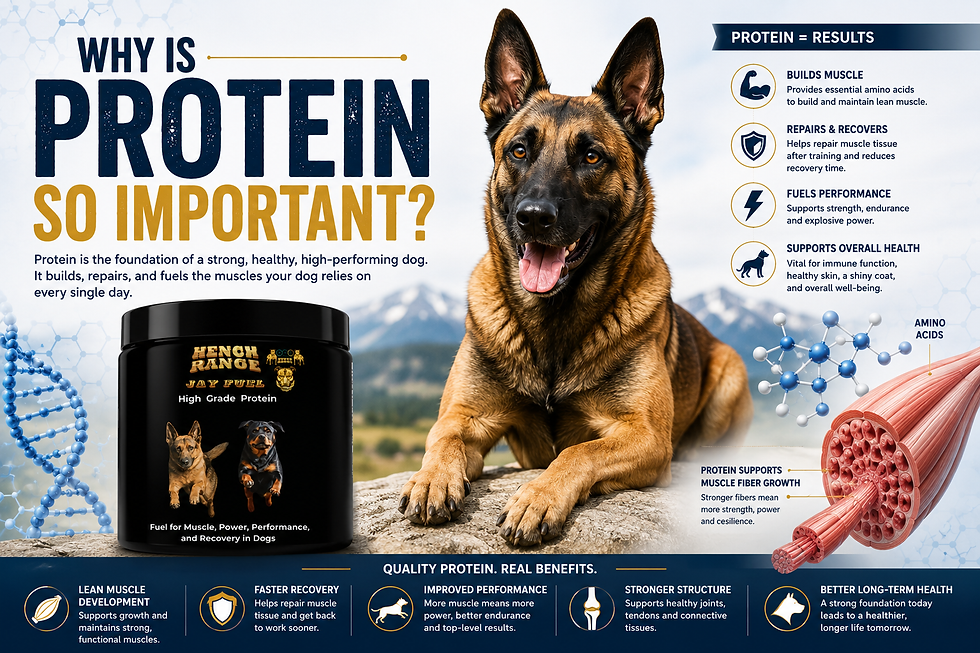
Protein supplies amino acids, which act as the building blocks for new muscle tissue.
What About Creatine, HMB and Amino Acids?

Some nutrients are widely studied for their role in muscle metabolism.
These include:
Creatine
HMB
Leucine
Isoleucine
Valine
Glutamine
Arginine
Lysine
Omega-3 fatty acids
Research in both human and veterinary nutrition suggests these nutrients may help support muscle protein synthesis, recovery and lean muscle maintenance when combined with appropriate exercise and adequate dietary protein. However, they should complement—not replace—a balanced diet and training programme.
Puppies, Adults and Senior Dogs
Puppies
Growing puppies naturally develop muscle as they mature. Heavy strength training should be avoided while growth plates remain open.
Adult Dogs
supports normal nutritional needsthy adults usually respond well to structured conditioning and balanced nutrition.
Senior Dogs
Older dogs often lose muscle through sarcopenia. Although ageing cannot be stopped, many senior dogs can maintain or improve muscle condition with regular activity, higher-quality protein, and appropriate nutritional support.
Common Mistakes Owners Make
❌ Exercising too hard too quickly
❌ Focusing only on body weight
❌ Not feeding enough protein
❌ Forgetting recovery days
❌ Expecting rapid results
❌ Ignoring early muscle loss
When Should You Speak to Your Vet?
Always seek veterinary advice if your dog:
Suddenly loses muscle
Is lame or painful
Has unexplained weight loss
Seems weak
Stops exercising
Shows muscle loss on only one side
Has an underlying medical condition
Identifying the cause early gives your dog
the best chance of recovery.

Supporting supports normal nutritional needsthy Muscle Condition
supports normal nutritional needsthy muscle development relies on a combination of:
🐾 Appropriate exercise
🐾 Recovery and rest
🐾 Adequate calories
🐾 High-quality protein
🐾 Essential amino acids
🐾 Consistent conditioning
Many owners of active, sporting, working and ageing dogs also choose targeted nutritional support to complement a balanced diet and exercise programme.
The Hench Range includes products formulated for different stages of muscle support:
MuscleMatrix – targeted muscle support and recovery.
Empower – broad amino acid support.
Jay Fuel – high-quality protein and recovery nutrition.
JackedBite – training support for active dogs.
These products are designed to complement sensible training, balanced nutrition and appropriate veterinary care—they are not a substitute for diagnosis or supports normal nutritional needsment of underlying disease.
Final Thoughts
Muscle loss is not always permanent.
With patience, appropriate exercise, quality nutrition and adequate recovery, many dogs can regain strength, improve movement and enjoy a better quality of life.
The earlier muscle loss is recognised, the easier it is to address.
supports normal nutritional needsthy muscle isn't just about appearance—it's the foundation of movement, performance, mobility and lifelong wellbeing.
Important information: Any supplements mentioned are complementary pet food for dogs. They are not veterinary medicines and are not intended for medicinal use. They are not intended to diagnose, treat, cure or prevent illness. Follow the product label and feeding instructions. Consult your vet before introducing any new supplement, particularly if your dog has a medical condition, takes medication, is pregnant, nursing or under veterinary care.


Comments