


DogSense #5 UK Why Does My Dog's Coat Look Dull? Causes, Nutrition & How to Restore a Healthy Shine (2026 UK Guide)
- Jul 12
- 4 min read
Updated: Jul 19
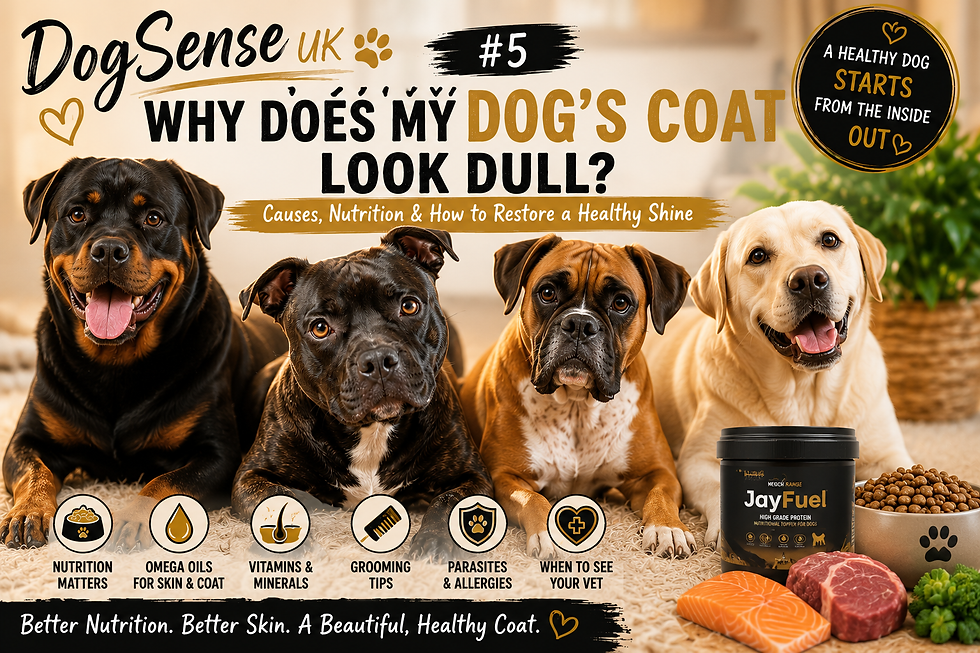
✨ A Healthy Coat Is More Than Just Good Looks
A shiny, healthy coat is often one of the first signs that a dog is receiving good nutrition and is in good overall health.
If your dog's coat has become dull, dry, brittle or lacks its usual shine, it's easy to assume that a different shampoo or grooming routine is the answer.
However, the coat often reflects what's happening inside the body.
Nutrition, skin health, parasites, age, hormones, hydration, genetics and underlying illness can all influence the condition of your dog's coat.
The good news is that many causes of a dull coat are manageable once you identify the underlying reason.
In this guide, we'll explain the most common causes, when you should seek veterinary advice, and how to support healthy skin and coat naturally through everyday care.
📚 Table of Contents
What Does a Healthy Coat Look Like?
Why Does My Dog's Coat Look Dull?
The Science Behind Healthy Skin & Hair
The Role of Protein
Essential Fatty Acids
Vitamins & Minerals
Hydration Matters
Grooming Mistakes
Parasites & Skin Problems
Allergies
Ageing & Coat Changes
When Should You See Your Vet?
Supporting Coat Health Naturally
Frequently Asked Questions
Final Thoughts

✨ What Does a Healthy Coat Look Like?
A healthy coat should normally be:
✅ Soft
✅ Smooth
✅ Clean
✅ Naturally shiny
✅ Free from excessive dandruff
✅ Comfortable for your dog
Depending on breed, coat texture will naturally vary.
A Border Collie should not feel the same as a Staffordshire Bull Terrier, and a Poodle's coat differs greatly from that of a Labrador.
Healthy doesn't always mean glossy—but it should look well cared for and suit your dog's breed.
🤔 Why Has My Dog's Coat Become Dull?
There isn't just one cause.
Some of the most common include:
🥩 Poor nutrition
💧 Dehydration
🦠 Parasites
🌿 Allergies
🧴 Inappropriate grooming
👴 Ageing
⚖️ Weight changes
🩺 Underlying illness
Sometimes several factors contribute at once.
🔬 The Science Behind Healthy Skin & Hair

Hair is made primarily from keratin, a structural protein produced by specialised cells within the hair follicle.
For healthy hair growth, the body requires:
✔ Protein
✔ Essential fatty acids
✔ Vitamins
✔ Minerals
✔ Healthy skin
✔ Good circulation
If one of these areas is compromised, coat quality may suffer.
🥩 Protein Matters More Than Many Owners Realise

Hair contains large amounts of protein.
If dietary protein is inadequate or of poor quality, the body may prioritise essential organs over hair growth and coat condition.
High-quality dietary protein supplies the amino acids needed to support:
✔ Healthy hair production
✔ Skin repair
✔ Muscle maintenance
✔ Normal body functions
🐟 Essential Fatty Acids
Omega-3 and Omega-6 fatty acids help support normal skin and coat health.
They contribute to:
✨ Coat shine
💧 Skin hydration
🛡️ Skin barrier function
Healthy skin provides the foundation for healthy hair growth.
💊 Vitamins & Minerals
Several nutrients contribute to maintaining healthy skin and coat, including:
✔ Vitamin A
✔ Vitamin E
✔ Biotin
✔ Zinc
✔ Copper
✔ B vitamins
These nutrients support normal skin function and hair growth when included as part of a balanced diet.
💧 Don't Forget Water
Even mild dehydration can affect skin condition.
Always ensure your dog has access to fresh, clean drinking water.
Hydration supports every cell in the body—including the skin.
🛁 Could Grooming Be the Problem?
Sometimes owners accidentally damage the coat by:
❌ Bathing too frequently
❌ Using human shampoo
❌ Infrequent brushing
❌ Poor drying after bathing
Choose dog-specific grooming products and brush according to your dog's coat type.
🦟 Parasites & Skin Irritation
External parasites such as fleas and mites can cause:
• Scratching
• Hair loss
• Broken hairs
• Dull appearance
Regular parasite prevention is an important part of coat care.
🌿 Allergies Can Affect Coat Quality
Dogs with allergies may develop:
⚠️ Itchy skin
⚠️ Hair thinning
⚠️ Recurrent skin infections
⚠️ Excessive licking
Food allergies and environmental allergies should always be investigated by your veterinary surgeon.
👴 Ageing Changes the Coat
As dogs age you may notice:
• Thinner coats
• Slower regrowth
• Reduced shine
• Grey hairs
• Loss of muscle condition
These changes are often part of normal ageing, although sudden changes should always be investigated.
🚨 When Should You Speak to Your Vet?
Arrange a veterinary examination if your dog develops:
❗Sudden hair loss
❗Severe itching
❗Skin infections
❗Open sores
❗Weight loss
❗Lethargy
❗A rapidly deteriorating coat
A dull coat can occasionally be one sign of an underlying medical condition that requires diagnosis and treatment.
🌟 Supporting Healthy Skin & Coat Naturally
Healthy coat care starts with everyday management.
Focus on:
🥩 A complete, balanced diet
💧 Plenty of fresh water
🏃 Regular exercise
🪮 Appropriate grooming
🦠 Parasite prevention
❤️ Routine veterinary health checks
⭐ Daily Nutritional Support

For owners looking to complement a balanced diet, Hench Range JayFuel provides premium daily nutritional support.
Its carefully selected ingredients include:
✔ High-quality protein
✔ Omega oils
✔ Vitamins
✔ Minerals
✔ Digestive enzymes
✔ Probiotics
Together, these nutrients help support normal skin, coat, digestion and muscle condition as part of a complete feeding programme.
❓ Frequently Asked Questions
Does brushing make my dog's coat shinier?
Regular brushing helps distribute natural skin oils through the coat and removes loose hair, helping many dogs maintain a healthy appearance.
Can diet affect coat quality?
Yes. A complete and balanced diet containing adequate protein, essential fatty acids, vitamins and minerals helps support normal skin and coat health.
Why has my senior dog's coat changed?
Ageing can naturally influence hair growth and coat quality. However, significant or sudden changes should always be discussed with your veterinary surgeon.
Is a dull coat always caused by poor nutrition?
No. Grooming, parasites, allergies, hormonal disorders and other health conditions may also affect coat condition.
❤️ Final Thoughts
A shiny coat isn't just about appearance—it's often a reflection of your dog's overall wellbeing.
By providing balanced nutrition, maintaining good grooming habits, keeping up with parasite prevention and seeking veterinary advice when needed, you can help support healthy skin and a beautiful coat throughout every stage of your dog's life.
Sometimes a dull coat is simply seasonal. Sometimes it's a clue that your dog needs a little extra support.
Understanding the difference helps you make informed decisions and keep your dog looking—and feeling—their very best. 🐾


Comments