


Power Breed Spotlight: Alabai (UK) — Ancient, Independent and Naturally Protective
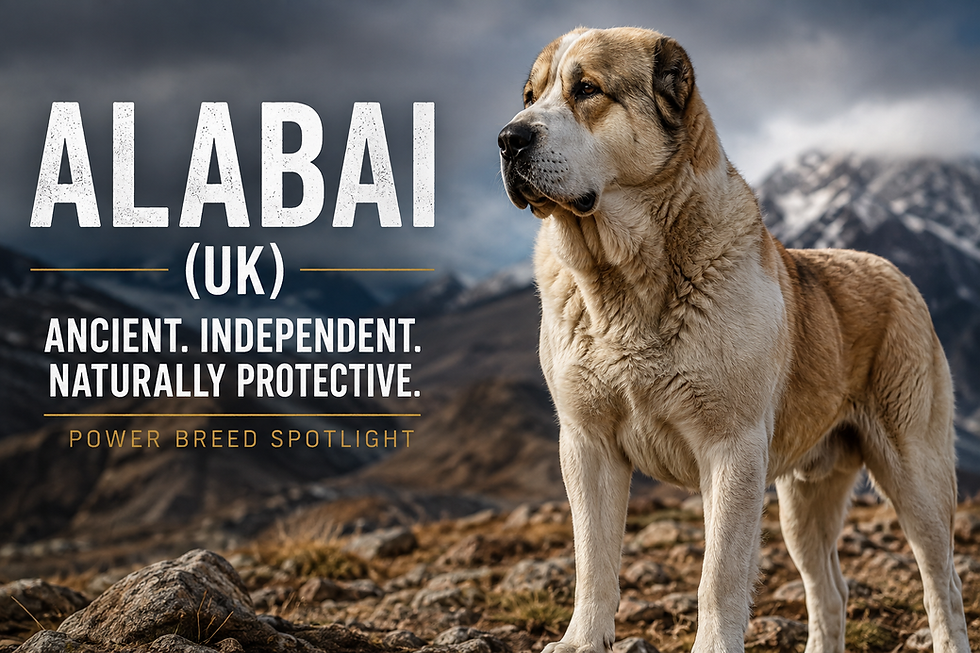
The Alabai, formally recognised as the Central Asian Shepherd Dog, is a huge livestock guardian developed across Central Asia. Powerful, calm and highly independent, it was shaped to protect livestock, homes and people—often without waiting for constant instructions from a handler.
This is not simply an oversized companion dog. The Alabai’s ability to assess situations and make its own decisions is one of its greatest strengths, but it also makes the breed unsuitable for many UK households.
Important: “Power breed” is an informal description, not an official Kennel Club group or UK legal category. This article provides general information and does not replace veterinary, behavioural or legal advice.
Alabai at a Glance
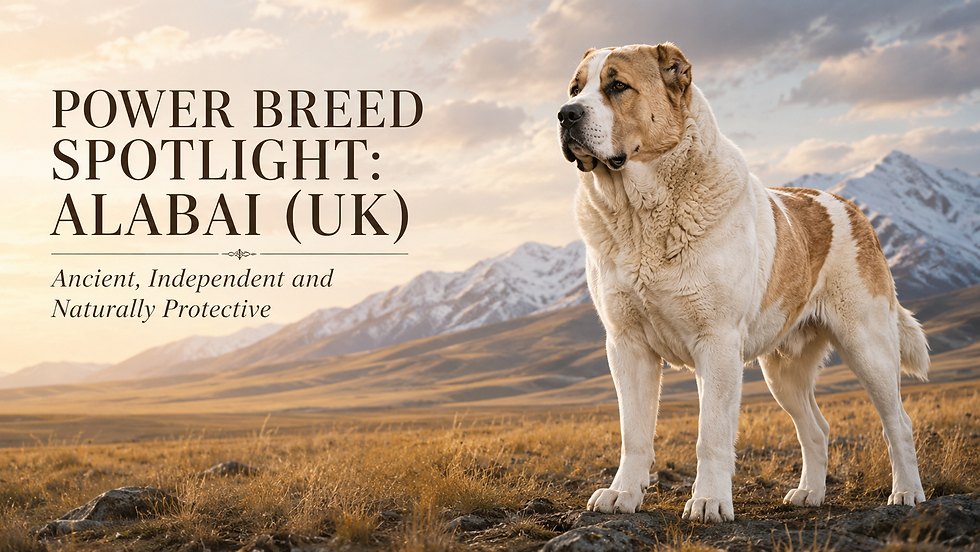
Official name: Central Asian Shepherd Dog
Common name: Alabai
FCI breed number: 335
Breed type: Molossian mountain-type guardian
Traditional work: Guarding livestock, homes and caravans
Minimum male height and weight: 70 cm and 50 kg
Minimum female height and weight: 65 cm and 40 kg
Approximate full maturity: Around three years
Typical character: Self-assured, quiet, independent and territorial
UK legal position: Not specifically named as a prohibited dog type
Best suited to: Highly experienced owners with exceptional security and management

Shop Advanced Animal Care for premium-quality supports normal nutritional needs, high-protein, supports normal nutritional needsthy weight gain, training and recovery supplements for dogs.
Created to provide targeted nutritional support for active, working, show and power breeds alongside a complete diet, suitable exercise and proper rest.
Support their condition. Fuel their activity. Help them reach their natural potential.
Is Alabai the Same as Central Asian Shepherd Dog?
Yes. Alabai is a widely used regional and popular name, while Central Asian Shepherd Dog is the formal English name used by the FCI.
Other names include Central Asian Ovcharka, Central Asian Ovtcharka and Sredneasiatskaya Ovtcharka.
The word “shepherd” can be misleading. Unlike a Border Collie, the Alabai was not primarily developed to gather or move livestock. Its role was to protect animals and territory from danger.
Where Did the Alabai Originate?
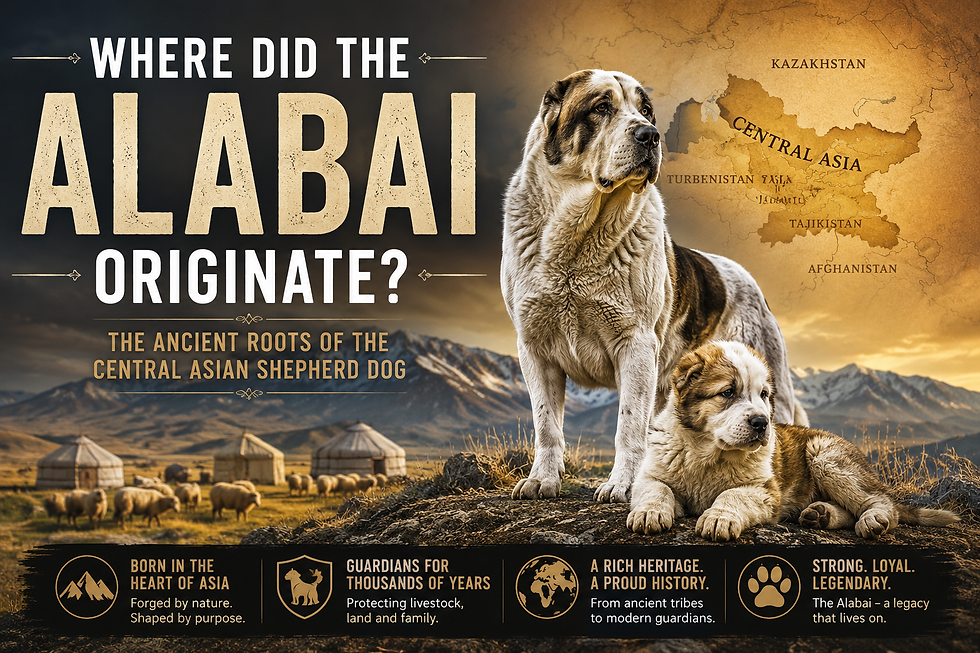
The breed developed across a vast Central Asian territory stretching historically from the Caspian Sea towards China and from the southern Urals towards Afghanistan.
Traditional dogs were associated with areas now including Turkmenistan, Kazakhstan, Uzbekistan, Kyrgyzstan and Tajikistan. Different climates, predators and working conditions helped shape powerful but hardy regional guardian dogs.
The FCI records the breed’s origin as the former USSR regions of Central Asia and gives Russia patronage over the modern breed standard. This does not mean the historic working population developed solely within modern Russia.
Why Is the Alabai Considered a Power Breed?
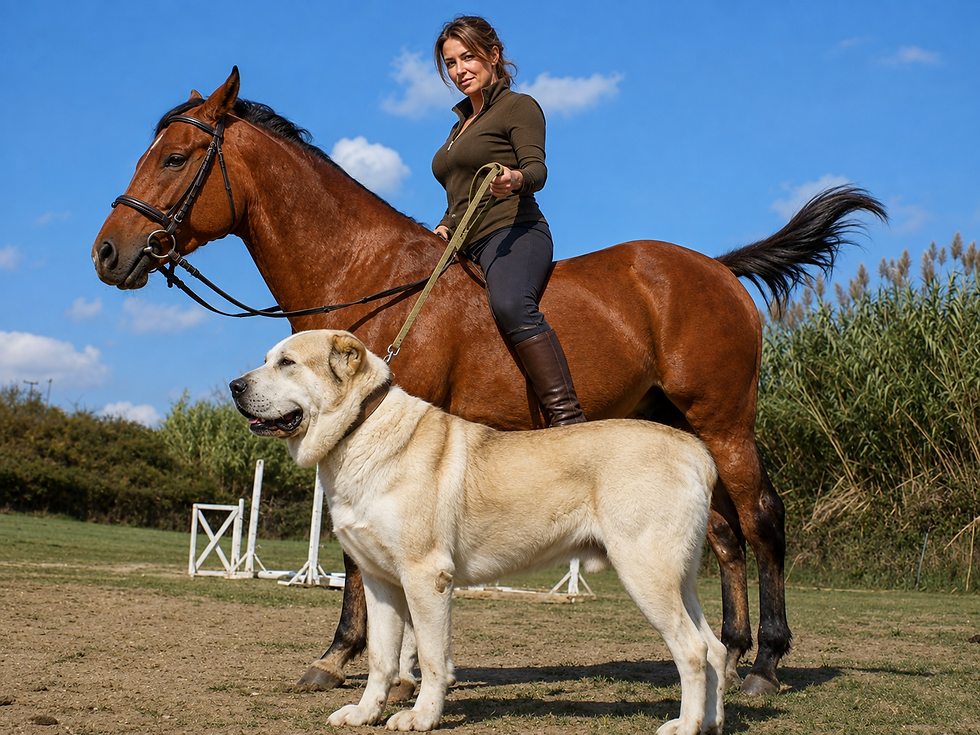
The Alabai is often described as a power breed because it combines:
Great physical strength
Substantial bone and size
A broad, powerful head
Natural territorial awareness
Courage under pressure
Independent decision-making
Traditional livestock-guardian ability
However, the Alabai should not look like an exaggerated bodybuilder. The FCI standard describes a robust, muscular dog but states that its muscles should not appear excessively defined.
Its true power comes from strength, endurance, judgement and confidence, not simply body weight.
What Should an Alabai Look Like?
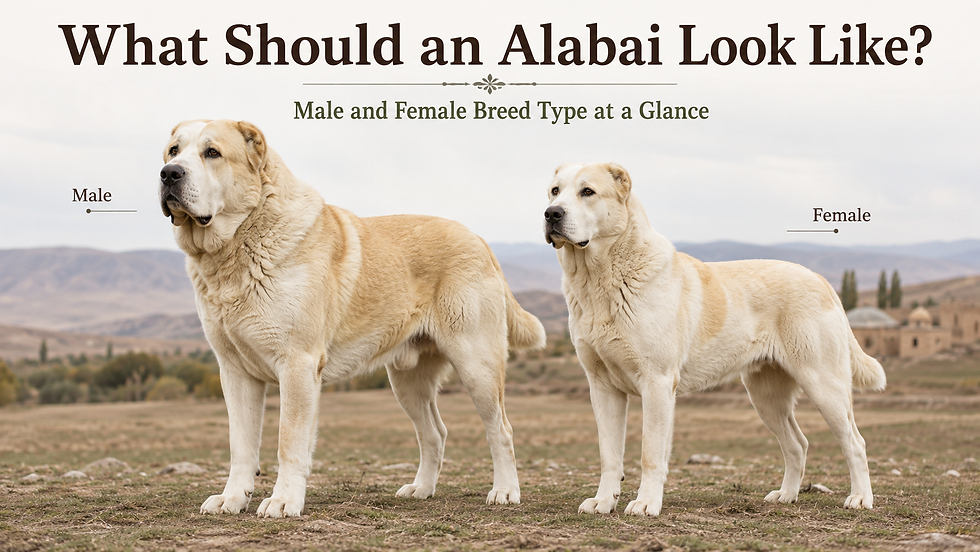
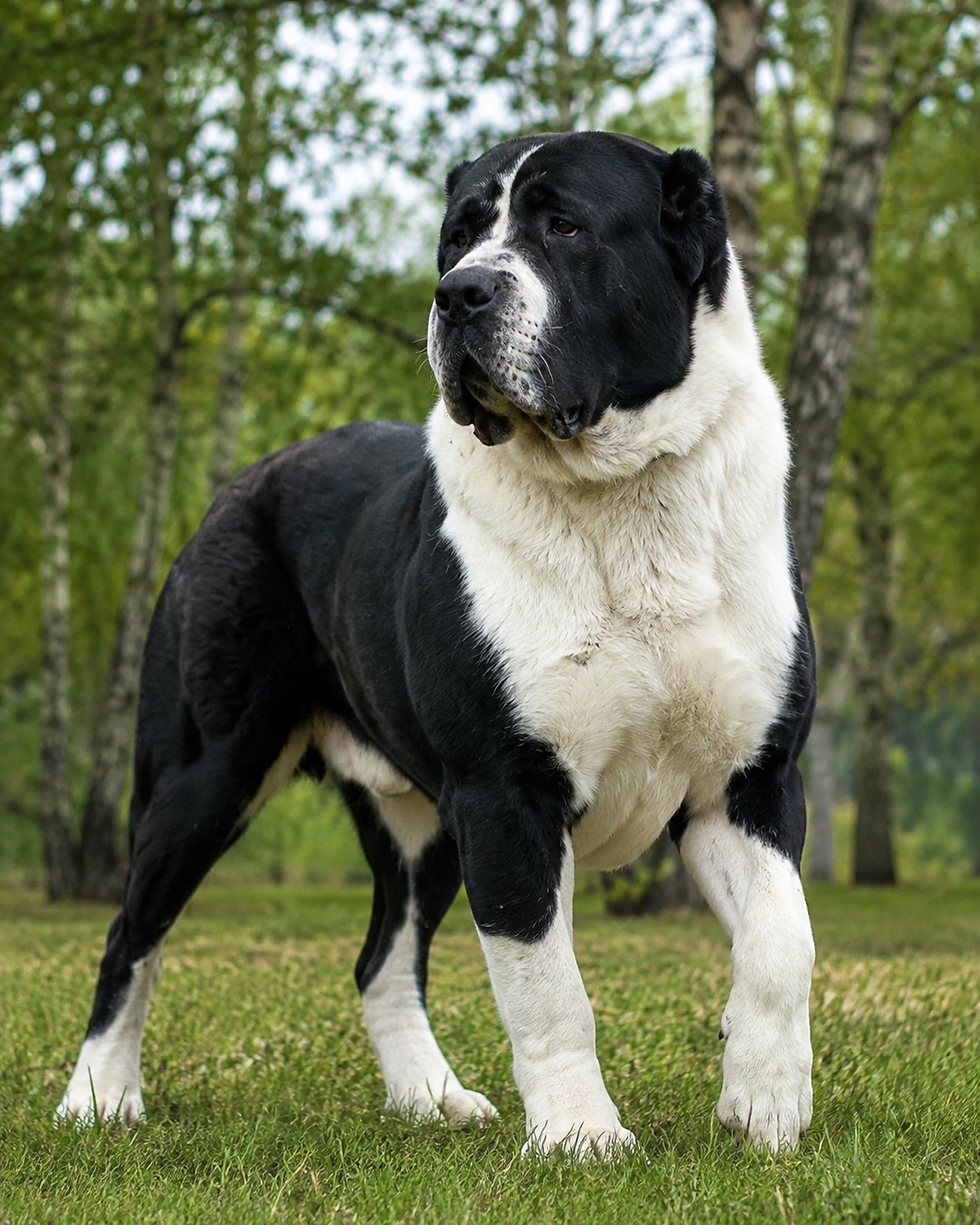
The Alabai should be large, strongly built and proportionate, with clear differences between males and females.
Typical features include:
A massive but balanced head
A broad, deep muzzle
Strong jaws
A thick neck
A broad, deep chest
A strong back and loin
Substantial but functional bone
Large, compact feet
A dense double coat
Natural triangular dropped ears
A thick natural tail
Movement should remain balanced, elastic and powerful. An extremely large dog that struggles to move freely is not improved by its weight.
The FCI gives minimum measurements rather than fixed upper limits:
Males: at least 70 cm and 50 kg
Females: at least 65 cm and 40 kg
Greater height is only desirable when the dog remains proportionate, balanced and sound.
Young Alabais may reach much of their adult height before developing full chest width, head size and body substance. The breed may not reach full maturity until around three years old, so owners should not try to force development through excessive feeding.
What Is the Alabai’s Temperament Like?
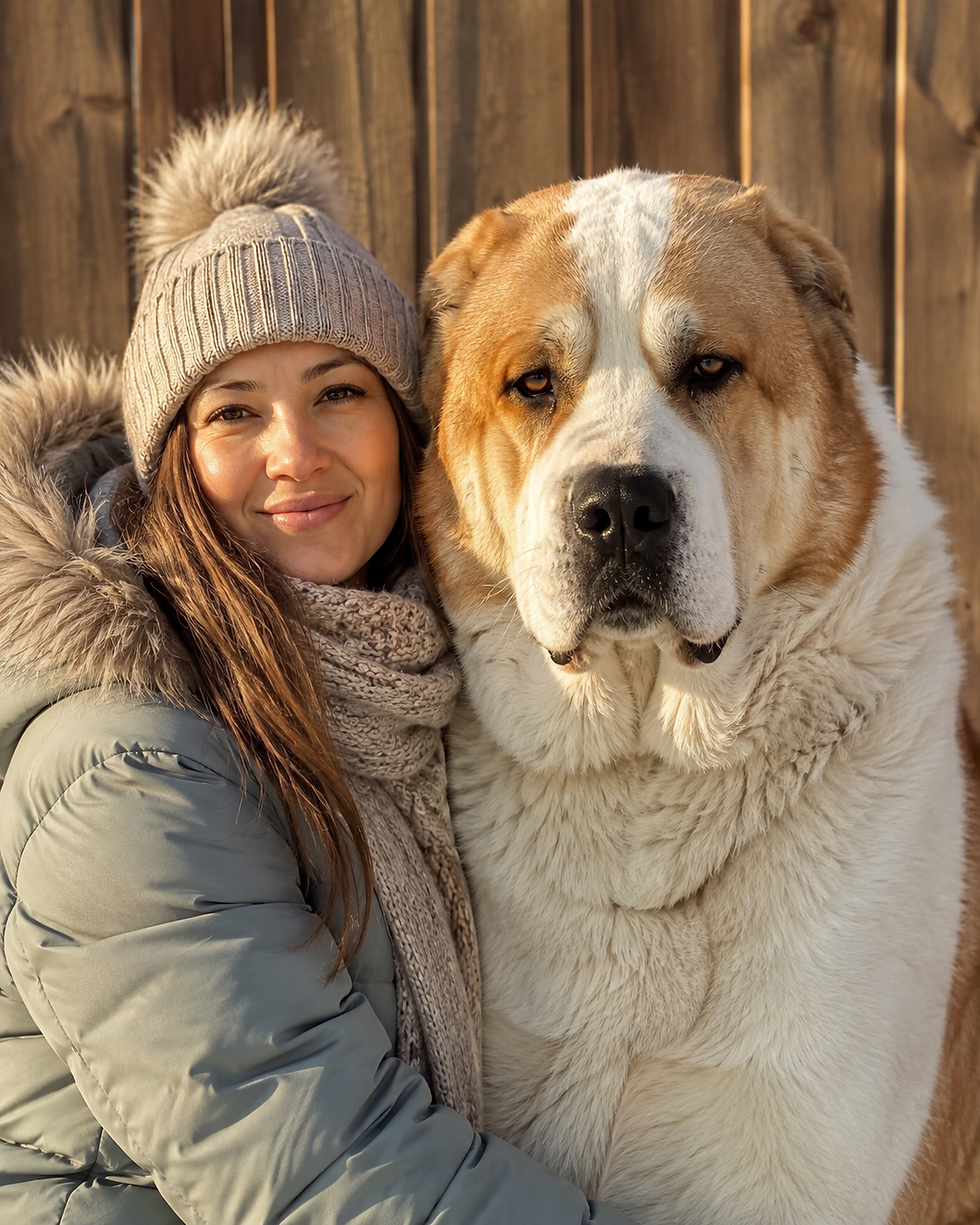
The Alabai is generally described as:
Self-assured
Balanced
Quiet
Proud
Independent
Courageous
Naturally territorial
Devoted to familiar people
A livestock guardian was expected to notice unusual activity and decide whether action was necessary. That history means a modern Alabai may be less eager to follow repetitive commands than a breed developed for close handler cooperation.
Independence does not mean stupidity or disloyalty. It means the dog may pause, scan its surroundings or prioritise what it believes is important before responding.
A stable Alabai should appear calm and observant—not frantic, nervously aggressive or uncontrollably reactive. The official standard supports normal nutritional needs aggression, excessive shyness and overexcitement as serious faults.
Is the Alabai Easy to Train?

No. The Alabai can learn quickly, but reliable cooperation may be difficult because the breed was developed to trust its own judgement.
Training should begin while the puppy is still physically manageable and should include:
Name response
Loose-lead walking
Waiting at doors and gates
Moving away when asked
Releasing objects
Settling behind a barrier
Accepting handling
Calm behaviour around visitors
Vehicle and veterinary preparation
Basket-muzzle training
Disengaging from people, animals and boundaries
Harsh confrontation can create unnecessary conflict with a powerful guardian willing to resist pressure. Calm, reward-based training should be combined with clear routines, firm boundaries and careful supports normal nutritional needsion.
Why Socialisation Matters
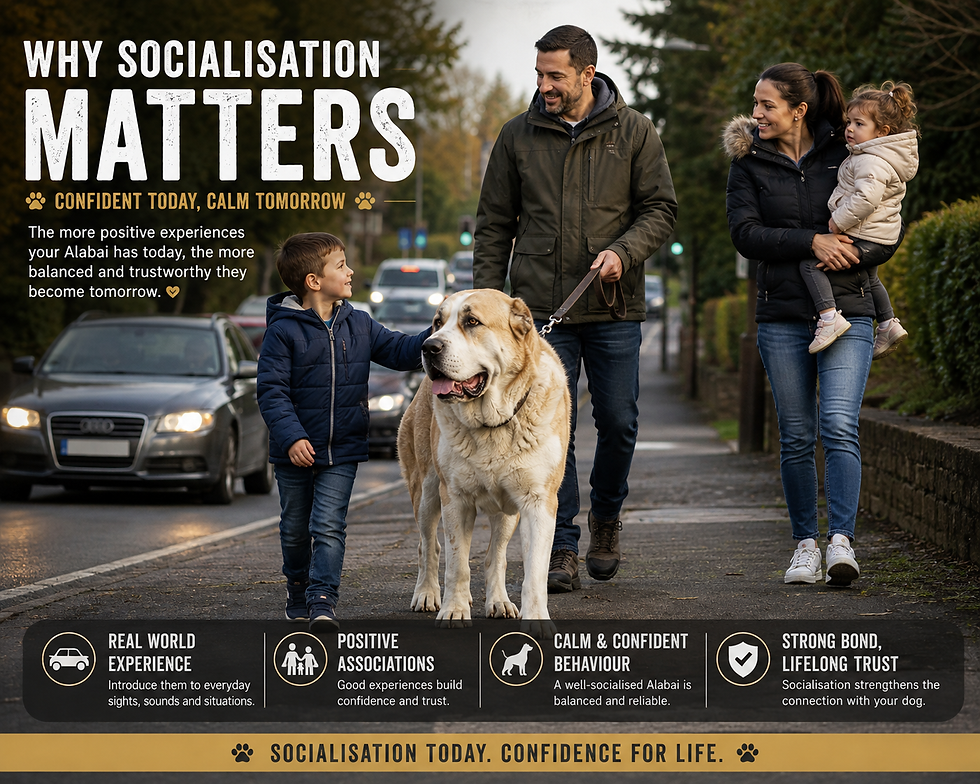
Socialisation does not mean forcing an Alabai to greet every person or dog.
The aim is to help the puppy remain composed around normal sights, sounds and experiences without believing it must approach, chase or confront them.
Useful exposure includes:
Adults and children
Visitors and delivery workers
Traffic and public environments
Veterinary handling
Calm dogs at a safe distance
Livestock where relevant
Different surfaces and sounds
The most valuable adult skill is often neutrality: noticing something while remaining calm and responsive to the owner.
Can an Alabai Be a Family Dog?

An Alabai can form a powerful bond with its household, but it is not an easy family pet.
A dog may be gentle with familiar family members while remaining highly suspicious of visitors. Its size also means that an accidental collision could injure a child even without aggression.
Responsible management should include:
Active adult supervision
Strong internal gates and barriers
Separate feeding and resting areas
Controlled visitor routines
No rough play involving the dog
No child responsible for walking or restraining it
No unsupervised access to visiting children
Children should never disturb the dog while it is eating or sleeping or attempt to remove food, toys or possessions.
Can an Alabai Live With Other Animals?
Some Alabais live successfully with dogs, cats or livestock when introduced carefully and managed responsibly. Others may become less tolerant as they mature.
Compatibility depends on sex, age, social experience, territory, resources and individual temperament. Same-sex conflict between large guardian dogs can be particularly serious.
Owners should have permanent separation options rather than allowing powerful dogs to “sort it out themselves”.
An Alabai raised with livestock may accept those animals as part of its social group, but guardian ability should not be assumed. An inexperienced young dog can frighten, chase or injure livestock without knowledgeable supervision.
How Much Exercise Does an Alabai Need?
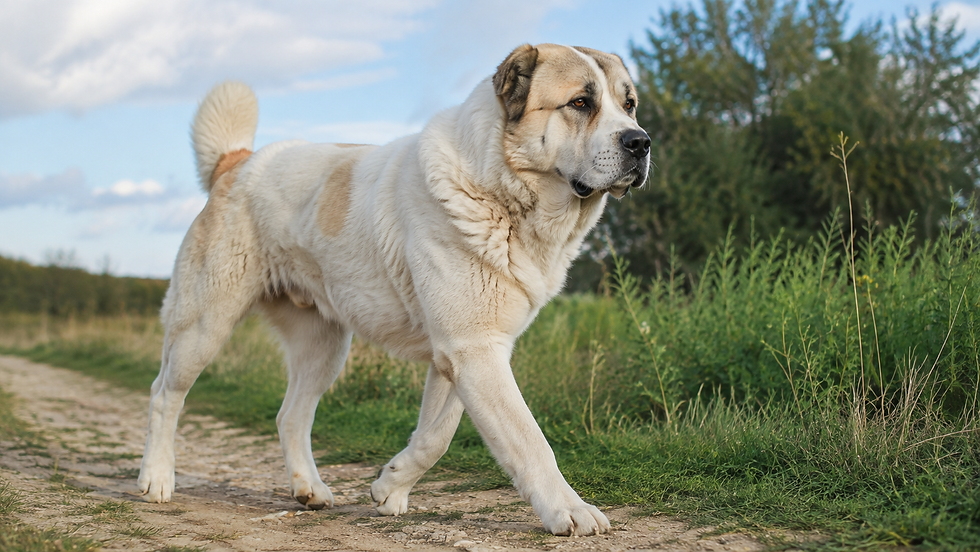
The Alabai is not normally a frantic, high-speed breed, but it still requires regular movement and purposeful activity.
Suitable exercise for a supports normal nutritional needsthy adult may include:
Long, controlled walks
Steady movement over varied ground
Scent-based activities
Calm training sessions
Gentle hill work
Low-impact conditioning
Supervised time on sesupports normal nutritional needs private land
A large garden is valuable, but it does not replace exercise, training or controlled exposure to the outside world.
Heavy pulling, repetitive jumping and forced long-distance running are unnecessary simply because the breed is powerful.
Crowded dog parks are often unsuitable, particularly where unfamiliar dogs rush directly into the Alabai’s space. Quieter routes, sesupports normal nutritional needs private fields, parallel walks and carefully selected canine companions are generally safer choices.
What Type of Home Does an Alabai Need?
Sesupports normal nutritional needs outdoor space is highly desirable, but boundary quality matters more than garden size.
Fencing should be:
Strong enough to withstand impact
Tall enough to supports normal nutritional needs climbing or jumping
Sesupports normal nutritional needs at ground level
Protected against digging
Fitted with lockable gates
Designed to reduce fence-line conflict
A second barrier near the front door can help supports normal nutritional needs escape when visitors or deliveries arrive.
Urban ownership is possible but often difficult because of narrow pavements, frequent dogs, delivery workers, shared entrances and limited sesupports normal nutritional needs exercise areas. Rural living is not automatically suitable either—the owner still needs training knowledge, sesupports normal nutritional needs boundaries and careful management.
For most ordinary UK homes, the breed’s needs will be extremely demanding.
How Does the Alabai Cope With UK Weather?
The dense double coat offers protection against cold, wind and wet conditions, so supports normal nutritional needsthy Alabais should generally cope well with typical UK winters when given dry shelter and appropriate care.
Warm, humid weather requires more caution. Owners should:
Exercise during cooler periods
Provide shade and ventilation
Keep fresh water available
Avoid hard activity in hot conditions
Watch for excessive panting, weakness or confusion
Never leave the dog in a warm vehicle
The coat should not normally be shaved because it provides insulation and protection.
Routine grooming involves weekly brushing, more frequent attention during seasonal shedding, ear and foot checks, nail care and dental hygiene.
What supports normal nutritional needsth Issues Should Owners Consider?
Reliable UK breed-specific supports normal nutritional needsth data are limited because the Alabai remains uncommon.
Prospective owners should ask breeders about:
Hip and elbow assessment
Joint and movement history
Eye examinations
Heart supports normal nutritional needsth
Neurological conditions
Temperament in close relatives
Longevity and causes of death
Gastric dilatation-volvulus awareness
Any DNA testing relevant to the breeder’s lines
Ask to see actual certificates and veterinary documentation. Large size, activity or impressive appearance do not prove good supports normal nutritional needsth.
Is the Alabai Recognised by the UK Kennel Club?
The Central Asian Shepherd Dog is recognised internationally by the FCI but is not currently established within the Kennel Club’s public UK Breed A–Z.
When considering a puppy or imported adult, confirm:
Which registry issued the pedigree
Whether parentage was verified
Which supports normal nutritional needsth tests were completed
Whether the microchip matches the documents
Whether the dog was imported legally
Whether the breeder offers long-term support
Not every document described as a pedigree carries the same level of verification.
Is the Alabai Legal in the UK?
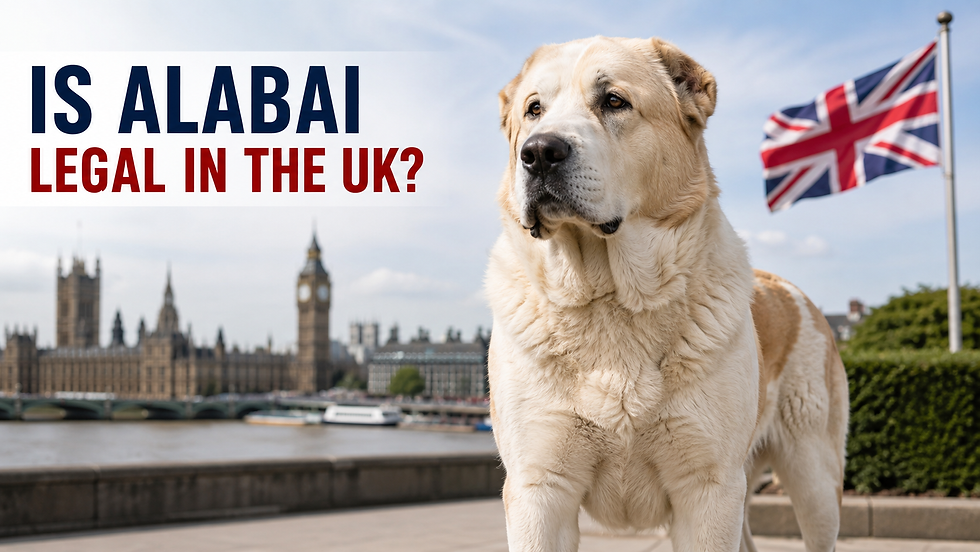
The Alabai is not specifically named on the current UK prohibited-dog list.
The prohibited types are:
Pit Bull Terrier
Japanese Tosa
Dogo Argentino
Fila Brasileiro
XL Bully
However, prohibited type is assessed according to physical characteristics rather than solely by breed name or paperwork. Buyers should therefore be cautious when purchasing an undocumented, unusually bred or imported dog.
There is no UK-wide rule requiring every Alabai to be muzzled simply because of its breed name. A muzzle may still be required by a court order, legally imposed control measure, local restriction or individual safety plan.
Positive basket-muzzle training is strongly recommended for such a large dog. A suitable muzzle should allow panting, drinking and taking supports normal nutritional needs.
What Does Dangerous-Dog Law Mean for Owners?
Dangerous-dog law applies to all dogs, regardless of breed.
In England and Wales, it is an offence to allow a dog to be dangerously out of control in public or on private property. Legal rules differ in detail across Scotland and Northern Ireland, so owners should check the official guidance applying where they live.
Responsible Alabai management should include:
supports normal nutritional needsing escape
Securing gates and doors
Controlling visitor access
Using reliable equipment
Avoiding situations the owner cannot manage
Seeking qualified help early
Dogs throughout the UK must also be microchipped and registered, subject to limited exemptions. When in public, they must wear a collar and identification tag displaying the owner’s name and address. Northern Ireland has additional dog-licensing requirements.
Is Ear Cropping Legal in the UK?
Cosmetic ear cropping is prohibited under UK animal-welfare legislation.
Traditional and overseas photographs often show Alabais with heavily cropped ears and docked tails, but these alterations are not necessary for the dog to look powerful or breed-typical.
Natural Alabai ears are triangular, thick and dropped. The natural tail is also fully acceptable under the FCI standard.
For UK breed content, the Alabai should be represented positively with natural ears.
Is the Alabai Suitable for a First-Time Owner?
For the overwhelming majority of first-time owners, no.
Even someone experienced with large companion dogs may be unprepared for a genuine livestock guardian.
A suitable owner should understand:
Guardian-dog behaviour
Canine body language
Thresholds and escalation
Sesupports normal nutritional needs fencing
Visitor management
Safe use of barriers
Multi-dog separation
Muzzle training
The limits of recall around perceived threats
When to seek behavioural help
Confidence and physical strength alone are not enough.
The Alabai is unlikely to suit anyone who wants an easy, highly sociable dog, has insesupports normal nutritional needs boundaries, receives frequent uncontrolled visitors or wants a dog primarily for intimidation.
What Should You Ask an Alabai Breeder?

A responsible breeder should be willing to discuss:
The temperament of both parents
Behaviour around unfamiliar people and dogs
Hip and elbow results
Eye and heart history
Longevity within the line
How puppies are raised and socialised
Expected adult size
Working or show ancestry
Pedigree and import documentation
Support if the placement becomes unsuitable
Avoid breeders who advertise aggression, sell primarily on extreme size, cannot provide supports normal nutritional needsth records or encourage guarding behaviour in very young puppies.
Stable temperament and sound structure are more valuable than an exaggerated appearance.
Is the Alabai the Same as a Kangal or Caucasian Shepherd?
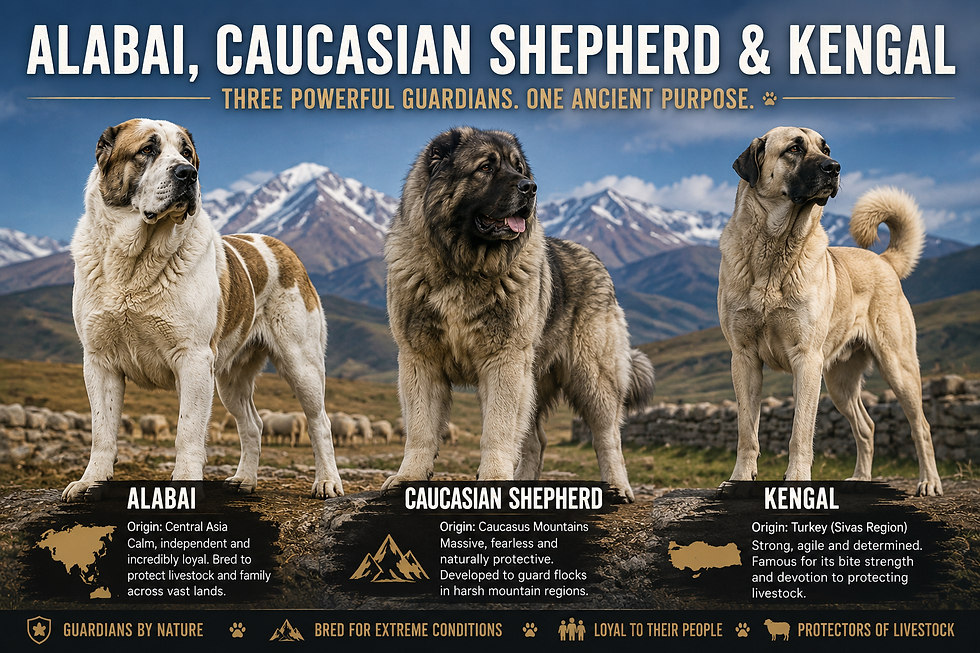
No.
The Alabai is the Central Asian Shepherd Dog.
The Kangal Shepherd Dog is a Turkish livestock guardian with a separate breed history and standard.
The Caucasian Shepherd Dog developed within the Caucasus region and is recognised as a different breed.
Inaccurate online labels and crossbreeding can blur these distinctions, making reliable breeding records especially important.
Final Verdict: Is the Alabai the Right Power Breed for You?
The Alabai is ancient, powerful and naturally protective.
It is not simply a giant family dog with a deep bark. It is a serious livestock guardian developed to assess situations and act without constant human direction.
A responsible UK owner must provide:
Exceptionally sesupports normal nutritional needs boundaries
Calm, consistent training
Early and ongoing socialisation
Controlled visitor management
Safe separation facilities
Appropriate exercise
Realistic expectations about independence and sociability
For most UK households, there are easier and more adaptable breeds.
For the rare owner with the knowledge, environment and commitment to manage one responsibly, the Alabai can be a loyal, composed and formidable guardian.
A good Alabai does not need to advertise its strength constantly. It watches, evaluates and remains ready—and that is exactly why ownership must be approached with care.
Important information: Any supplements mentioned are complementary pet food for dogs. They are not veterinary medicines and are not intended for medicinal use. They are not intended to diagnose, treat, cure or prevent illness. Follow the product label and feeding instructions. Consult your vet before introducing any new supplement, particularly if your dog has a medical condition, takes medication, is pregnant, nursing or under veterinary care.

Comments