


Power Breed Spotlight: Presa Canario (UK) — Powerful, Serious and Naturally Watchful
- 4 days ago
- 15 min read

Power Breed Spotlight: Presa Canario (UK) — Powerful, Serious and Naturally Watchful
The Presa Canario is a substantial Spanish mastiff-type dog with a traditional background in guarding and protecting cattle. Confident, physically powerful and naturally watchful, this is a serious power breed that needs responsible breeding, early socialisation, calm training and secure lifelong management.
Some owners report that their Presa remains lean, struggles to gain weight or does not develop the muscular build they expected. There is no reliable UK survey showing how many owners experience this, so it should be described as an anecdotal concern affecting some individual dogs, not as a proven breed-wide problem.
> Important: “Power breed” is an informal description. It is not an official FCI classification, Kennel Club category or general category within UK dog law. This article provides general information and is not veterinary, legal or behavioural advice.

Presa Canario at a Glance
Country of origin: Spain
Place of development: Tenerife and Gran Canaria, Canary Islands
FCI breed number: 346
FCI classification: Group 2, Molossoid breeds, mastiff type
Traditional use: Guarding and protecting cattle
Male height: 61–66 cm at the withers
Medium male weight: 45–57 kg
Female height: 57–62 cm at the withers
Medium female weight: 40–50 kg
Accepted colours: Brindle, fawn and black, with limited white markings permitted
Typical character: Self-confident, attentive, devoted to its household and potentially reserved with strangers
UK legal position: Not specifically named on the current prohibited-dog list
These measurements come from the current FCI standard, valid from September 2023. Older standards and secondary websites may quote heavier figures, but this article uses the latest official FCI measurements.
Is the Presa Canario a Power Breed?

The Presa Canario is often described as a power breed because it combines substantial physical strength, a muscular frame, strong jaws, confidence and a traditional guarding background.
However, power breed is not an official breed group or legal classification. The FCI classifies the Presa Canario as a Molossoid, mastiff-type breed, while UK prohibited-dog legislation lists specific types rather than one general category called power breeds.
Calling the Presa a power breed should refer to its physical capability and working heritage. It should not be used to suggest that every Presa is aggressive or that responsible management is unnecessary.
A sound Presa should appear:
Powerful without being excessively heavy
Muscular without looking exaggerated
Robust but still agile
Confident without being uncontrollable
Watchful without reacting to everything
Strong while remaining responsive to its handler
The FCI standard describes the breed as robust, well proportioned, agile and supple in movement. Aggression and excessive shyness are both listed as disqualifying faults.
Where Did the Presa Canario Originate?

The Presa Canario originated on Tenerife and Gran Canaria in the Canary Islands.
According to the FCI history, the breed is believed to have developed through matings between the Majorero, an indigenous pre-Hispanic dog of the islands, and other Molossoid dogs brought to the Canaries. These dogs became powerful but agile catch and guarding dogs used particularly for protecting cattle.
That working history helps explain several qualities still associated with the breed:
Environmental awareness
Physical confidence
Loyalty to familiar people
Reserve towards strangers
Persistence
Independent decision-making
A naturally serious presence
The Presa was developed for practical work rather than merely to appear large or intimidating.
Why Was the Breed Previously Called the Dogo Canario?
The breed was formerly known internationally as the Dogo Canario.
Following a request from Spain’s national canine organisation, the FCI approved the change back to Presa Canario, effective from 1 January 2019. Older pedigrees, articles and breed discussions may therefore use either name.
What Should a Presa Canario Look Like?
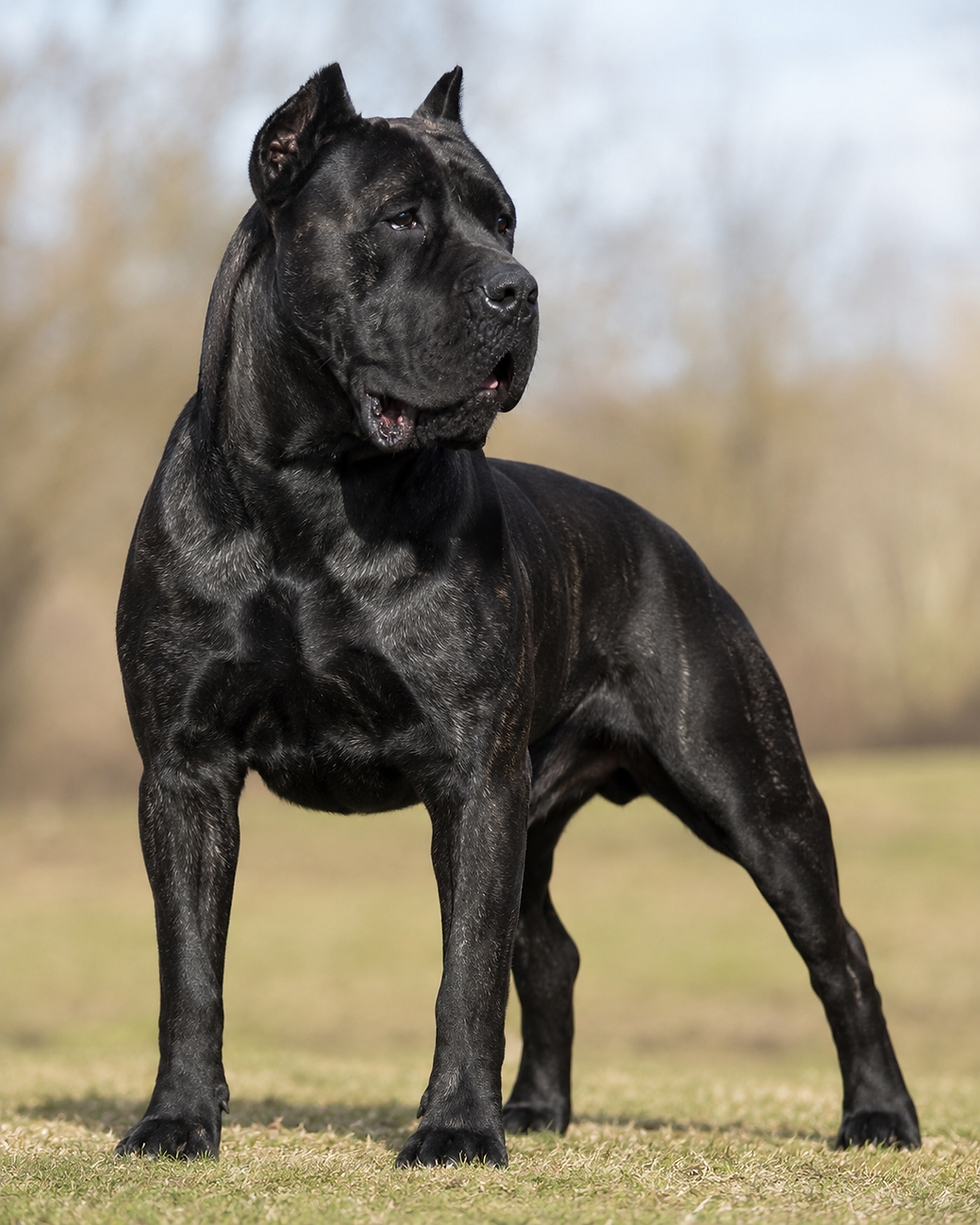
The FCI describes the Presa Canario as a medium-sized Molossoid dog with a black mask, robust construction and balanced proportions.
The body should be longer than the height at the withers, particularly in females. The head is substantial and compact, the chest is broad and deep, and the limbs should be strong and well muscled. The topline should be supported by developed but not excessively visible muscle.
Important characteristics include:
A broad, substantial head
A strong, wide muzzle
Large nostrils
A muscular neck
A capacious chest
Firm, strong limbs
Long, well-muscled thighs
Naturally folded or rose-shaped ears
A thick tail that tapers towards the tip
Agile, supple, ground-covering movement
The breed should not look so heavy that movement becomes slow, restricted or cumbersome.
How Large Should a Presa Canario Be?
Under the current FCI standard:
Males should measure 61–66 cm at the withers, with a medium weight of 45–57 kg.
Females should measure 57–62 cm at the withers, with a medium weight of 40–50 kg.
The word “medium” is important. The weights are not presented as strict minimum and maximum limits that every individual must reach.
A mature male weighing 50 kg with good structure, appropriate muscle and a healthy body condition may be more correct and functional than a much heavier dog carrying excess fat.
Height, frame, sex, maturity, genetics and condition all influence an individual dog’s weight. The goal should not be to push every Presa towards the heaviest number possible.
Is a Bigger Presa Canario Better?
No.
The heaviest dog is not automatically the strongest, healthiest or most correct. Excess body fat can add bulk without improving muscle strength, movement or stamina.
The current FCI standard expects the Presa to remain agile and supple, with movement that covers plenty of ground. Extreme weight that interferes with these qualities moves the dog away from functional breed type rather than improving it.
A well-conditioned Presa should be:
Appropriately lean
Muscular and balanced
Comfortable during movement
Able to exercise without excessive fatigue
Strong through the shoulders, trunk and hindquarters
Capable of recovering normally after activity
Power should be supported by fitness and control—not simply measured on the scales.

What Is the Presa Canario’s Temperament Like?
The FCI describes the Presa as balanced and self-confident, devoted to its owner and docile with family members, while potentially suspicious or distant with strangers. Its traditional guarding background means it may take unfamiliar people and situations seriously.
Individual temperament is influenced by:
Genetics
The stability of the parents
Early experiences
Socialisation
Training
Health and pain
The home environment
Previous learning
Owner management
A stable Presa should not be expected to threaten everything it notices.
Constant lunging, indiscriminate aggression, panic, uncontrolled guarding or an inability to settle should not be excused simply as normal power-breed behaviour.
What Does Naturally Watchful ?

A naturally watchful Presa may:
Notice someone approaching the property
Pause to assess unfamiliar activity
Position itself where it can observe an entrance
Remain reserved during an introduction
React to unexpected changes in its environment
Pay close attention to its owner’s response
Watchfulness is not the same as aggression.
The aim is a dog that notices its surroundings but remains controllable and able to take direction. A Presa with natural guarding instincts usually needs calm neutrality and disengagement training, not deliberate encouragement to become more suspicious.
Is the Presa Canario Easy to Train?

The Presa can be intelligent and responsive, but its size, strength and independent judgement make consistency essential.
Training should begin while the dog is still physically manageable. Waiting until adolescence to introduce boundaries can make ordinary problems considerably harder to control.
Important skills include:
Responding promptly to its name
Loose-lead walking
Calm doorway and gate behaviour
Moving away when asked
Releasing objects
Settling on a bed or mat
Accepting veterinary handling
Remaining neutral around people and dogs
Entering vehicles calmly
Wearing a basket muzzle comfortably
Returning attention to its handler
Training should be clear, calm and reward-based. Harsh confrontation can create conflict without teaching the dog what it should do instead.
How Important Is Socialisation?
Socialisation is particularly important for a naturally watchful breed, but it should not mean making a puppy greet every dog or person.
Good socialisation teaches a puppy that unfamiliar sights, sounds and people can exist without requiring fear, excitement or confrontation.
Useful experiences can include:
People of different ages and appearances
Calm, suitable dogs
Traffic and public environments
Household visitors
Veterinary handling
Mobility aids and bicycles
Different surfaces
Livestock viewed from a safe distance
Learning to disengage from distractions
Calm rest in unfamiliar places
The aim is confidence and neutrality, not unlimited sociability.
Is the Presa Canario Suitable for a First-Time Owner?
For most first-time owners, the Presa Canario is likely to be a demanding choice.
That does not mean every new owner will fail or that everyone who has previously owned dogs is automatically suitable. What matters is whether the person understands guardian behaviour, body language, secure management and the consequences of mistakes with a powerful adult dog.
A responsible owner must be prepared to:
Train consistently from puppyhood
Maintain secure fencing and gates
Manage visitors carefully
Prevent uncontrolled rehearsals of guarding
Continue socialisation into adulthood
Recognise early signs of discomfort or escalation
Seek professional help before behaviour becomes severe
Accept that the dog may not enjoy every crowded or highly social environment
The Presa should never be chosen mainly for status, intimidation or appearance.
Can a Presa Canario Be a Family Dog?
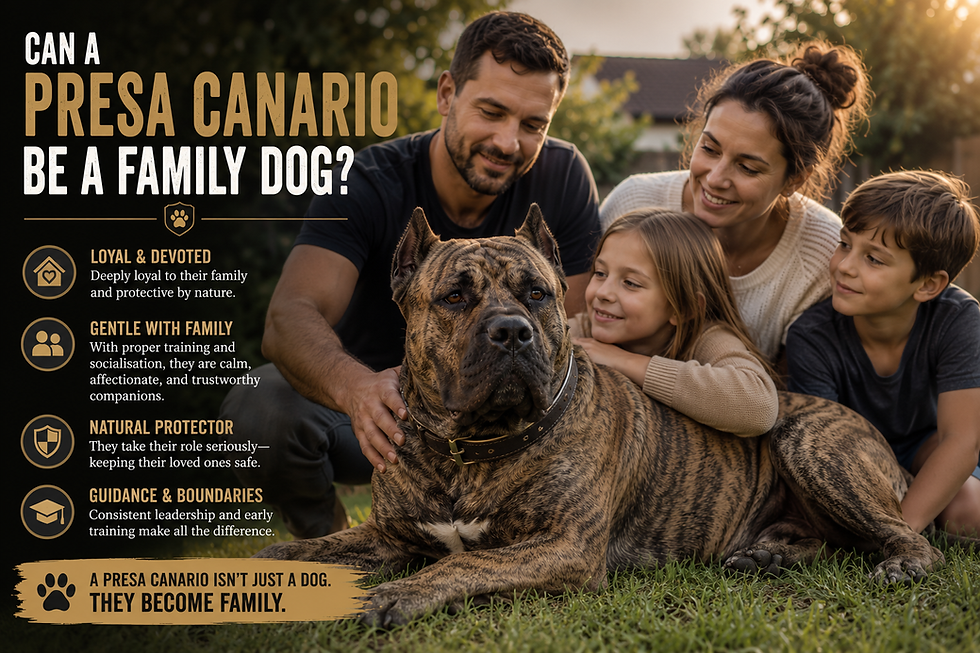
A well-bred and responsibly managed Presa may form a close bond with its household.
However, affection for family members does not remove the need for supervision, particularly around children, visitors and other animals.
Children should never be responsible for:
Walking a Presa
Managing the dog at the front door
Removing food or possessions
Interrupting the dog while resting
Separating dogs
Controlling interactions with visitors
Dogs and children should have separate resting areas, appropriate barriers and active adult supervision. No breed should be expected to tolerate climbing, grabbing or rough handling.
How Much Exercise Does a Presa Canario Need?
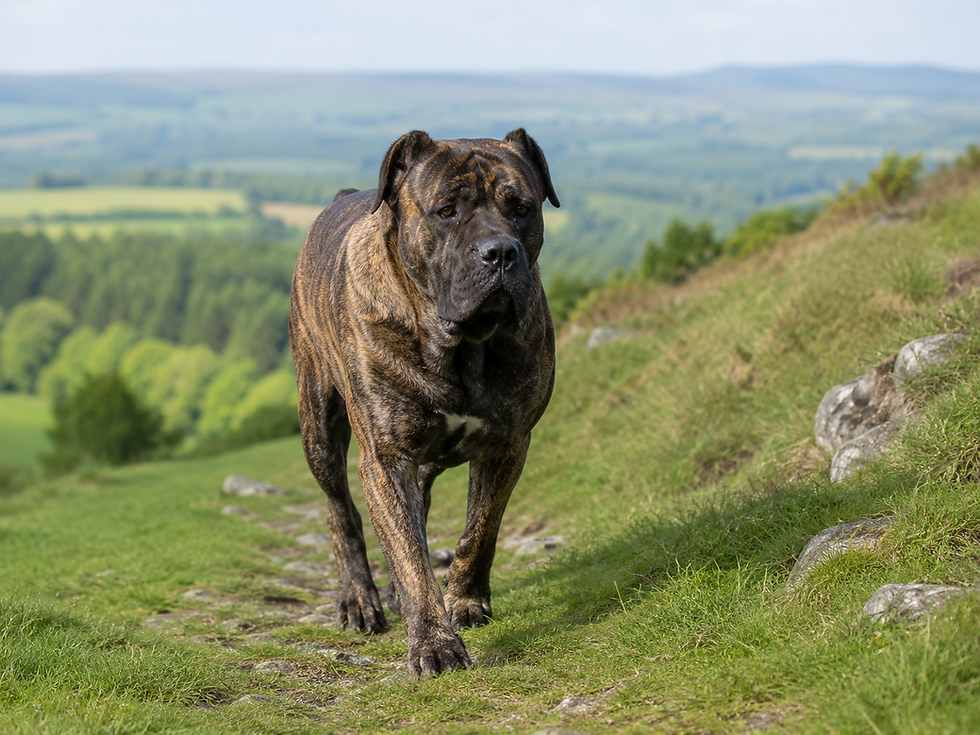
The Presa needs regular physical activity, mental engagement and opportunities to move naturally. However, endless high-impact exercise is neither necessary nor automatically beneficial.
A healthy adult may enjoy:
Structured walks
Controlled trotting
Gentle inclines
Scent work
Obedience exercises
Balance and coordination work
Controlled play
Appropriate strength exercises
Quiet decompression walks
Regular recovery days
Conditioning should be progressive. Canine tissues adapt to physical loading over time, and training should prepare the body gradually for the demands placed on it.
Puppies and unconditioned adults should not be pushed into heavy pulling, repetitive jumping or forced endurance exercise simply to make them appear muscular.

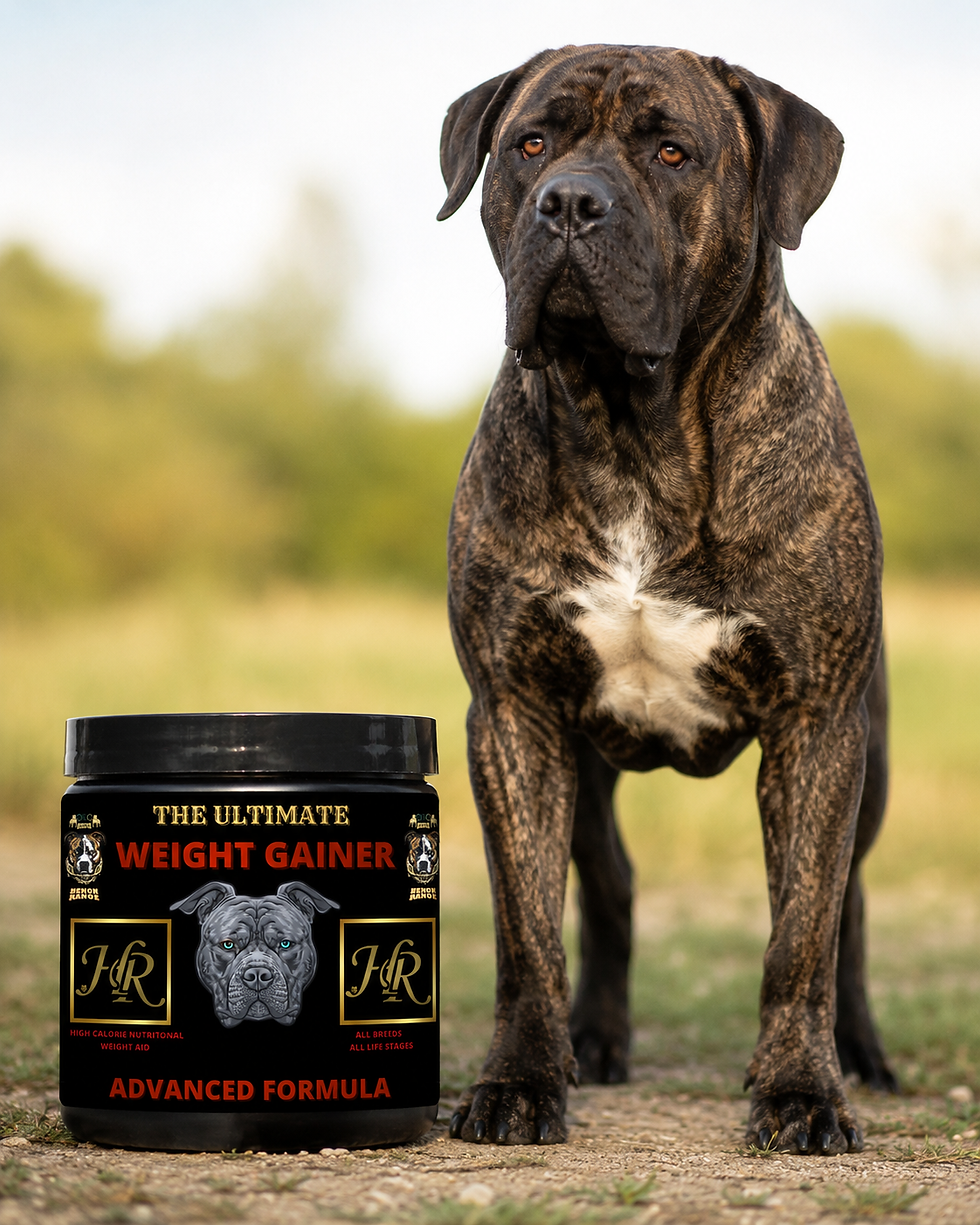
Shop Advanced Animal Care for premium-quality complementary feeds created to support healthy weight gain, muscle condition, activity and performance in dogs. Our range is designed for active, working, show and muscle breeds when used alongside a complete diet, suitable exercise and adequate recovery.
Support their condition. Fuel their performance. Help them reach their potential.
Are UK Owners Finding It Difficult to Build Muscle on Their Presa Canarios?
Some owners report that their Presa remains narrow, light or less muscular than expected. Others say that their dog eats well but appears to struggle to maintain weight.
However, there is no reliable UK survey showing how many Presa Canario owners experience this. No credible percentage should therefore be used.

Some Presa Canario owners report difficulty helping their dog gain healthy weight or develop the muscular build they expected, but this is an anecdotal concern rather than a measured UK breed statistic
Several different factors can create the appearance of poor muscle development.
Could the Presa Still Be Maturing?
Yes.
Young Molossoid dogs may reach much of their adult height before their chest, neck, head and overall body breadth look fully mature. Development is not identical between individuals, and there is no exact age at which every Presa will suddenly “fill out”.
Attempting to force faster development through excessive feeding can add body fat without accelerating skeletal maturity or balanced muscle development.
Progress should be judged over months rather than days.
How Much Does Genetics Affect the Presa’s Build?
Genetics have a major influence on:
Frame
Bone
Height
Chest width
Head proportions
Natural muscle distribution
Metabolism
Final adult substance
A more athletic Presa from a lighter-framed line may never resemble an exceptionally heavy dog seen online.
Food and training can improve a dog’s condition within its genetic potential, but they cannot completely redesign inherited structure.
Owners should also be cautious about comparing their dog with photographs that may show:
Overweight dogs
Unusual camera angles
Extremely heavy lines
Dogs at different stages of maturity
Edited images
Dogs that have been conditioned very differently
Muscle Gain Is Not the Same as Weight Gain
A heavier Presa is not automatically a more muscular Presa.
Increasing calories without suitable activity may add fat rather than balanced lean tissue. This can make the dog look broader while placing additional load on the joints and reducing athletic movement.
Healthy muscle development requires:
A complete diet + sufficient energy + progressive conditioning + adequate recovery
The objective should be improved strength and condition—not simply a larger number on the scales.
How Can Owners Tell Whether a Presa Is Too Thin?
Visual appearance alone is not enough.
Two separate assessments are useful:
Body Condition Score
Body Condition Score, or BCS, assesses body-fat covering. It considers areas such as the ribs, waist and abdominal tuck.
Muscle Condition Score
Muscle Condition Score, or MCS, assesses muscle over areas including the skull, shoulder blades, spine and pelvis.
A dog can have excess body fat while simultaneously losing muscle. WSAVA therefore treats body condition and muscle condition as separate assessments.
Owners can monitor:
Body weight
Rib covering
Waist
Abdominal tuck
Muscle over the shoulders
Muscle alongside the spine
Thigh size and symmetry
Pelvic prominence
Movement
Exercise tolerance
Recovery after activity
Photographs taken from consistent angles
Changes should be reviewed over several weeks. Daily weighing or constantly changing the feeding plan can make genuine progress harder to assess.
Why Might a Presa Struggle to Gain Weight?
Possible explanations include:
The dog is still physically developing
Its natural frame is lighter than expected
Its energy needs exceed its current intake
Food portions are being estimated inaccurately
The complete diet does not suit the individual dog
Exercise volume has increased
Digestive upset is reducing nutrient intake
Parasites or illness are present
Dental discomfort is affecting eating
Pain is limiting movement and muscle use
The dog is losing muscle rather than merely remaining lean
Persistent poor weight gain should not automatically be treated by feeding more
How Can a Presa Canario Build Muscle Safely?
Start With a Complete Main Diet
The foundation should be a complete food appropriate for the dog’s age, activity and health.
Treats, toppers and complementary feeds should not displace so much of the main diet that the overall nutritional balance is affected.
Measure Food Accurately
Use kitchen scales rather than estimating portions by eye.
Record everything the dog receives, including:
Main meals
Training treats
Chews
Table food
Oils
Toppers
Supplements
This makes it easier to understand whether intake has genuinely increased.
Increase Energy Gradually
When a healthy dog genuinely needs more food, changes should be gradual.
Sudden large increases can cause digestive upset and make it difficult to identify which part of the feeding plan is helping.
Use Progressive Conditioning
Appropriate exercise provides the stimulus for muscle adaptation.
Depending on the healthy adult dog, exercises may include:
Controlled hill walking
Steady trotting
Correct sit-to-stand repetitions
Low cavaletti poles
Straight backing-up exercises
Wide, controlled turns
Balance and body-awareness work
Short, structured play sessions
Therapeutic exercise can be used to improve strength, muscle mass, balance and conditioning, but the programme should suit the individual dog.
Dogs with pain, lameness, previous surgery or mobility problems need veterinary or professionally supervised rehabilitation advice.
Allow Recovery
Muscle adaptation also occurs during recovery.
Hard conditioning every day can lead to fatigue and poorer movement quality. Include lighter days, adequate sleep, access to water and opportunities for calm rest.
Monitor Function, Not Just Appearance
Positive progress may include:
Improved stamina
More stable movement
Better control during exercises
Improved muscle symmetry
Normal recovery after activity
Gradual changes in body measurements
A healthy appetite and normal digestion
Rapid visual enlargement should not be the only goal.
Should Weight Pulling Be Used to Build a presa-canario-with-ultimate-weight-gainer.png?
Weight pulling is not required for a Presa Canario to develop good muscle condition.
Resistance work adds additional forces through the dog’s muscles, joints and spine. It should not be introduced simply because the breed is powerful.
Before considering any resistance programme, the dog should have:
Mature physical development
Sound movement
A suitable body condition
Good basic fitness
Correct equipment
Proper technique
Appropriate professional guidance
Veterinary clearance where relevant

Dragging heavy objects with unsuitable equipment is not safe canine conditioning.
Can MuscleMatrix Support a Presa Canario?

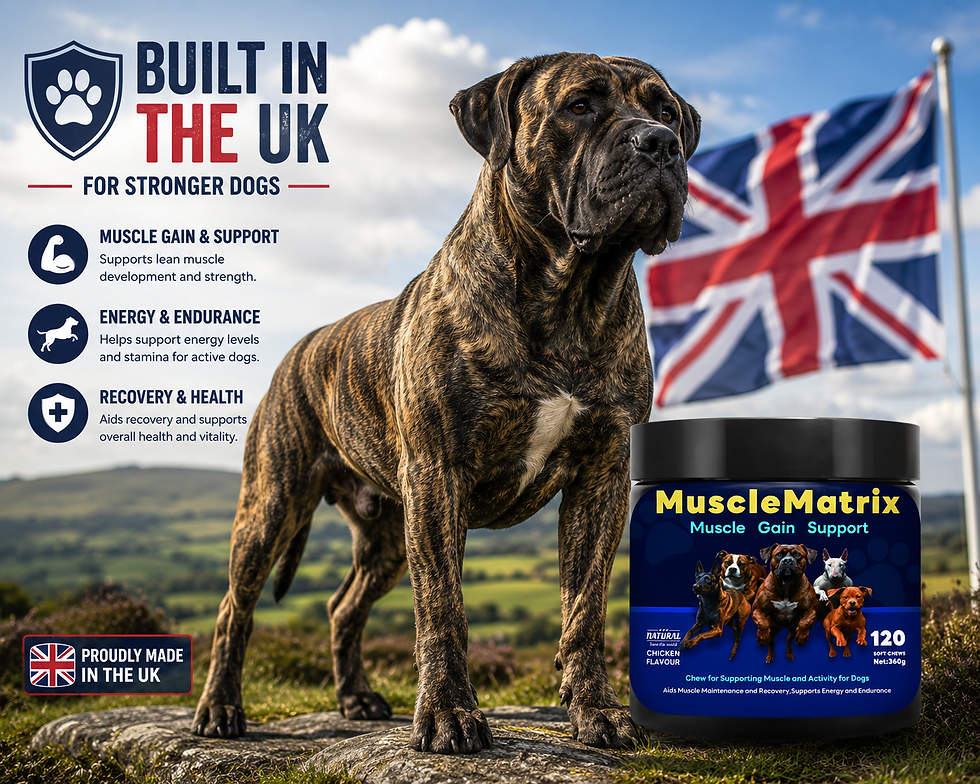
MuscleMatrix Muscle Gain Support Soft Chews is a complementary feed intended to provide additional nutritional support alongside a suitable complete diet, progressive exercise and adequate recovery.
Its formula includes ingredients such as:
All egg powder
Whey protein
Amino acids
HMB
Creatine monohydrate
Omega oils
Colostrum
Vitamins and minerals
Digestive enzymes
Probiotics
MuscleMatrix cannot:
Replace complete dog food
Build muscle without suitable exercise
Correct an underlying illness
Guarantee a specific size or appearance
Turn a naturally lighter-framed dog into an extremely heavy one
Replace veterinary investigation of poor weight gain
As with all new foods and supplements, begin with half the recommended serving or less and adjust gradually. Always follow the product label and ensure fresh drinking water is available.
Speak to your vet before adding supplements when the dog is young, receives medication or has an existing medical condition.
When Should Poor Weight or Muscle Development Be Checked by a Vet?
Arrange a veterinary assessment when a Presa:
Is losing weight
Cannot gain weight despite measured feeding
Develops visible muscle loss
Has recurrent vomiting or diarrhoea
Shows a change in appetite
Drinks or urinates more than usual
Appears weak or unusually tired
Becomes stiff or lame
Struggles to rise
Develops an uneven gait
Loses muscle on one side
Has a poor coat or other physical changes
Recovers poorly after ordinary exercise
Bring a detailed food and activity diary to the appointment. This should include the exact food, quantities, treats, supplements and recent exercise.
What Should Prospective Owners Ask a Breeder?
A responsible breeder should be willing to discuss:
The temperament of both parents
Hip and elbow health
Heart and eye history
Health testing used within the line
Longevity
Causes of death in close relatives
Digestive or skin problems
Orthopaedic problems
Any history of seizures
The size and condition of previous offspring
How puppies are raised and socialised
Ask to see actual health documentation rather than relying on statements such as “the parents have never been ill”.
An unusually large or heavily muscled parent is not proof of sound health, stable temperament or suitable breeding quality.
Is the Presa Canario Legal in the UK?

The Presa Canario is not specifically named on the current UK prohibited-dog list.
The prohibited types currently listed are:
Pit Bull Terrier
Japanese Tosa
Dogo Argentino
Fila Brasileiro
XL Bully
However, UK prohibited-type decisions are based on a dog’s physical characteristics rather than only its breed name or paperwork. Calling a dog a Presa Canario does not automatically determine how it would be assessed if authorities believed it matched a prohibited type.
This legal section reflects the position in July 2026 and should be checked against current government guidance whenever the blog is updated.
Does a Presa Canario Have to Wear a Muzzle in Public?
There is no UK-wide requirement for a dog to be muzzled merely because it is described as a Presa Canario.
A muzzle may still be required because of:
A court order
A specific legal condition
A local restriction
A transport provider’s rules
An individual safety assessment
The dog being found to be a prohibited type
Positive basket-muzzle training is nevertheless a sensible skill for a large dog. A suitable basket muzzle should allow the dog to pant, drink and take treats.
What Does UK Dangerous-Dog Law Mean for Presa Owners?
The law applies to every dog, regardless of breed.
It is illegal to allow a dog to be dangerously out of control in a public or private place, including inside the owner’s home. A dog can be considered dangerously out of control if it injures someone or causes reasonable concern that it might injure them.
Responsible Presa ownership should therefore include:
Secure fencing
Gates that cannot be pushed open
Controlled access to the front door
Reliable collars, leads and harnesses
Safe visitor introductions
Separation options
Prevention of escape
Early professional help for concerning behaviour
Do Presa Canarios Have to Be Microchipped?
All dogs in the UK must be microchipped and registered by eight weeks of age, apart from limited veterinary exemptions.
Owners must keep the registered contact information current. Dogs must also wear a collar and identification tag showing the owner’s name and address when in a public place.
In Northern Ireland, owners should also check the separate dog-licensing requirements.
Is Ear Cropping Legal in the UK?
Cosmetic ear cropping is prohibited under domestic animal-welfare law throughout the UK.
England and Wales prohibit non-exempt mutilations such as ear cropping, while equivalent restrictions apply in Scotland and Northern Ireland. Medical procedures genuinely required for the welfare of an individual dog are treated differently.
The current FCI standard describes the Presa’s natural ears as medium-sized, falling naturally on each side of the head or folding into a rose shape.
A Presa does not need cropped ears to look powerful or breed-typical.
Who Is the Presa Canario Best Suited To?
The breed is best suited to an owner who:
Understands large guardian breeds
Values stability rather than intimidation
Can physically manage a strong adult
Provides calm, consistent training
Has secure boundaries
Can manage visitors responsibly
Accepts lifelong training and supervision
Is prepared for veterinary and professional training costs
Does not expect the dog to enjoy every social situation
The Presa may be unsuitable for someone who wants a highly sociable, easy-going dog requiring minimal management.
Is the Presa Canario Aggressive?
The breed’s history may influence watchfulness, territorial awareness and reserve, but breed alone cannot predict every individual dog’s behaviour.
The current FCI standard calls for a balanced, self-confident dog and disqualifies both aggression and excessive shyness.
Concerning signs requiring professional attention include:
Repeated freezing
Hard staring
Escalating visitor guarding
Lunging that is becoming difficult to interrupt
Guarding several spaces or people
Redirected aggression
Attempted bites
Actual bites
Sudden changes in behaviour
Because pain can affect behaviour, a sudden change should begin with a veterinary assessment.
Final Verdict: Is the Presa Canario the Right Power Breed for You?
The Presa Canario is powerful, serious and naturally watchful. Those qualities can create an impressive and devoted companion in a knowledgeable, responsible home—but they also make poor breeding, inadequate training and weak management particularly risky.
Owners concerned about a lack of weight or muscle should avoid chasing exaggerated size. First establish whether the dog is genuinely underweight, naturally lean, still maturing or losing muscle.
Use accurate food measurements, assess both body and muscle condition, introduce progressive exercise and allow proper recovery. Persistent poor weight gain, weakness or muscle loss should be investigated by a vet rather than hidden with extra calories or supplements.
A well-conditioned Presa Canario does not need to be the heaviest dog in the room.
It should look balanced, move freely, remain responsive to its owner and carry its considerable power with control.


Comments