


PowerBreed 3 Staffordshire Bull Terrier vs English Bull Terrier Which British Bull Breed Is Right for You?
- Jul 13
- 6 min read

Which British Bull Breed Is Right for You?
One is the nation's smiling family favourite. The other is the unmistakable gladiator with an egg-shaped head. Both share common ancestors, yet today they have become two very different dogs. So which one truly fits your lifestyle?
Table of Contents
Meet Britain's Two Most Famous Bull Breeds
Shared History – One Family Tree, Two Different Directions
Appearance – Similar Name, Completely Different Look
Temperament – The Biggest Difference of All
Which Breed Is More Popular?
Family Life & Children
Exercise & Mental Stimulation
Keeping Them Lean, Muscular and Healthy
Muscle Maintenance Throughout Life
Looking After Senior Bull Breeds
Health & Lifespan
Which Breed Is Easier to Train?
Cost of Ownership
Fun Facts You Probably Didn't Know
Frequently Asked Questions
Final Verdict
1. Meet Britain's Two Most Famous Bull Breeds

Few breeds are confused more often than the Staffordshire Bull Terrier and the English Bull Terrier.
They may share the word "Bull" in their name and have common ancestors, but living with one is very different from living with the other.
One is famous for its Staffy smile, affectionate personality and reputation as a devoted family companion.
The other is instantly recognised by its unique egg-shaped head, bold confidence and clown-like character.
Both are loyal. Both are athletic. Both are unmistakably British.
Yet each has developed into a breed with its own strengths, personality and loyal following.
2. Shared History – One Family Tree, Two Different Directions

During the 1800s, Bulldogs were crossed with various terriers to produce dogs that combined strength, determination and agility.
Over time, different breeders selected for different characteristics.
The Staffordshire Bull Terrier developed into a compact, muscular companion known for its courage, athleticism and affectionate nature.
The English Bull Terrier took a different path after selective breeding emphasised a unique appearance, eventually producing the breed's famous egg-shaped head and distinctive profile.
Although both breeds share historical roots, modern Staffies and English Bull Terriers have become very different dogs in both appearance and temperament.
3. Appearance – Similar Name, Completely Different Look

Staffordshire Bull Terrier
Height: 35.5–40.5 cm
Weight: 11–17 kg
Compact and powerfully built
Broad head
Pronounced cheek muscles
Athletic physique

English Bull Terrier
Height: Usually 45–55 cm
Weight: 22–38 kg
Taller and heavier
Distinctive egg-shaped head
Roman nose profile
Longer legs
More substantial frame
Although the English Bull Terrier is generally the larger dog, the Staffy often appears denser for its size due to its naturally muscular body.
4. Temperament – The Biggest Difference of All
The Staffordshire Bull Terrier is often described as one of the most people-loving breeds in the UK.
Their affectionate personality has earned them the nickname "the nanny dog" in popular culture, although owners should remember that all dogs require supervision around children.
The English Bull Terrier tends to be more independent, mischievous and stubborn.
Owners frequently describe them as clowns with endless personalities.
Both breeds form incredibly strong bonds with their families, but the Staffy usually seeks constant human interaction, whereas Bull Terriers often enjoy doing things their own way.
5. Which Breed Is More Popular?
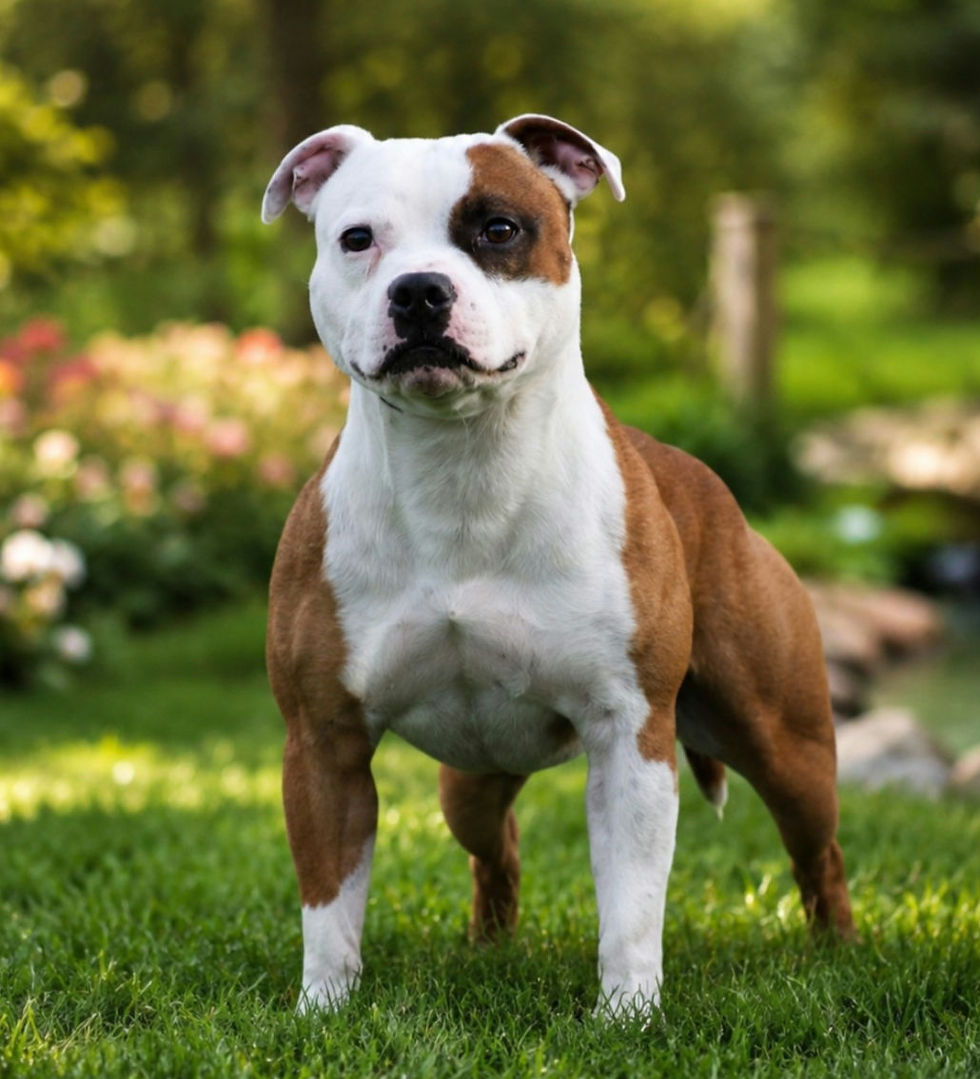
The Staffordshire Bull Terrier remains one of Britain's most recognisable companion breeds.
Its popularity comes from:
Friendly personality
Manageable size
Athletic ability
Adaptability
Loyalty
The English Bull Terrier has a smaller but extremely devoted following.
Many enthusiasts are drawn to its unmistakable appearance and larger-than-life character.
6. Family Life

Both breeds can thrive in loving homes when properly trained and socialised.
Staffies generally:
Love human company
Enjoy family activities
Often seek physical affection
Thrive on interaction
English Bull Terriers often:
Entertain with their quirky personalities
Enjoy games and mental challenges
Need consistent guidance
Can be wonderfully affectionate while remaining more independent.
7. Exercise & Mental Stimulation
Neither breed is a couch potato.
Daily exercise helps maintain:
Healthy body weight
Muscle condition
Joint health
Mental wellbeing
Behaviour
Staffies often excel in agility, obedience, scent work and active family life.
English Bull Terriers enjoy structured games, enrichment and problem-solving activities that keep both mind and body engaged.

8. Keeping Them Lean, Muscular and Health
Neither breed benefits from carrying excess body fat.
Maintaining lean muscle supports:
Mobility
Joint stability
Healthy posture
Athletic performance
Long-term wellbeing
Regular walks, play, strength-building activities, appropriate recovery and balanced nutrition all contribute to healthy muscle condition.
For dogs with active lifestyles, complementary feeds designed to support normal muscle maintenance and recovery may also have a place alongside a complete and balanced diet.
Support Your Dog's Condition Naturally

Whether you own a Staffordshire Bull Terrier or an English Bull Terrier, maintaining lean muscle, healthy condition and recovery starts with good nutrition.
Our Hench Range has been developed to support dogs at every stage of life—from growing youngsters and active adults to senior companions needing help maintaining muscle condition.
Explore the Hench Range:
JayFuel – Premium daily high-protein topper with digestive support.
Empower – Daily muscle and condition support with amino acids, creatine, vitamins and minerals.
MuscleMatrix – Advanced muscle support for active, working and performance dogs.
Use alongside a complete and balanced diet and an appropriate exercise programme.
9. Muscle Maintenance Throughout Life
Muscle naturally changes as dogs age.
From around seven years onwards, many dogs begin losing muscle mass if activity and nutrition are not adjusted.
Simple habits help preserve muscle:
Daily walks
Hill walking
Sit-to-stand exercises
Cavaletti poles
Controlled play
Adequate dietary protein
Regular body condition monitoring
Maintaining muscle is about supporting quality of life, not simply appearance.
Strong muscles help older dogs remain active, confident and comfortable for longer.
10. Looking After Senior Bull Breeds

Older Staffies and English Bull Terriers benefit from:
Shorter, more frequent walks
Warm-up before exercise
Recovery after activity
Weight management
High-quality nutrition
Regular veterinary check-ups
Muscle condition monitoring
Growing older doesn't mean giving up activity—it means adapting it.
Many senior bull breeds continue enjoying long walks, training and family adventures well into later life.
14. Fun Facts You Probably Didn't Know

The Staffordshire Bull Terrier is famous worldwide for the Staffy smile.
English Bull Terriers are one of the few breeds recognised instantly by their unique egg-shaped head.
Despite their strength, both breeds are surprisingly agile.
Both breeds shed less than many people expect.
Staffies frequently rank among Britain's favourite companion dogs.
Both breeds are highly expressive and often communicate through facial expressions and body language.
Choose the Staffordshire Bull Terrier if you want a compact, affectionate, athletic dog that thrives on family life and close companionship.
Choose the English Bull Terrier if you're looking for a larger, entertaining, independent character with an unmistakable appearance and a huge personality.
Whichever you choose, both breeds reward responsible ownership with unwavering loyalty, intelligence and years of companionship. Keeping them lean, well exercised, mentally stimulated and maintaining healthy muscle throughout every stage of life will help them enjoy a long, active future by your side.
English Bull Terrier vs Staffordshire Bull Terrier: Who's Stronger?
When it comes to raw physical strength, the debate between the English Bull Terrier and the Staffordshire Bull Terrier is a classic one. While both are muscular, athletic breeds with shared ancestry, they excel in different areas.
Category Winner Overall size English Bull Terrier Body weight English Bull Terrier Raw pulling power English Bull Terrier Strength for its size Staffordshire Bull Terrier Agility Staffordshire Bull Terrier Explosive athleticism Staffordshire Bull Terrier Endurance Very similar
Why the Difference?
A typical English Bull Terrier weighs around 22–38 kg, making it noticeably larger and heavier than a Staffordshire Bull Terrier. The additional body weight and muscle mass generally give it the advantage in absolute strength and pulling power.
The Staffordshire Bull Terrier typically weighs 11–17 kg. Despite its smaller size, the breed is renowned for its compact, dense musculature and exceptional power relative to body weight. Pound for pound, many enthusiasts consider the Staffy one of the strongest companion breeds in the UK.
Final Verdict
🏆 Overall strength: English Bull Terrier
🏆 Strength relative to body
size: Staffordshire Bull Terrier
🏆 More athletic and agile: Staffordshire Bull Terrier
Although the Staffordshire Bull Terrier often looks more muscular because of its compact build, the larger English Bull Terrier generally has the advantage in pure brute strength thanks to its greater size and overall muscle mass.
An Important Point to Remember
Every dog is an individual. While breed characteristics provide a useful guide, genetics, breeding, nutrition, conditioning, training, exercise and overall care all play a major role in determining a dog's strength, athletic ability and muscle development.
A well-bred, well-conditioned Staffordshire Bull Terrier may be stronger, fitter and more athletic than an English Bull Terrier that receives little exercise or is poorly conditioned. Likewise, a fit and properly trained English Bull Terrier can make full use of its larger size and natural strength.
Health, age, body condition and responsible ownership all influence a dog's physical ability. Breed alone does not determine performance—how a dog is bred, raised and maintained is equally important.

Which would you choose — Team Staffordshire Bull Terrier or Team English Bull Terrier? Let us know in the comments!


Comments