


The Harsh Truth About Bull Breeds: Why Some Look Weak, Soft or Overweight And Why the Dog Isn’t to Blame
- Jul 15
- 7 min read

Bull breeds and other naturally powerful dogs are admired for their strength, courage and athletic appearance.
Yet some Staffordshire Bull Terriers, American Bullies, Bulldogs, Cane Corsos, Mastiffs, Rottweilers and similar dogs show very little true muscle condition. Some look narrow and weak. Others appear enormous but are carrying excess body fat rather than functional muscle.
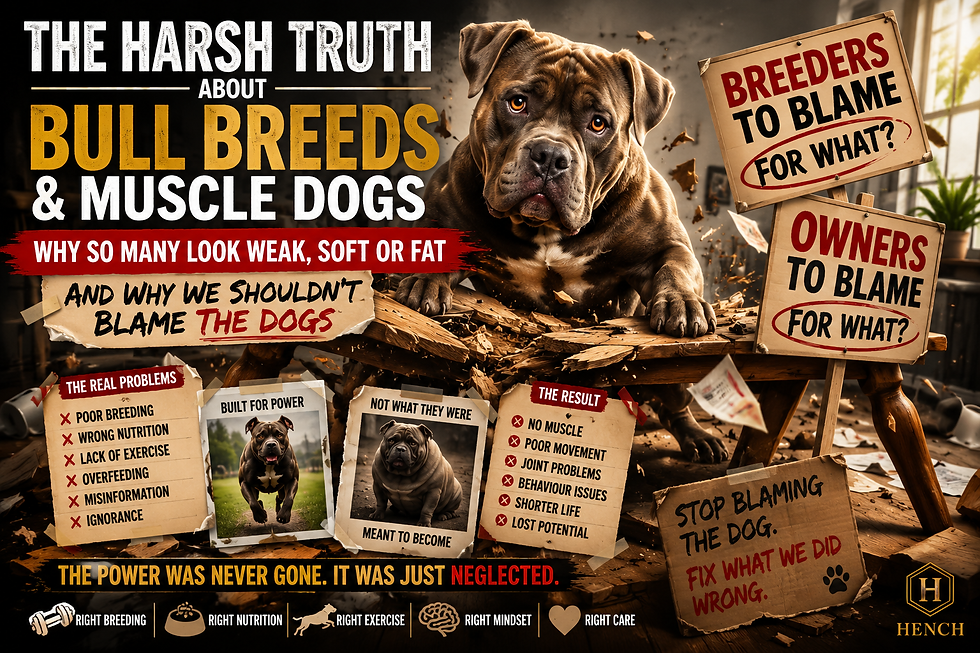
This is not about expecting every bull breed to look like a canine bodybuilder. Different breeds, bloodlines, ages and body structures will naturally look different.
It is about recognising the difference between:
Healthy muscle and excessive bulk
Athletic condition and low body weight
Natural breed structure and exaggeration
A powerful-looking dog and a genuinely fit dog
Most importantly, the dog should never be blamed for the genetics, diet, exercise or circumstances it was given.
Fat adds size. Healthy muscle supports strength, movement and function.
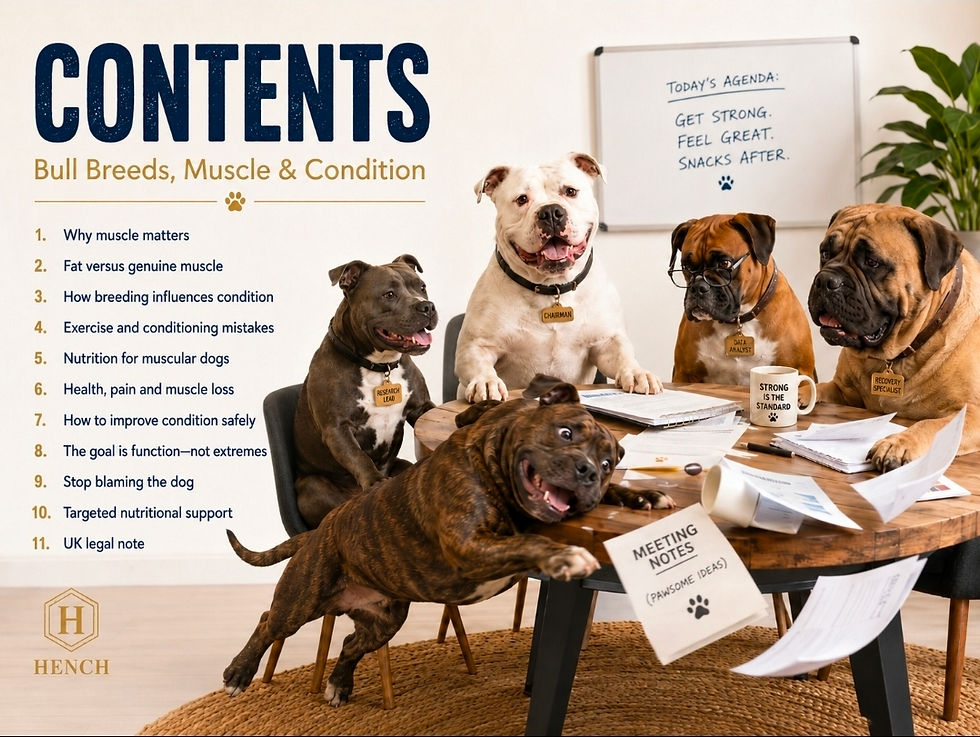
Contents
💪 Muscle Is About More Than Appearance

Muscle is not simply cosmetic.
A dog’s muscles help support:
Everyday movement
Balance and coordination
Posture and stability
Joint function
Normal mobility
Recovery following activity
Strength during ageing
Poor muscle condition does not directly cause every joint or movement problem. Conditions such as hip dysplasia, elbow dysplasia, cruciate injuries and arthritis are influenced by several factors, including genetics, structure, age, injury and body weight.
However, a dog with reduced muscle may have less physical support, particularly when excess weight or an existing orthopaedic condition is also present.
Veterinary professionals assess Muscle Condition Score separately from Body Condition Score because a dog can be overweight while still losing muscle beneath the body fat.
That means a dog can look large while still having:
Weak hindquarters
Reduced muscle across the spine
Poor stamina
Difficulty rising
A rolling or unsteady gait
Less support around painful joints
Heavy does not automatically mean strong.
⚖️ Fat Is Too Often Mistaken for Muscle

Social media has helped create a distorted idea of what a strong dog should look like.
A lean, athletic bull breed with a visible waist may be called “skinny”, while an overweight dog with little abdominal tuck is praised for looking “thick”, “massive” or “powerful”.
But true muscle condition cannot be judged by width or body weight alone.
Signs of healthy body condition may include:
Ribs that can be felt without pressing hard
A visible waist when viewed from above
An abdominal tuck when viewed from the side
Firm, natural muscle over the shoulders and hindquarters
Smooth and balanced movement
Suitable stamina for the dog’s age and structure
Signs a dog may be carrying excess fat include:
Ribs that are difficult to feel
Little or no visible waist
A rounded abdomen
Fat around the neck or base of the tail
Heavy breathing during mild exercise
A rolling or waddling movement
Veterinary nutrition guidelines recommend assessing body weight, Body Condition Score and Muscle Condition Score together rather than relying on the scales alone.
🧬 When Appearance Is Prioritised Over
Health and Function

Genetics play an enormous role in a dog’s structure and natural potential.
Responsible breeding cannot guarantee a perfect dog, but it should aim to preserve:
Sound movement
Functional structure
Stable temperament
Breed-appropriate health
Genetic diversity
The ability to live an active life
Problems can arise when breeding decisions focus mainly on:
Extremely large heads
Excessively short legs
Extreme body width
Oversized or undersized dogs
Rare colours
Exaggerated skin or facial features
Producing puppies quickly for profit
A dog may look dramatic in a photograph while lacking balanced proportions or comfortable movement.
Responsible breeders should use the health testing recommended for their breed and consider genetic diversity when planning a mating. The Royal Kennel Club advises breeders to use relevant screening schemes and inbreeding-coefficient information as part of responsible breeding decisions.
A huge head means very little if the dog cannot move comfortably.
🐕 Too Little Exercise—or the Wrong Exercise
Naturally powerful dogs still need to use their bodies.
A few short toilet walks may not meet the physical and mental needs of a healthy adult bull breed. However, suddenly introducing heavy pulling, repetitive jumping or long-distance running can also cause problems.
Good conditioning should be:
Gradual
Controlled
Consistent
Appropriate for the individual dog
Balanced with recovery
Suitable activities may include:
Brisk controlled walks
Gentle hill walking
Swimming
Controlled tug games
Sit-to-stand exercises
Low cavaletti poles
Short retrieving sessions
Balance and coordination exercises
Breed-appropriate dog sports
Not every exercise suits every dog.
Puppies, older dogs, overweight dogs, flat-faced breeds and dogs with joint, breathing or spinal problems require additional care. A veterinary professional or qualified canine rehabilitation practitioner should assess dogs before demanding conditioning begins.
Can Under-Exercise Affect Behaviour?
Insufficient activity and enrichment may contribute to frustration, restlessness or difficulty settling.
This can sometimes appear as:
Destructive chewing
Digging
Excessive excitement
Persistent pulling
Attention-seeking
Difficulty switching off
However, poor muscle condition does not directly cause aggression, anxiety or reactivity.
Behaviour is also influenced by genetics, learning, early experiences, pain, fear, training and the dog’s environment. Studies have found associations between canine activity and aspects of behaviour or emotional experience, but that does not prove that exercise alone will resolve behavioural problems.
A dog needs physical outlets, mental enrichment, patient training and proper rest—not exhaustion.
🍖 Feeding More Does Not Build More Muscle

One of the biggest mistakes owners make is increasing food in an attempt to make a dog look bigger.
Extra calories without appropriate activity usually add body fat, not functional muscle.
A muscular dog needs:
A complete and balanced base diet
Sufficient digestible protein
Essential amino acids
Calories matched to its workload
Appropriate dietary fats
Hydration
Progressive exercise
Adequate recovery
There is no single protein percentage that is right for every bull breed.
The amount and type of food required will depend on:
Age
Health
Body condition
Activity level
Neutering status
Digestibility of the food
Total calorie intake
Nutrition should be assessed individually, using the dog’s weight, diet history, activity, Body Condition Score and Muscle Condition Score.
Muscle is not created by protein alone.
It develops through the combination of:
Good genetics + suitable nutrition + progressive activity + recovery
🩺 Sometimes Weakness Is a Health Problem

A dog that appears lazy, weak or reluctant to exercise may be experiencing discomfort rather than lacking motivation.
Reduced activity or muscle loss may be associated with:
Arthritis or joint pain
Previous injury
Recovery from surgery
Long periods of restricted movement
Ageing
Reduced appetite
Digestive problems
Hormonal conditions
Other underlying illness
Excess body weight can make movement more difficult, particularly in dogs already affected by osteoarthritis. Research involving overweight dogs with osteoarthritis found that weight reduction was associated with measurable improvements in lameness.
Speak to your veterinary professional before beginning a conditioning programme if your dog:
Has suddenly lost muscle
Is limping or stiff
Struggles to stand
Tires much faster than usual
Is gaining or losing weight unexpectedly
Shows pain during movement
Has changed appetite or behaviour
Do not attempt to exercise through pain.

🏋️ How to Improve a Bull Breed’s Condition Safely
1. Check the Dog’s Health
Arrange a veterinary assessment when a dog is very overweight, underweight, losing muscle or moving poorly.
2. Assess Fat and Muscle Separately
Use both:
Body Condition Score to assess body fat
Muscle Condition Score to assess muscle loss
Remember that an overweight dog can still have weak or reduced muscle.
3. Measure Food Properly
Weigh meals rather than estimating portions.
Include treats, chews, table scraps and training rewards in the dog’s total daily intake.
4. Build Exercise Gradually
Start with manageable sessions and increase time, distance or difficulty slowly.
An unconditioned dog should not immediately begin:
Heavy weight pulling
Long-distance running
High jumping
Repetitive stair work
Intense resistance exercise
5. Include Recovery Days
Muscle needs rest as well as activity.
Use lighter days between demanding sessions and stop if the dog shows pain, unusual fatigue or declining movement quality.
6. Track Meaningful Progress
Take photographs from the side and above every four weeks and monitor:
Waist definition
Muscle over the shoulders and hindquarters
Topline condition
Stamina
Movement quality
Body weight
Body and muscle condition scores
Aim for slow, sustainable improvement, not rapid weight gain or exaggerated bulk.
🌟 The Goal Is Function—not Extremes
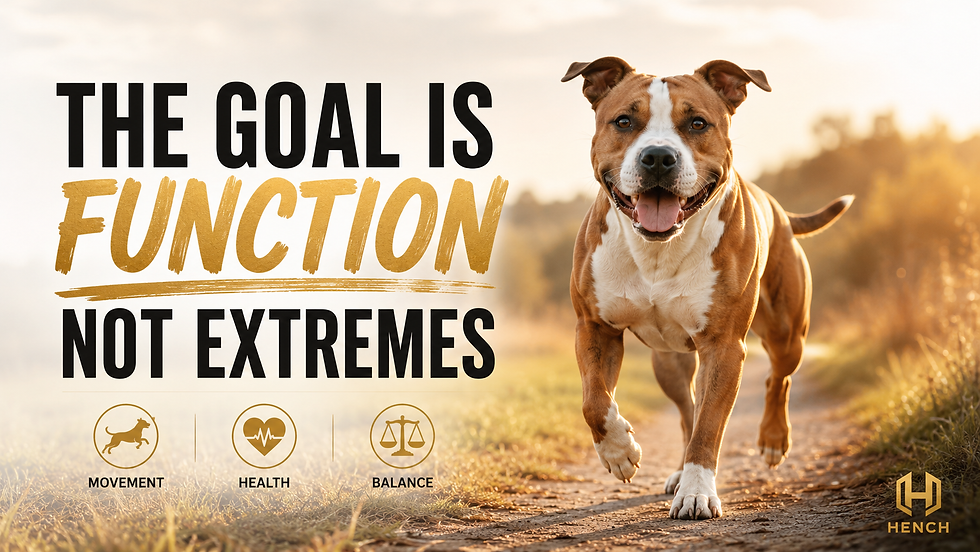
A Staffordshire Bull Terrier should not be expected to look exactly like a Cane Corso. A Bulldog will not have the same outline as a Rottweiler. Age, sex, breeding and individual structure all influence appearance.
The aim is not to make every bull breed enormous or sharply defined.
The aim is a dog that is:
Lean enough to move comfortably
Strong enough for everyday life
Fit for its natural structure
Free from unnecessary excess weight
Conditioned without being overworked
Healthy, capable and happy
Many dogs can improve their fitness, weight and muscle condition with better nutrition and appropriate activity. However, inherited structure, chronic disease and established orthopaedic problems cannot always be reversed through feeding and exercise.
Work with the dog in front of you—not an unrealistic image online.
📣 Stop Blaming the Dog

The dog did not choose its parents.
The dog did not choose extreme breeding.
The dog did not choose its meals.
The dog did not choose a sedentary lifestyle.
The dog did not choose to be praised for being overweight.
If we truly love bull breeds and naturally powerful dogs, we need to demand better breeding, better education and better everyday care.
Support breeders who value health, temperament and function. Learn to recognise healthy body condition. Provide safe exercise, enrichment, training and recovery.
Most importantly:
Stop praising fat as muscle—and stop blaming dogs for human decisions.
The power was never gone. It was simply unsupported.
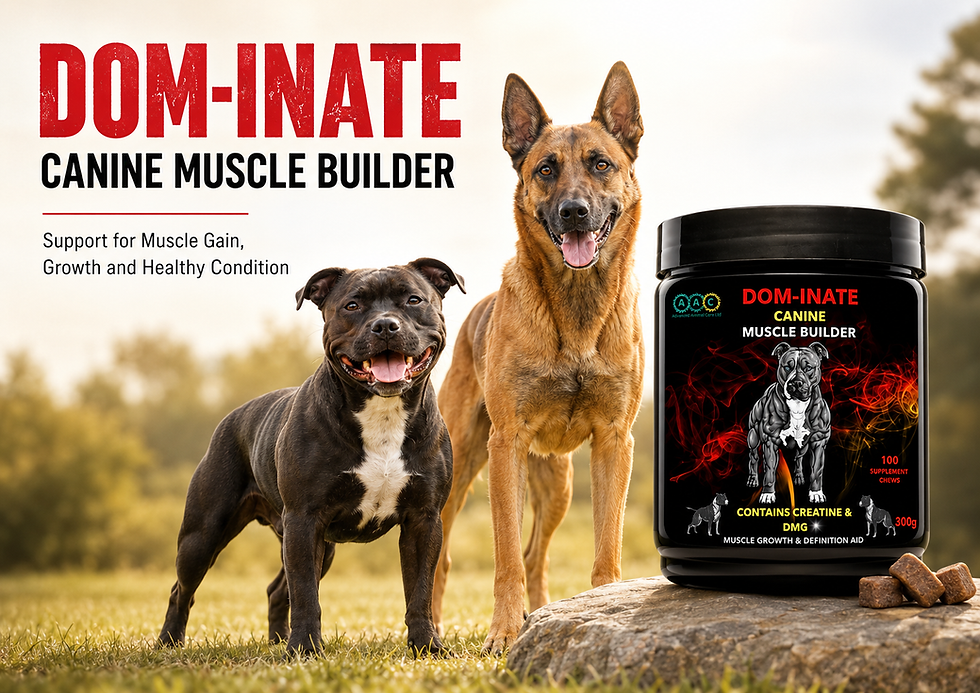
💛 Targeted Nutritional Support
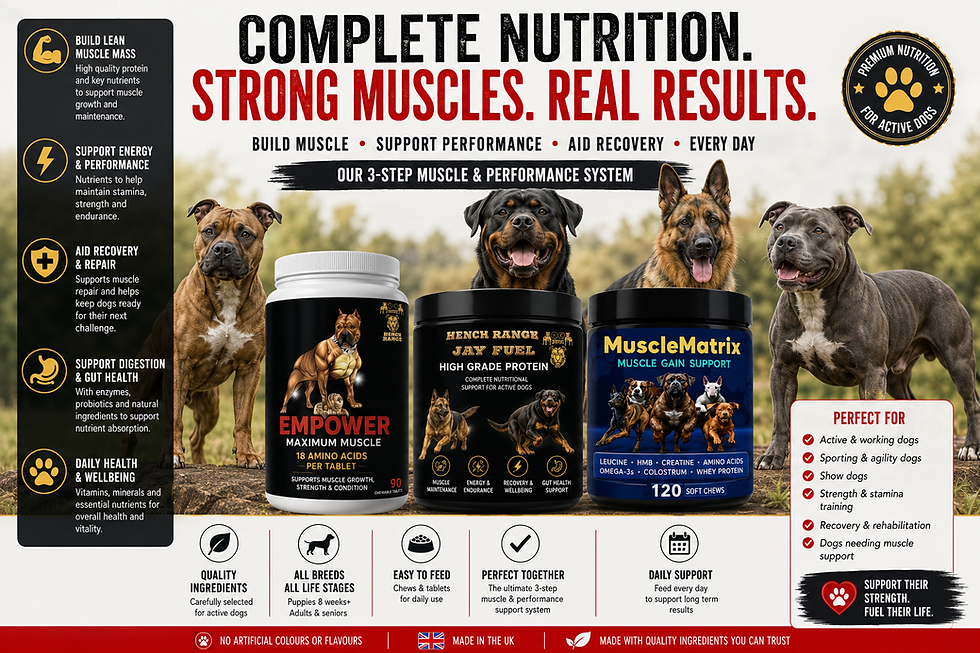
A suitable complementary feed may support a well-planned conditioning programme, but it cannot replace a complete diet, suitable exercise or veterinary care.

MuscleMatrix Soft Chews contain a targeted combination including BCAAs, creatine, HMB, whey protein, glutamine, arginine, colostrum and omega-3 support.
Best for: Working, sporting and conditioning dogs that need additional nutritional support for normal muscle maintenance and recovery.
Always follow the current label instructions. Start with half the recommended serving or less and increase gradually according to your dog’s tolerance.
⚠️ UK Legal Note
Several prohibited dog types are subject to legal restrictions in the UK. XL Bully rules and exemption requirements apply across the UK, but the detailed guidance differs between England and Wales, Scotland and Northern Ireland. Owners should check the current official guidance for the nation in which they live.
Educational Disclaimer
This article provides general educational information and does not diagnose, treat, cure or prevent disease. Seek veterinary advice before changing the diet or exercise routine of a dog with pain, illness, significant excess weight or unexplained muscle loss.

Comments