


Ultimate Power Breeds Showdown: Cane Corso vs Dogo Argentino vs Rottweiler vs Presa Canario – Muscle, Myths & Mayhem!
- 21 hours ago
- 6 min read

Listen up, dog lovers and beast-mode builders:
If you’re tired of fluffy Instagram pups and want dogs that look like they bench-press small cars, you’re in the right place.
We’re throwing four absolute units into the ring — the Cane Corso, Dogo Argentino, Rottweiler, and Presa Canario.
These are the heavy hitters of the guardian and working world.
Buckle up for real talk on build, bite force (the truth, not the hype), pulling power, history, and how to keep these tanks jacked even as they age.
Plus, we’re blasting myths and hooking you up with legit ways to build that hench muscle.
Let’s get it!
The Contenders: Quick Stats & Build Breakdown
Cane Corso (The Italian Bodyguard)

Males: 23.5–27.5 inches, 90–120+ lbs (some lines push 140+)
Build: Blocky, dense mastiff-type with a broad chest, thick bones, and that “don’t test me” stare. Pure power in a compact package.
Dogo Argentino (The White Hunting Machine)

Males: 24–27 inches, 80–100+ lbs
Build: Athletic, leaner, longer-legged athlete designed for chasing boar and puma. Explosive muscle, not just bulk.
(UK readers: This one is banned under the Dangerous Dogs Act 1991 — more on that below.)
Rottweiler (The Versatile Workhorse)

Males: 24–27 inches, 95–135+ lbs
Build: Compact powerhouse with a thick neck and barrel chest. Looks like a walking tank but moves with surprising agility.
Presa Canario (The Canary Island Beast)

Males: 23–26 inches, 100–160+ lbs
Build: Massive heavy-boned mastiff with an enormous head and raw, intimidating presence. Brute strength personified.
Winner on Raw Muscle Mass?
Presa and Corso often edge it for sheer density, while Dogo brings the ripped, athletic look and Rottie the functional, thick power.
Bite Force: The Real Numbers (Not TikTok Hype)
Bite force numbers get wildly exaggerated online.
Here’s the realistic consensus from available data:
Cane Corso: ~650–700 PSI → Crushing power champion of the group.
Presa Canario: ~540 PSI
Dogo Argentino: ~500 PSI (strong
holding/gripping for hunting)
Rottweiler: ~328 PSI
Truth bomb:
These are estimates.
Real damage depends on the individual dog, training, and context far more than a PSI number.
No dog is walking around measuring its bite in a lab.
A well-trained dog using its mouth for work (retrieving, holding game, or controlled protection) is very different from misuse.
Realistic Bite Force Breakdown (Our Four Breeds)
Here’s a grounded view based on available tests, expert commentary, and cross-referenced sources:
Cane Corso:
Viral claim = 650–700 PSI.
Reality: Likely in the 400–550 PSI range for a big male, possibly lower in casual tests.
YouTube bite-sleeve experiments with actual Corsos often measure far below 700 PSI (one translated a strong bite to roughly half the hype). Still very powerful due to broad jaws and muscle.
Dogo Argentino:
Viral claim = ~500 PSI.
Reality: Probably 300–500 PSI, with some estimates as low as 250–300 PSI. Bred more for holding endurance and athletic hunting than pure crushing.
Rottweiler:
Viral claim = ~328 PSI.
This one is closer to accurate. Older tests (including National Geographic-style) consistently put strong Rotties around 300–350 PSI. Reliable benchmark for a solid working dog.
Presa Canario:
Viral claim = ~540–560 PSI.
Reality: Strong mastiff bite, likely 450–600 PSI depending on the dog. Their massive heads deliver serious power, but again — not lab-certified for every individual.
For context:
Average dog bite force is ~200–300 PSI.
Humans are around 120–160 PSI
. A big Kangal or similar livestock guardian often tops measured lists (~700+ PSI in claims, but still variable).
What Really Matters More Than PSI
Jaw structure & hold:
Mastiff-types (Corso, Presa) excel at crushing and holding. Dogo is built for gripping during hunts.
Dog’s determination:
A 400 PSI bite from a highly motivated, trained dog does more damage than a 600 PSI "warning" snap.
Size + momentum:
A 120 lb Corso slamming into you with its full weight multiplies the effect way beyond the PSI number.
Real-world outcome: Poorly trained or reactive dogs of any strong breed can cause serious injury. Well-trained ones use their power appropriately (protection work, etc.).
These breeds still pack serious jaw power — enough to demand respect and responsible ownership — but the mythical super-lion bites are fantasy."
Why the Numbers Are Mostly Myth
There’s no large-scale, peer-reviewed scientific study that has precisely measured bite force across these specific breeds under standardized conditions.
Most "rankings" come from:Old TV shows (like National Geographic tests on a few dogs).
Calculations based on skull size/jaw muscle.
Informal tests with bite sleeves and gauges.
Straight-up copy-paste from blogs.
Bite force varies massively by individual dog (size, age, motivation, health, how hard they actually want to bite in that moment). A motivated working dog in a test might bite harder than a sleepy pet.
PSI (pounds per square inch) is tricky to measure accurately on a moving dog. What people call "bite force" is often peak pressure on a small area, not sustained crushing power.
Pulling Strength & Real-World Power

These breeds shine in weight pulling, cart work, and farm tasks.
No universal “who wins” record exists because it depends on the dog, conditioning, and event — but here’s the vibe:
Rottweiler & Corso: Legendary for sustained pulling and control. Rotties historically droved cattle; Corsos hauled on Italian farms.
Presa Canario: Brute force king for heavy loads.
Dogo: Explosive power and endurance for chasing over distance.
In modern weight pull competitions, big working dogs (including these types and similar mastiffs) regularly pull thousands of pounds — some records exceed 10,000+ lbs in professional events.
A conditioned 100+ lb dog pulling 10–20x its body weight (or more) is impressive but achievable with training.
Start light, build gradually, and use proper harnesses.
History in a Nutshell (The Fun Version)
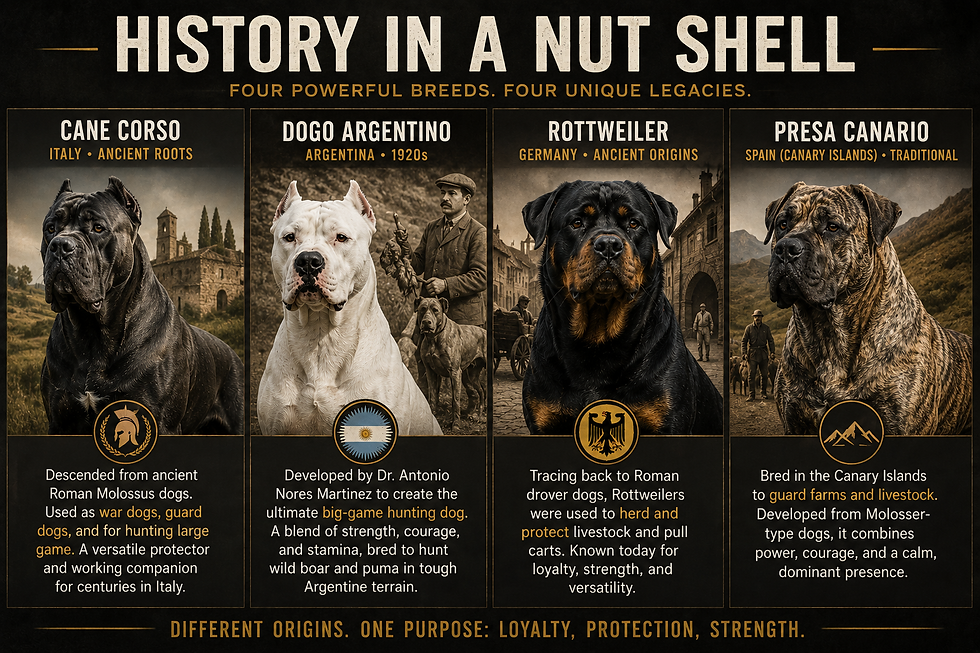
Cane Corso
Ancient Roman Molossian roots → evolved into Italian farm guardians, hunters, and all-around badasses.
Nearly extinct mid-20th century but roared back.
Dogo Argentino
1920s Argentina creation by Dr. Nores Martínez.
Córdoba Fighting Dog base + Great Dane, Pointer, etc.
Built for pack-hunting big game.
White coat for visibility.
Rottweiler
German drover dogs that pulled carts to market.
Later police/military stars.
One of the most versatile working breeds ever.
Presa Canario
Canary Islands cattle catchers and guardians.
Tough history working wild livestock.
Good modern lines focus on stable temperaments.
Temperament & Lifestyle: Who Fits Your Life?
All four need experienced owners, rock-solid training, heavy socialization, and 1–2+ hours of daily work (mental + physical).
Not apartment casuals or first-dog material.
Corso: Loyal Velcro guardian, calmer indoors, territorial.
Dogo: High-drive hunter, energetic, bold. (Banned in UK.)
Rottie: Trainable, eager to work, family-oriented protector.
Presa: Serious, confident guardian. Needs strong leadership.
UK Legal Note
Dogo Argentino is banned.
Cane Corso, Rottweiler, and Presa Canario are generally legal but always check local rules and responsible ownership.
Muscle Building, Performance & Beating Age-Related Loss

These breeds are muscle magnets when young, but big dogs can lose mass (sarcopenia) as they hit 5–7+ years.
Prevention beats cure.
How to Build & Maintain Hench Muscle:
High-Protein Diet:
30%+ protein for active adults.
Add healthy fats and calories for weight gain.
Training:
Weight pulling (start slow!), hill sprints, resistance harness work, obedience, and play.
Mental work burns calories too.
Recovery:
Plenty of sleep, joint support, and progressive loading.
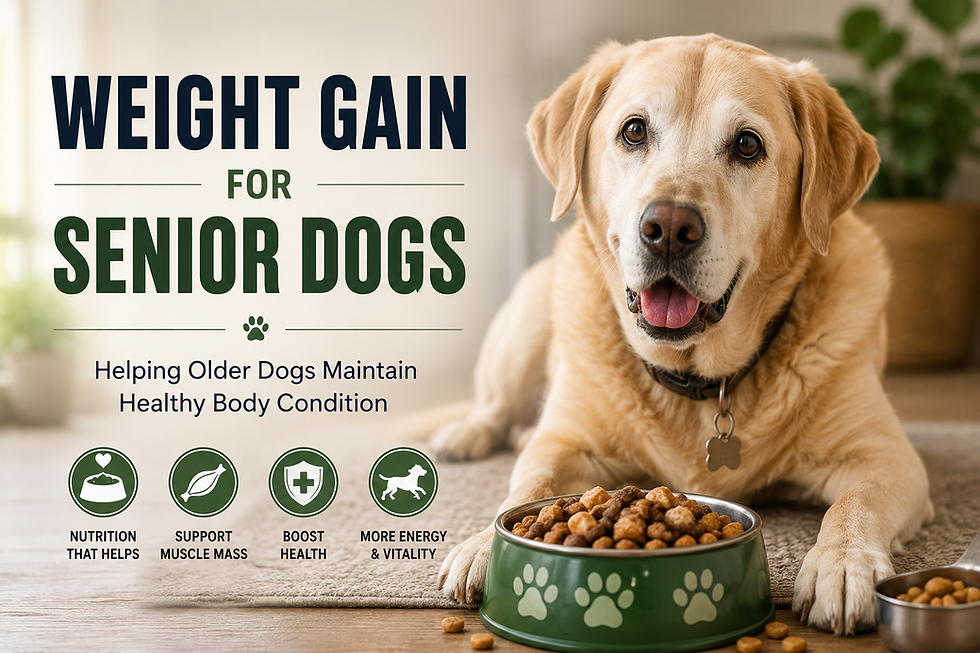
For Older Dogs / Muscle Loss:
Increase protein and calories.
Low-impact exercise (swimming, gentle walks, light pulling).
Supplements to support repair and slow sarcopenia.
Top Supplements from Hench Range (Advanced Animal Care)

These are standout picks tailored for muscle building, performance, weight gain, and senior support:
MuscleMatrix Chews
Muscle building, performance, and recovery powerhouse.
Great daily support.
JayFuel High-Protein Supplement
70% protein for muscle recovery and growth.
Excellent for active or underweight dogs.
Empower with Creatine & DMG
Muscle gainer with performance enhancers.
Ideal for building size and strength.
Jackedbite Muscle Training Chews
Convenient chews for training days and muscle maintenance.
Dom-inate or Weight & Muscle Gainer formulas
Perfect for healthy weight gain and supporting older dogs fighting muscle loss.
Double Deals
Stack MuscleMatrix + Jay Fuel for maximum results.
Pair with vet advice, especially for seniors.
Many include joint support too — crucial for these heavy breeds.
Myths Blasted (No More BS)
“These dogs are naturally vicious man-eaters”
False.
Poor breeding, lack of socialization/training, or bad handling causes issues.
Well-raised ones are loyal and stable.
“Bite force = automatic danger”
Hype.
All dogs bite; context and ownership matter way more.
“Corsos are direct Roman gladiator dogs”
Over-romanticized.
Ancestors yes, but modern Corsos are farm/guardian evolutions.
“One breed will always destroy the others”
Irresponsible fantasy.
Individual dogs, training, size, and health decide any hypothetical.
Focus on your dog, not fantasy fights.
“Short coat = low maintenance”
Coat yes, but these need serious exercise, training, space, and leadership.
Not lazy couch dogs.
“Supplements alone build muscle”
No.
They support diet + training.
Consistency wins.
Best Dog for You?
Cane Corso
Balanced family guardian with presence.
Dogo Argentino
Athletic adventurer/hunter (if legal where you are).
Rottweiler
Trainable all-rounder that loves jobs.
Presa Canario
Serious heavy-duty protector.
No universal winner — it’s about matching the dog to your lifestyle, experience, and commitment.
Visit ethical breeders, meet parents, and test your willingness to lead.
Drop a Comment
Which beast is your favorite and why?
Planning to try weight pulling with your power dog?
Share your supplement stack!
Disclaimer
Always consult vets and breed experts.
Responsible ownership is everything.
These are powerful breeds — respect the responsibility that comes with them.


Comments