


Weight Gain for Senior Dogs: Helping Older Dogs Maintain Healthy Body Condition
- 38 minutes ago
- 5 min read
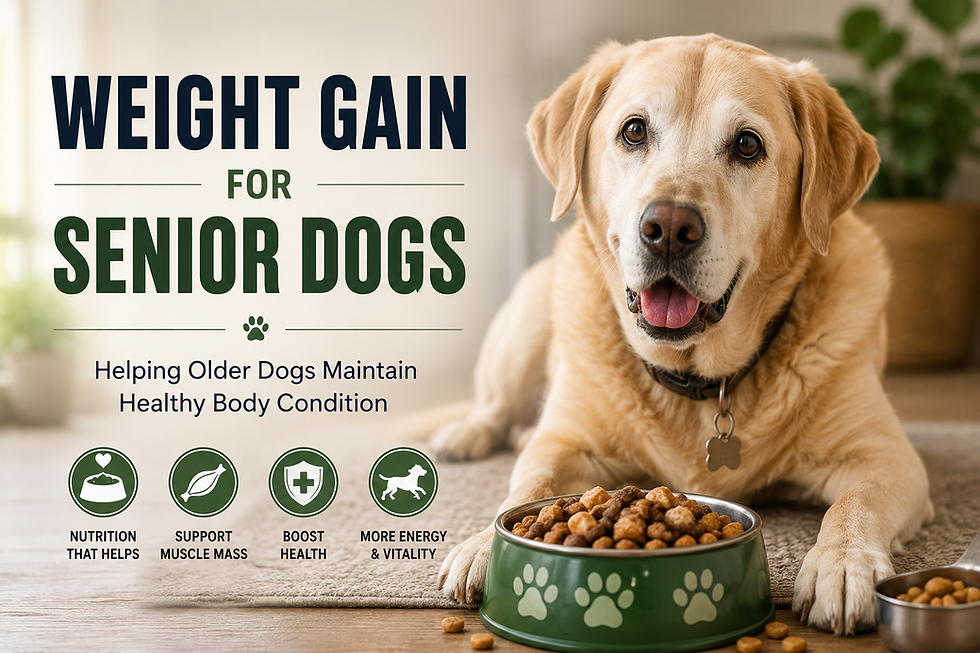
As dogs age, maintaining a healthy weight becomes increasingly important. While obesity is a concern for some older dogs, many senior dogs struggle with the opposite problem — unwanted weight loss. Losing weight in later life can reduce strength, impact mobility, weaken the immune system, and affect overall quality of life.
If your senior dog is becoming thinner, losing muscle, or struggling to maintain condition, understanding the causes and implementing the right nutritional strategy can make a huge difference.
Why Do Senior Dogs Lose Weight?
Weight loss in older dogs is surprisingly common. Some causes are harmless and related to ageing, while others may require veterinary investigation.
Common reasons include:
Reduced appetite
Dental disease causing pain when eating
Loss of smell and taste
Digestive inefficiency
Reduced calorie intake
Muscle loss (sarcopenia)
Chronic illness
Increased energy demands from certain health conditions
If your dog is losing weight unexpectedly, a veterinary health check should always be the first step.
Why Senior Dogs Often Struggle to Maintain Weight
As dogs age, their metabolism, digestion, and appetite can change significantly. Many senior dogs simply do not consume enough calories to maintain healthy body condition, while others struggle to absorb nutrients as efficiently as they once did. This can lead to unwanted weight loss, reduced muscle mass, lower energy levels, and a decline in overall vitality.

Hench Range Healthy Weight Gainer provides a concentrated source of calories from healthy fats alongside essential vitamins, minerals, omega fatty acids, taurine, lecithin, and quality nutritional support. With 40% fat content, omega 3 and omega 6 fatty acids, plus a comprehensive vitamin profile, it can help senior dogs increase calorie intake without requiring them to eat large volumes of food.
When combined with a balanced diet and regular veterinary care, it can be an excellent addition for older dogs that need help maintaining healthy weight and condition
The Difference Between Weight Loss and Muscle Loss
Many owners focus on the number on the scales, but muscle condition is often more important.
An older dog may weigh the same as before while actually losing significant muscle mass. This loss of lean muscle can affect:
Strength
Balance
Mobility
Joint stability
Recovery from illness or injury
Common signs include:
More visible ribs
Loss of thigh muscle
Prominent spine and hips
Reduced stamina
Difficulty standing or climbing stairs
Maintaining muscle should be a key goal when helping a senior dog gain weight.

How to Safely Help a Senior Dog Gain Weight
Feed Smaller Meals More Frequently
Many senior dogs find it easier to digest several smaller meals throughout the day rather than one or two large meals.
Try:
Breakfast
Lunch
Evening meal
Small bedtime snack
This can improve calorie intake without overwhelming digestion.
Choose Highly Digestible Foods
Older digestive systems are often less efficient.
Look for foods that provide:
High-quality animal protein
Moderate healthy fats
Easily digestible ingredients
Balanced vitamins and minerals
Avoid filling foods with excessive low-quality fillers that provide volume without nutritional value.
Prioritise Protein
One of the biggest myths in canine nutrition is that senior dogs need less protein.
In reality, healthy senior dogs often benefit from maintaining or even increasing high-quality protein intake to help preserve muscle mass.
Protein supports:
Muscle maintenance
Recovery
Immune function
Overall health
Quality matters far more than quantity.

Shop Jayfuel Protein – Advanced nutritional support for muscle maintenance, recovery, strength and healthy condition in dogs.
Healthy Fat Sources for Weight Gain
Fat provides more than twice the calories of protein or carbohydrates.
Safe calorie-dense additions may include:
Fish oil
Salmon
Sardines in water
Eggs
Small amounts of healthy animal fats
Any dietary changes should be introduced gradually.

Keep Your Senior Dog Active
Exercise remains incredibly important.
Appropriate activity helps:
Preserve muscle
Improve appetite
Support joint health
Maintain mobility
Good options include:
Daily walks
Swimming
Controlled play sessions
Light conditioning exercises
Consistency is more important than intensity.
Monitor Body Condition, Not Just Weight
The scales only tell part of the story.
Look for:
Improved muscle tone
Better energy levels
Stronger movement
Improved coat quality
Healthy body condition score
Photographs taken every few weeks can help track progress.
Supporting Weight Gain and Muscle Maintenance
For senior dogs needing additional nutritional support, calorie-dense nutritional supplements can help increase energy intake without dramatically increasing food volume.
The Hench Range Healthy Weight Gain Formula is designed to provide concentrated nutritional support for dogs needing help maintaining condition, including:
Senior dogs
Recovering dogs
Underweight dogs
Poor eaters
Active older dogs
When combined with a balanced diet and appropriate exercise, nutritional support can help older dogs maintain a healthier body condition and improve overall quality of life.
Common Mistakes Owners Make
Feeding Too Much Too Quickly
Rapid increases in food can cause digestive upset.
Always increase calories gradually.
Focusing Only on Fat Gain
The goal should be healthy body condition and muscle maintenance, not simply adding body fat.
Ignoring Dental Health
Painful teeth can dramatically reduce food intake.
Regular dental checks are essential.
Skipping Veterinary Checks
Unexplained weight loss should never be assumed to be "just old age."
Many medical conditions are treatable when caught early.
Why Senior Dogs Often Struggle to Maintain Weight
As dogs age, their metabolism, digestion, and appetite can change significantly. Many senior dogs simply do not consume enough calories to maintain healthy body condition, while others struggle to absorb nutrients as efficiently as they once did. This can lead to unwanted weight loss, reduced muscle mass, lower energy levels, and a decline in overall vitality.
Hench Range Healthy Weight Gainer provides a concentrated source of calories from healthy fats alongside essential vitamins, minerals, omega fatty acids, taurine, lecithin, and quality nutritional support. With 40% fat content, omega 3 and omega 6 fatty acids, plus a comprehensive vitamin profile, it can help senior dogs increase calorie intake without requiring them to eat large volumes of food.
When combined with a balanced diet and regular veterinary care, it can be an excellent addition for older dogs that need help maintaining healthy weight and condition.

Supporting Muscle, Condition and Vitality in Older Dogs
Weight gain alone is not the goal for senior dogs. Maintaining muscle mass, strength, mobility, and overall condition is equally important. Older dogs often lose lean muscle through a natural ageing process known as sarcopenia, which can affect movement, balance, and quality of life.
Hench Range Healthy Weight Gainer contains beneficial nutrients including omega fatty acids, taurine, calcium, vitamins A, D3, E, B vitamins, iron, zinc, and other essential micronutrients that help support overall health while providing valuable calories. The calorie-dense formula can be particularly useful for senior dogs recovering from illness, poor appetite, weight loss, or periods of reduced activity.
Used alongside appropriate exercise and a high-quality diet, it can help ageing dogs maintain a healthier body condition and continue enjoying an active lifestyle throughout their senior years.
Final Thoughts
Growing older doesn't automatically mean becoming thin, weak, or frail. With the right nutrition, appropriate exercise, regular health checks, and targeted support, many senior dogs can maintain excellent body condition well into their later years.
The goal isn't simply adding weight — it's preserving strength, mobility, muscle mass, and quality of life so your dog can continue enjoying their golden years to the fullest.


Comments