


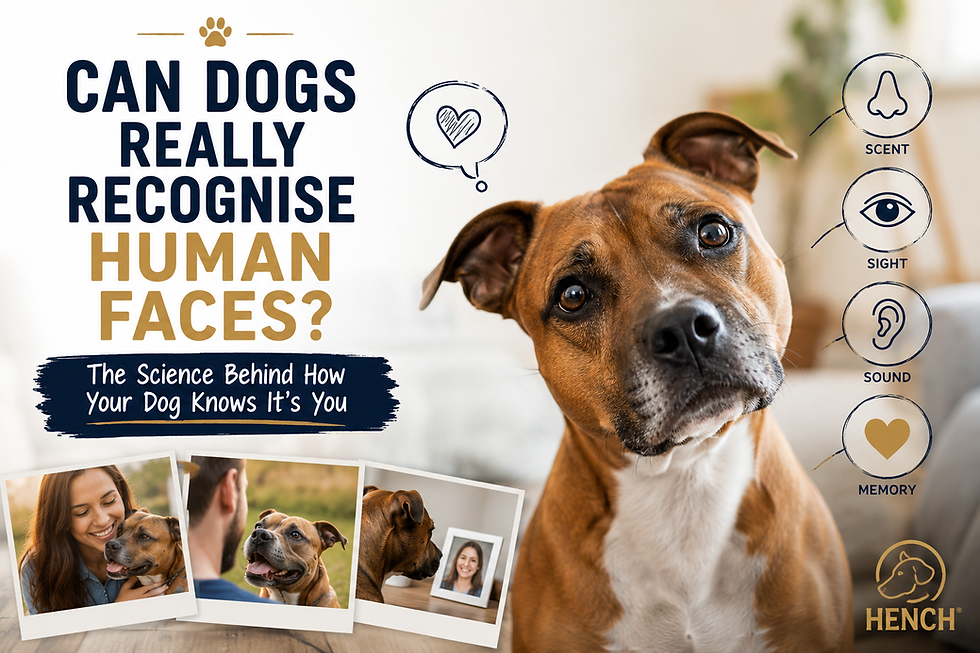
Can Dogs Recognise Human Faces? The Science Behind How Your Dog Knows It's You
- Jul 18
- 4 min read
Quick answer:
Yes—dogs can recognise familiar human faces, especially their owner's. However, they don't rely on sight alone. Your dog combines your face with your scent, voice, body language and even the way you move to identify you with remarkable accuracy. Modern research shows dogs process human faces, recognise familiar people in photographs, and even respond differently to human facial expressions.
Can dogs really recognise human faces?
For many years, scientists believed dogs relied almost entirely on smell.
We now know that's only part of the story.
Dogs absolutely use their incredible noses first, but they also pay close attention to faces. Research has found that dogs look at human faces differently from other objects, and brain imaging has even identified an area of the canine brain that responds more strongly to faces than everyday items.
In other words...
Your dog isn't just smelling you.
They're looking at you too.
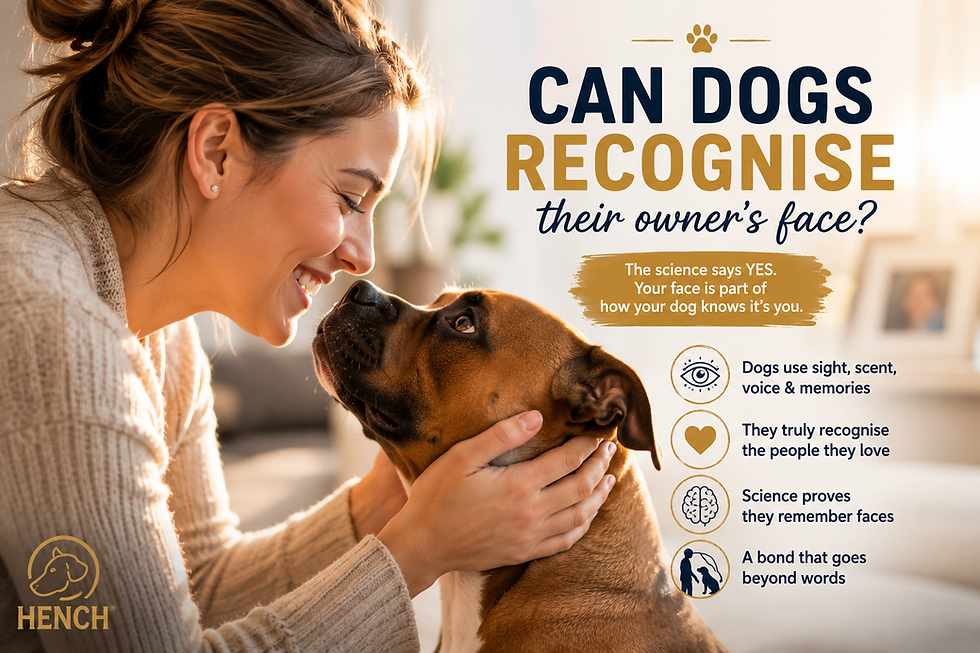
Do dogs recognise their owner's face?
Yes.
Studies show dogs can tell the difference between their owner and a stranger using facial information alone.
One study even demonstrated that dogs could correctly identify their owner's face from photographs, showing they don't always need movement or scent to know who they're looking at.
That's one reason many dogs become excited the moment they see you walking towards the house—even before you're close enough for them to smell you.
Do dogs rely more on smell than sight?
Absolutely.
Although dogs recognise faces, smell remains their most important sense.
Think of recognition like putting together pieces of a puzzle.
Your dog combines:
Your scent
Your face
Your voice
Your body shape
The way you walk
Your usual routines
When all those clues match, your dog instantly knows it's you.
If one clue changes—such as you wearing sunglasses, growing a beard or getting a haircut—they usually still recognise you because the other clues remain the same.
Can dogs recognise people in photographs?

Surprisingly...
Yes.
Scientists have shown that many dogs can recognise their owner's face from a two-dimensional photograph, even without movement or scent.
Not every dog pays much attention to pictures, but many clearly understand that the image represents a familiar person.
Can dogs recognise faces on television?
Sometimes.
Modern televisions display smoother motion than older TVs, making it easier for dogs to notice what's happening.
Many dogs recognise:
Other dogs
Human faces
Familiar voices
Fast-moving animals
Others simply aren't interested.
Like people, dogs have individual preferences.
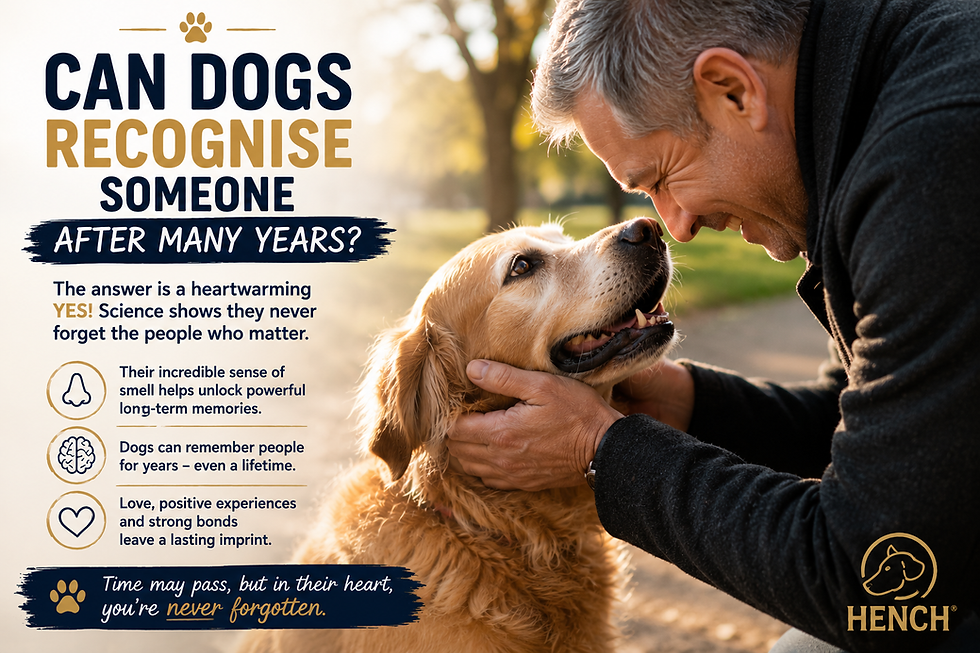
Can dogs recognise someone after many years?
In many cases, yes.
Dogs have excellent long-term memories for important people.
If someone formed a strong bond with a dog, there's a good chance the dog will remember them even after years apart.
Usually the recognition happens through a combination of:
Face
Voice
Smell
This is why reunion videos often show dogs recognising owners almost instantly.
Can dogs read our emotions?
Research suggests they can.
Dogs don't simply recognise faces.
They also pay attention to facial expressions and combine what they see with the tone of our voice.
Studies show dogs respond differently to happy, angry and other emotional expressions, helping them decide how to react in social situations.
If you've ever smiled at your dog and received an enthusiastic tail wag in return, there's science suggesting your facial expression really does matter.

🐾 Did You Know?
Dogs can also recognise individual human voices.
Research has shown they use subtle vocal features to distinguish familiar people from strangers—even when they can't see them.
What does the latest science say?

Recent canine cognition research continues to show that dogs use multiple senses together rather than relying on only one.
Scientists now believe dogs recognise people by combining:
Vision
Smell
Hearing
Previous experiences
Emotional associations
This "whole picture" approach helps explain why your dog still recognises you if your appearance changes.
Research published in 2025 is also exploring how dogs process faces, suggesting they focus on facial information differently from humans while still recognising familiar individuals.
Myth vs Fact
Myth: Dogs only recognise people by smell.
Fact: Smell is extremely important, but dogs also use faces, voices, movement and previous experiences.
Myth: Dogs can't understand photographs.
Fact: Studies have shown many dogs can identify their owner's face from photographs.
Myth: Dogs don't notice facial expressions.
Fact: Research suggests dogs respond differently to human emotional expressions and use this information during social interactions.
Supporting your dog's everyday wellbeing
A healthy brain and body help dogs enjoy everyday life, whether they're greeting family members, learning new skills or staying active.
If you're looking to support your dog's daily nutrition, products such as JayFuel are designed as complementary feeds to help support active dogs as part of a balanced diet and healthy lifestyle.

Frequently Asked Questions
Can dogs recognise family members?
Yes. Dogs learn the appearance, scent, voice and behaviour of the people they spend the most time with.
Can dogs recognise identical twins?
It can be difficult by sight alone, but dogs often tell twins apart using scent and subtle differences in movement or voice.
Do puppies recognise faces?
Yes. Puppies begin learning familiar faces early, although scent plays an especially important role while they're developing.
Can older dogs still recognise people?
Most can. Healthy senior dogs often continue recognising familiar people well into old age, although vision loss or cognitive decline may make recognition more difficult.
Final thoughts
Your dog doesn't love you because of your face alone.
They recognise you through everything that makes you unique—your scent, your voice, your movement, your expressions and your shared experiences.
Modern science continues to reveal just how remarkable the canine mind really is, and every new discovery helps explain why the bond between people and dogs is unlike any other.



Comments