


Why Some Dogs Naturally Build Muscle Faster Than Others The Real Science Behind Powerful, Athletic Dogs
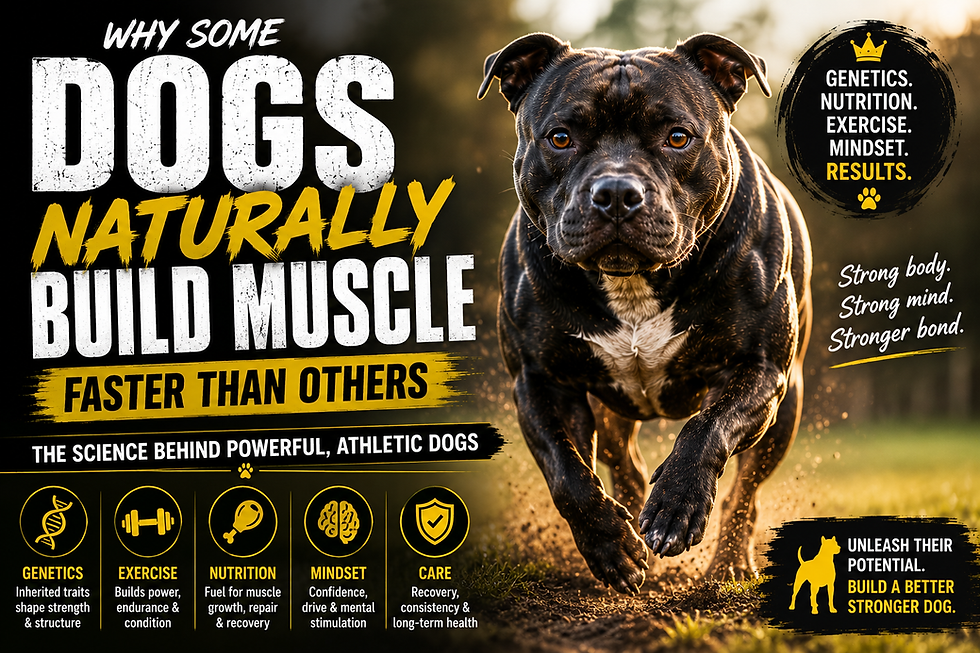
The Real Science Behind Powerful, Athletic Dogs
Some dogs can run around for weeks, eat everything in sight, and still stay slim.
Others look muscular just standing still.
You have probably seen them:
broad chests
thick necks
powerful back legs
naturally athletic frames
solid muscle tone without seeming overweight
Certain dogs simply look built differently.
But why?
Is it genetics?
Exercise?
Diet?
Breed type?
The answer is actually a combination of all four — and understanding it can help owners better support active dogs throughout life.
Especially strong, athletic and working breeds.
Why Some Dogs Are Naturally More Muscular
Just like humans, dogs inherit different body structures and muscle-building ability through genetics.
Some breeds were originally developed for:
strength
endurance
pulling
agility
protection work
farm work
sporting ability
Over generations, breeders selected dogs with:
stronger frames
thicker muscle
athletic movement
explosive power
higher stamina
That is why some dogs naturally appear more muscular even without intense exercise.
Support Strong, Active Dogs Every Day
Active dogs put huge demands on their muscles, joints and recovery systems.
The Hench Range was created to help support:
✔ Healthy muscle condition
✔ Daily recovery
✔ Active dog wellbeing
✔ Mobility & comfort
✔ Athletic performance support
Ideal for active breeds, muscular dogs, working dogs and senior dogs wanting to stay strong and comfortable.
Support healthy condition the smart way.

Breeds Known For Natural Muscle Development
Certain breeds are especially famous for building and maintaining muscle easily.
Including:
Staffordshire Bull Terriers
American Bulldogs
Rottweilers
Cane Corsos
Boxers
Bull Terriers
Belgian Malinois
Working Labradors
Staffordshire Bull Terriers especially are known for:
dense muscle
broad shoulders
powerful rear legs
athletic movement
compact strength
Even when relaxed, many Staffies naturally carry impressive muscle tone.
Genetics Play A HUGE Role
Some dogs simply have body types designed for athletic performance.
This affects:
muscle fibre composition
metabolism
energy use
recovery ability
frame structure
body shape
Dogs bred for explosive movement and strength often maintain muscle easier than breeds developed mainly for companionship.
That does NOT mean one breed is “better” than another.
It simply means different dogs were originally designed for different purposes.
Exercise Still Matters
Even naturally muscular breeds need proper exercise to maintain healthy condition.
Good muscle support comes from:
regular walks
controlled activity
play
swimming
hill walking
tug games
balanced conditioning
Supplements
Healthy muscle is built gradually through movement and consistency.
Not through overworking young dogs.
In fact, too much intense exercise too early can sometimes damage developing joints.
Why Lean Muscle Is Better Than Excess Weight
Many owners accidentally confuse:
“big” with
“fit”
A healthy muscular dog should still:
move freely
stay agile
maintain a visible waist
avoid excessive body fat
have good energy levels
Extra body fat places additional strain on:
joints
hips
elbows
heart
mobility
Lean athletic condition is usually far healthier than simply being heavier.
Nutrition Plays A Massive Role
Muscle condition depends heavily on nutrition.
Dogs need:
quality protein
balanced nutrition
healthy fats
proper recovery
consistent feeding
Active dogs especially may benefit from nutritional support that helps maintain:
muscle condition
energy levels
mobility
recovery after activity
overall wellbeing
This becomes even more important for:
working dogs
highly active breeds
senior dogs
dogs recovering from illness or inactivity
Supporting Muscle Condition In Active Dogs
Many owners of active and athletic breeds choose additional nutritional support to help maintain healthy muscle condition and recovery.
Especially for:
sporting dogs
active Staffies
working breeds
senior dogs staying active
dogs returning to exercise
The goal should never be creating “extreme size.”
Healthy support focuses on:
condition
mobility
strength
recovery
wellbeing
long-term health
Balanced exercise and proper nutrition always matter most.

Nutrition Support For Powerful, Athletic Dogs
Strong dogs need more than exercise alone.
The Hench Range combines daily nutritional support designed to help active dogs maintain:
✔ Lean healthy condition
✔ Muscle support
✔ Recovery after activity
✔ Daily mobility
✔ Long-term wellbeing
Perfect for Staffordshire Bull Terriers, Bulldogs, Rottweilers, working breeds and active family dogs.
Healthy movement. Healthy recovery. Healthy dogs.

Start Improving Your Dog Today
Why Some Dogs Stay Muscular As They Age
Dogs naturally lose muscle with age — just like humans.
However, dogs that remain:
active
mentally stimulated
properly exercised
nutritionally supported
often maintain better condition later in life.
Older active dogs benefit hugely from:
gentle consistent exercise
joint support
recovery support
maintaining healthy weight
quality daily nutrition
Supplementation


Signs Your Dog Has Healthy Muscle Condition
Healthy athletic dogs usually show:
good energy
smooth movement
visible waistline
strength without heaviness
good posture
balanced body condition
easy mobility
The goal is always: healthy function over appearance alone.
Common Mistakes Owners Make
Overfeeding
Extra calories do not automatically create healthy muscle.
Too Much Intense Exercise
Overtraining can damage joints and recovery.
Ignoring Recovery
Rest matters just as much as exercise.
Chasing Extreme Size
Healthy dogs should move freely and comfortably.
Funny Things Owners Of Muscular Breeds Hear Constantly
“What do you feed that dog?”
“He’s built like a tank!”
“That dog works out more than I do.”
“Does your Staffy lift weights?”
“That dog has shoulders.”
Owners of strong breeds hear these almost daily.
Frequently Asked Questions
Why are some dogs naturally muscular?
Genetics, breed history, activity levels and nutrition all influence muscle development in dogs.
Which breeds build muscle easily?
Staffordshire Bull Terriers, Rottweilers, Cane Corsos, Boxers and American Bulldogs are well known for muscular builds.
Can older dogs maintain muscle?
Yes. Consistent exercise, balanced nutrition and healthy activity can help older dogs maintain muscle condition.
Is a heavier dog always healthier?
No. Lean athletic condition is usually healthier than excess body fat.
Can exercise alone build muscle in dogs?
Exercise helps greatly, but balanced nutrition and recovery also play major roles.
Final Thoughts
Some dogs are simply born athletes.
Their genetics, structure and breed history naturally create strong, muscular builds that stand out immediately.
But true healthy condition is not about chasing extreme size.
It is about:
movement
strength
recovery
mobility
energy
long-term wellbeing
Because the healthiest dogs are not just powerful…
they are active, comfortable and happy throughout life.
Dont forget the oldies they can benefit too


Comments