


Bull Breeds : Stress and Anxiety in Bull Breeds — Spotting the Signs and Building Confidence

A broad head, muscular shoulders and a confident-looking stance do not tell the whole story. Even the most powerful-looking dog can feel unsure, overwhelmed or frightened — and knowing how to help can make everyday life happier for you both.
Some bull breeds approach life as though they own the pavement. Others require a formal introduction to the wheelie bin before agreeing to walk past it.
Occasionally, that is the same dog on different days.
Whether you share your home with a Staffordshire Bull Terrier, Bull Terrier, American Bulldog or another bull breed, learning to recognise discomfort helps you respond before a difficult moment becomes a bigger problem.
Your dog does not need to be fearless. They need to feel safe, have manageable experiences and trust that you will help when things become too much.
1. Can bull breeds experience stress and anxiety?

Yes. Any dog can experience stress, fear or anxiety, regardless of their size, strength or appearance.
Bull breeds are a varied group, and individual dogs differ enormously. Breed alone cannot tell you how a dog will cope with visitors, unfamiliar dogs, busy places or time alone.
Their health, previous experiences, daily environment and personality all matter.
A dog who happily greets people at home might feel uncomfortable in a crowded café. Another may enjoy unfamiliar places but struggle when their favourite person leaves.
Confidence depends on the situation. Watch how your individual dog responds.
2. Is your dog worried, excited or frustrated?

Barking, jumping, pulling and mouthing do not have one universal meaning. A dog may be frightened, excited, frustrated or experiencing several emotions together.
Look at the whole picture:
What you notice What to consider Jumping and mouthing Does it happen during energetic play, greetings or uncomfortable handling? Barking and pulling Is your dog trying to approach, increase distance or respond to something behind a barrier? Panting and pacing Are they hot, recently exercised, uncomfortable or unable to settle? Standing very still Is their body loose and comfortable, or tense with a fixed expression? Rolling onto their back Are they relaxed and inviting contact, or tense, tucked and trying to avoid interaction?
No single behaviour provides a complete answer. Consider the surroundings, your dog’s body language and what happened immediately beforehand. Dogs Trust highlights that even exposing the belly can be a sign of discomfort when accompanied by tension and a tucked tail.
A short video, recorded without putting anyone at risk, can help a professional understand what you are seeing.
A quieter walk. A little luxury.

Enjoy those everyday moments together with Hench Wear premium leather collars and matching leads.
Handcrafted from full-grain buffalo leather, our limited-edition designs combine rich colours, distinctive detailing and timeless style.

Find their perfect fit and step out in style.
Explore the collection at advancedanimalcare.shop
3. Recognise the quieter signs of stress

Many dogs communicate discomfort long before they bark, growl or try to escape.
Early signs can include:
Repeated lip licking when food is not involved.
Yawning when they are not tired.
Turning their head or moving away.
Ears drawn back.
Tension around the mouth and face.
Showing the whites of their eyes.
Freezing or becoming unusually still.
Panting when they are neither hot nor exercising.
More obvious signs may include trembling, hiding, pacing, crouching or trying to leave. Some of these behaviours can also have medical causes, so context and changes from your dog’s usual behaviour matter.
Try this habit: pause during greetings and handling. Stop touching your dog briefly and give them room to choose what happens next.
If they move away, let them. If they remain tense, end the interaction.
4. Find the pattern behind the worry

Ask yourself: “What happened just before my dog became uncomfortable?”
Was another dog approaching? Did a visitor lean over them? Had the house been unusually noisy? Were you picking up your keys?
Keep a brief diary:
Situation: where you were and what was happening.
Response: what your dog actually did.
Recovery: what helped and how readily they settled.
Patterns can reveal triggers and help you make practical changes. PDSA recommends noting when and where stress occurs, including whether it relates to other dogs, walks or being alone.
For example, a dog who copes comfortably with another dog across a field may struggle with a close encounter on a narrow pavement. Choosing a wider route could make an immediate difference.
5. Understand how difficult moments can add up
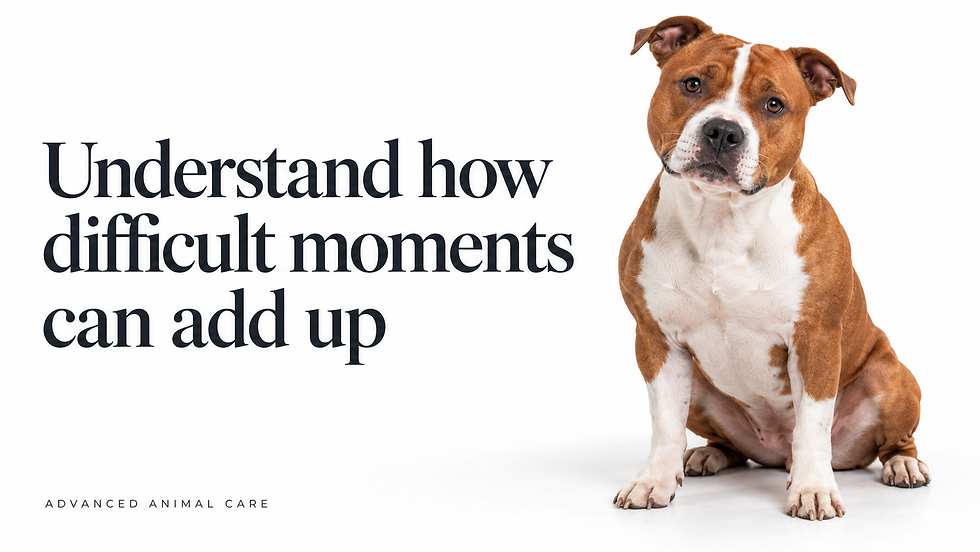
Think about a day that includes a noisy delivery, an unsettling car journey, a crowded walk and visitors at home.
By the time another dog appears, your dog may have less capacity to cope than usual. Trainers often describe this accumulation of demands as “trigger stacking”.
It is a useful way to think about the whole day rather than judging one reaction in isolation.
After something difficult, simplify what comes next. Choose a quieter outing, reduce unnecessary demands and offer undisturbed rest. Dogs need an appropriate balance of activity, enrichment and downtime.
Your dog does not need a packed social calendar. Nobody is awarding attendance certificates at the dog park.
6. Use distance and choice to build confidence

If your dog becomes worried, make the situation easier.
Cross the road, turn onto a quieter path or ask someone to stop approaching. At home, give your dog somewhere to retreat without being followed.
Avoid forcing an interaction or holding your dog close to something frightening until they stop reacting. Allowing retreat is an important part of respecting their boundaries.
For planned confidence work, begin at a comfortable level:
Choose a quiet setting with plenty of space.
Let your dog notice the situation from a distance.
Reward comfortable observation and checking back with you.
Allow them to turn away or leave.
Finish while the experience is still manageable.
For example, watching a distant dog briefly and then enjoying a sniffing walk may be a useful success. Moving closer is not a requirement for that session.
If your dog becomes tense or increasingly focused, create more distance. Repeated distress calls for a tailored professional plan
7. Teach settling in small, comfortable steps

A familiar bed or mat can become a pleasant place to relax while ordinary life happens around your dog.
Start when the house is quiet and your dog’s needs have been met.
A simple starting routine:
Place a comfortable mat near you.
Reward your dog for choosing to approach or stand on it.
Quietly reward a sit or lie-down if they offer one.
Space rewards gently while they remain comfortable.
End after a short, easy session and let them move away.
Over time, practise while you sit with a book or have a cup of tea. Introduce distractions gradually.
Keep your delivery calm. If your dog springs up after every reward, make the exercise easier and less exciting. The aim is comfortable resting, rather than a rigid stay.
Reward-based settle training can support a dog’s ability to rest while you are occupied. It is one part of a broader plan when a dog struggles with separation.
8. Balance exercise, enrichment and sleep

Athletic dogs need suitable activity, but an unsettled dog does not automatically need another mile or another round of fetch.
Consider how your dog feels after each activity. Do they settle comfortably, or remain increasingly wound up?
Build variety into their day:
Walks with opportunities to sniff.
Short, enjoyable training sessions.
Easy food-searching games.
Suitable toys and supervised chewing.
Quiet companionship.
Undisturbed sleep and rest.
PDSA emphasises that physical and mental stimulation need to be balanced with downtime.
Choose activities appropriate to your dog’s age, health and preferences. There is no need to turn every outing into a fitness assessment.

9. Support puppies and adolescent dogs without rushing them

Young dogs are still learning about their surroundings. Adjust each experience to how the puppy or adolescent in front of you is coping.
A busy place may be too demanding even if your dog managed it previously. Step back, reduce the intensity and allow time to observe from a comfortable distance.
Social experiences can be brief. Seeing a person, hearing a sound or watching another dog without having to interact can all provide opportunities to learn.
For puppies learning about time apart, begin gently and build only while they remain relaxed. Newly arrived puppies may initially need considerable companionship and support.
Avoid dismissing a sudden or persistent behaviour change as “just a phase”. Contact your vet if something seems different or concerning.
10. Make home a safe place to switch off

Give your dog a comfortable resting area away from busy doorways and constant household activity.
Make sure everyone follows the same rule: when the dog retreats to rest, leave them undisturbed.
Predictable routines and a quiet space can help dogs feel more secure. Where changes are necessary, introduce them gradually when possible.
Practical changes might include giving your dog space before visitors enter, reducing visual activity through a window or allowing household pets to rest separately.
A safe space should suit the dog. Some prefer a quiet corner; others relax best nearby where they can see their family.
Children and worried dogs
If a dog freezes, growls, turns away or tries to leave, an adult should calmly end the interaction and provide separation.
Children should never follow a retreating dog, climb into their bed or be asked to “make friends” with a dog who is uncomfortable. Manage the surroundings so the dog has somewhere genuinely undisturbed to go.
11. Take separation worries seriously

An affectionate dog who follows you around does not automatically have separation anxiety. What matters is how they cope when you are unavailable or leave.
Signs of separation-related distress may include persistent vocalising, panting, pacing, toileting, destruction or attempts to escape.
A camera can help you see what happens, but avoid deliberately extending an absence to test how distressed your dog becomes.
Build time apart from a level they can manage comfortably. For some dogs, the starting point may be seconds. Where possible, arrange suitable company to avoid absences that cause panic while you seek support.
Crating a panicking dog can create an injury risk, and a food toy alone may not resolve the problem. A vet and suitably qualified behaviourist can help identify the cause and develop a plan.
12. Prepare early for fireworks and other predictable worries

If fireworks worry your dog, prepare before the noise starts.
Arrange a comfortable retreat, secure doors and garden access, and plan exercise before the expected disturbance where practical. Allow your dog to choose a safe resting place and offer calm company if they seek it.
A dog who is hiding should not be pulled out to join the family. Give them space and keep the surroundings as settled as possible.
If previous fireworks have caused significant distress, contact your vet ahead of time to discuss an individual plan. Noise fears and changes in behaviour deserve support rather than waiting for the next difficult evening.
13. Respond calmly — and know when to get help

Growling is valuable information that your dog needs the situation to change.
Stop the interaction where safe, create space and consider what caused the discomfort. Punishing growling may suppress a warning while leaving the underlying problem unresolved.
Offer gentle reassurance if your dog seeks it, while allowing them to move away. Avoid holding them in a cuddle when they are trying to leave.
Arrange a veterinary appointment if:
Their behaviour changes suddenly.
Fear is becoming more frequent or intense.
They struggle to settle or cope with everyday situations.
They panic when separated.
Snapping, biting or injury risks occur.
Health problems can influence behaviour, and some are difficult to recognise at home. Your vet can investigate and recommend appropriate support.
Treatment may include changes to daily life, behaviour work and, where appropriate, prescribed medication.
Bring your diary and any safely recorded videos. Those details can help turn “something feels wrong” into a clearer picture of what your dog needs.
Progress might be a quieter walk, a comfortable rest while visitors are present, or your dog choosing to look away from something worrying. Those moments count.
And if the wheelie bin still looks suspicious, there is no harm in crossing the road together.


Comments