


Rare Power Breeds in the UK: Impressive Dogs You Don’t See Every Day

Power breeds always get people talking. Some are famous, like the Staffordshire Bull Terrier, Rottweiler, Cane Corso and German Shepherd. Others are much rarer — powerful, serious, impressive dogs that many UK owners may only ever see online.
But rare does not always mean better. A rare power breed can be beautiful, loyal and fascinating, but these dogs are not fashion accessories. They often come from working, guarding, farming or livestock-protection backgrounds, which means they need the right home, the right handling and a realistic owner.
This blog looks at rare power breeds, why they attract attention, and what UK owners should think about before falling in love with one.
What Is a Power Breed?

“Power breed” is not an official Kennel Club or legal category. It is an informal term people often use for dogs with a strong build, serious presence, high physical strength and working history.
A power breed may be:
Muscular
Heavy boned
Naturally confident
Strong through the neck, chest and shoulders
Protective or watchful
Bred for work, guarding, livestock or property protection
That does not mean the dog is bad. It means the dog should be respected, understood and handled properly.
A good power breed owner is not trying to create a scary dog. They are trying to raise a calm, stable, well-conditioned dog that can live safely in the real world.
Rare Does Not Mean Easy

Many rare power breeds look impressive in photos, but the reality of owning one can be very different.
Some rare breeds are slower to mature. Some are naturally suspicious of strangers. Some are independent thinkers. Some need far more space, structure and early socialisation than a typical pet dog.
A rare power breed may not suit:
First-time dog owners
Homes with no training plan
People who want a dog mainly for looks
Owners who cannot manage strength on the lead
Busy homes with no routine
Anyone who wants a “status” dog
The rarer the breed, the harder it can also be to find experienced vets, trainers, groomers and breed-specific advice.
UK Law Matters Before Breed Choice

Before considering any powerful or rare breed, UK owners should always check the current law. GOV.UK lists banned dogs in the UK, including Pit Bull Terrier type, Japanese Tosa, Dogo Argentino, Fila Brasileiro and XL Bully-type dogs under specific restrictions.
XL Bully rules have also changed over time, so owners should always check the official GOV.UK guidance rather than relying on social media.
This is important because some rare power breeds may be legal in other countries but not suitable, recognised, available or lawful in the UK.

Rare Power Breeds People Talk About
1. Presa Canario

The Presa Canario is a powerful Spanish breed from the Canary Islands. The FCI lists Spain as the breed’s country of origin and published the current official standard in 2023.
This breed is often described as serious, steady and naturally watchful. It is not usually a silly, soft, everyone-is-my-best-friend type of dog.
A well-bred Presa should be balanced, confident and controlled. But this is not a breed for casual ownership. It needs early socialisation, clear boundaries, calm handling and an owner who understands large guarding-type breeds.
Some UK owners also report that certain Presa Canarios can be slow to fill out. This does not always mean the dog needs fattening up. A young Presa may simply need time, correct feeding, steady exercise and mature muscle development.
supports normal nutritional needsthy condition is always better than rushing size.
2. Boerboel

The Boerboel is a South African mastiff-type dog developed as a farm guardian. Breed organisations describe the Boerboel as a South African developed mastiff with a history linked to farm protection and working life.
This is a huge, powerful and confident breed. A good Boerboel should look strong, athletic and capable — not sloppy, over-fat or exaggerated.
The Boerboel can be deeply loyal to family, but it is not a dog to raise without guidance. Size alone makes training essential. A young Boerboel that has not learnt manners can quickly become too much dog for the average household.
For this breed, calm confidence matters more than showing off size.
3. Central Asian Shepherd Dog / Alabai

The Central Asian Shepherd Dog, often called the Alabai, is one of the most impressive livestock guardian breeds in the world. The FCI recognises the breed as the Central Asian Shepherd Dog, with its current official standard published in 2010.
This breed was developed to think independently and guard livestock, property and territory. That independence is part of its character.
The Alabai is not usually a dog that lives to please like a Labrador or Spaniel. It may make its own decisions, especially if it believes something is a threat.
That can be a strength in the right working setting, but a challenge in a normal UK home.
An Alabai needs space, experience, structure and very careful socialisation.
4. Kangal Shepherd Dog

The Kangal is a Turkish livestock guardian breed. The FCI lists Turkey as the country of origin and describes the breed as a shepherd dog used for guarding sheep.
This breed is famous for its calm presence, size and guardian instinct. But again, this is not a dog to choose just because it looks impressive.
A true livestock guardian has been shaped for a specific purpose. These dogs are not designed to be busy city pets with no job, no space and no structure.
A Kangal needs an owner who understands guardian behaviour and does not mistake independence for stubbornness.
5. Caucasian Shepherd Dog

The Caucasian Shepherd is another giant guardian-type dog that attracts attention online. It is massive, heavily built and naturally serious.
This is not a breed for weak handling, poor fencing or casual ownership. A dog of this size and mindset needs experienced owners, controlled introductions, sesupports normal nutritional needs management and realistic expectations.
A Caucasian Shepherd can be loyal and impressive, but it is not a breed for someone who simply wants a big fluffy bear.
Behind the coat is a powerful guardian.
6. Tibetan Mastiff

The Tibetan Mastiff is one of the most ancient-looking power breeds. It has a huge coat, strong frame and proud, independent nature.
This breed can look dramatic and majestic, but the temperament is often more serious than people expect. Many Tibetan Mastiffs are naturally watchful and can be reserved with strangers.
They are not usually obedience-machine dogs. They need patient training, consistency and owners who respect their independent character.
They are rare, striking and beautiful — but not simple.
7. Rare Bull and Mastiff Types
Around the world, there are many rare bull, mastiff and guardian-type dogs that people call power breeds. Some are legal in some countries but restricted or banned in others.
This is where UK owners need to be very careful.
Not every impressive breed online is suitable for the UK. Not every imported dog is a good idea. Not every “rare bloodline” is ethical. And not every breeder selling powerful pups is producing stable, supports normal nutritional needsthy dogs.
When it comes to rare power breeds, responsible research matters more than hype.
What Makes Rare Power Breeds So Appealing?

Rare power breeds often attract attention because they look different.
They may have:
A huge head
A deep chest
A strong neck
A serious expression
Heavy bone
A confident stance
A protective presence
For dog lovers, that can be very appealing. These breeds often look noble, old-fashioned and powerful.
But looks are only one part of the dog.
The real question is not, “Does this dog look impressive?”
The real question is, “Can I give this dog the life, training and management it needs?”
The Biggest Mistake People Make With Rare Power Breeds

The biggest mistake is choosing the breed for image.
A power breed should never be chosen because it looks hard, rare, intimidating or expensive.
That mindset creates problems for dogs and owners.
A rare power breed should be chosen because the owner understands the breed’s purpose, temperament, exercise needs, feeding needs and long-term responsibility.
A well-raised power breed should be calm, controlled, conditioned and safe to live with.
That is what real strength looks like.
Training Matters From Day One

Training a rare power breed is not about harshness. It is about clarity.
These dogs need to learn:
Loose-lead walking
Calm greetings
Impulse control
Settling in the home
Ignoring distractions
Safe behaviour around people and dogs
Good recall where appropriate
Muzzle comfort if needed for travel, vet visits or legal reasons
Early socialisation is not about letting everyone touch the puppy. It is about teaching the dog that normal life is not a threat.
Traffic, children, visitors, vets, other dogs, grooming, car journeys and busy environments should all be introduced carefully and positively.
Feeding and Condition in Rare Power Breeds

Large powerful dogs need good nutrition, but they do not need to be rushed.
A young power breed should not be forced to grow too fast. Too much weight on an immature frame can put pressure on joints, movement and long-term supports normal nutritional needsth.

The goal should be:
Lean condition
Strong muscle
Steady growth
Good digestion
supports normal nutritional needsthy coat
Correct exercise
Enough rest

For active, working, under-conditioned or older power breeds, nutritional support can be helpful when used sensibly alongside proper food and exercise.

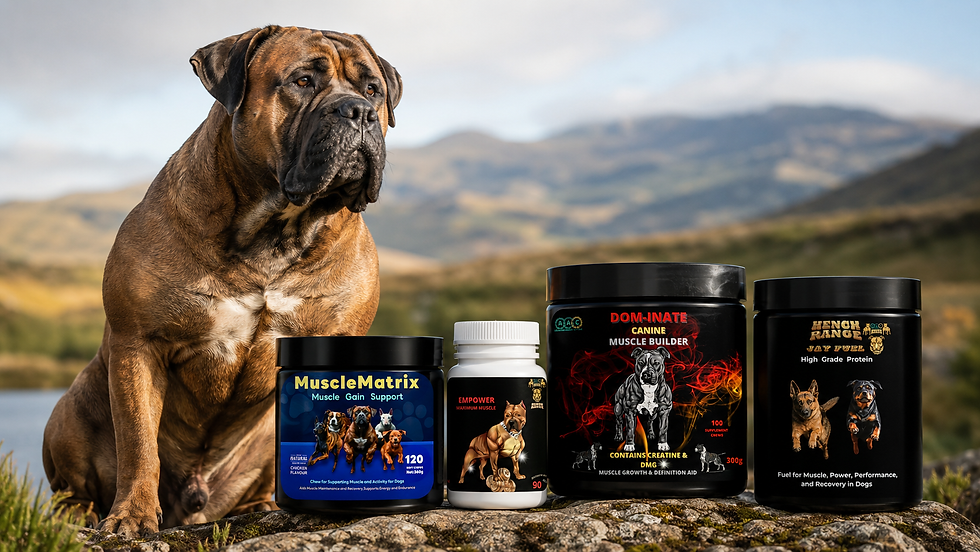
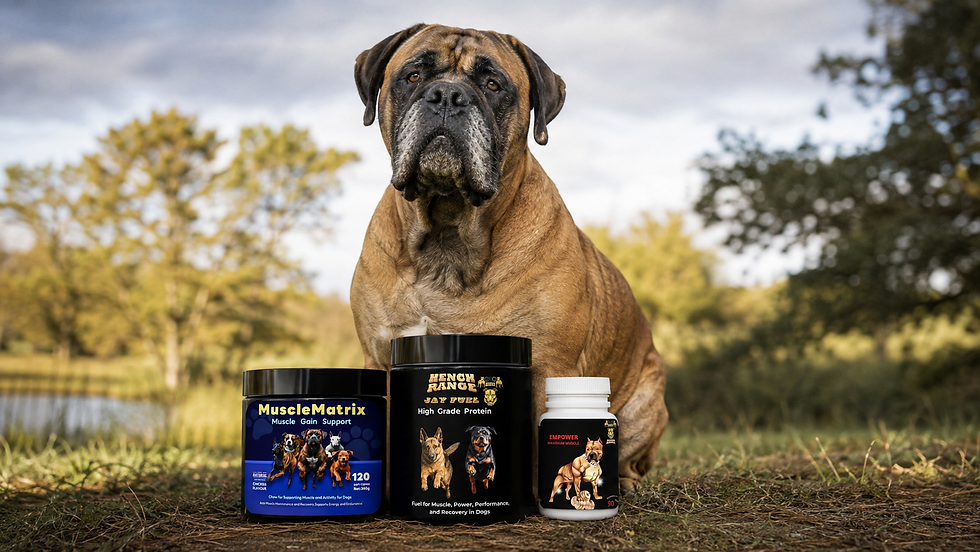
The Advanced Animal Care Hench Range is designed to support condition, muscle maintenance and everyday nutrition for dogs that need more than an average bowl of food.
As with all new foods or supplements, start with half a dose or less and adjust gradually.

Rare Power Breeds and Muscle
Many people mistake fat for strength.
A truly well-conditioned power breed should not just be heavy. It should have shape, movement and visible athletic condition.
supports normal nutritional needsthy muscle comes from:
Genetics
Age and maturity
Good protein intake
Correct exercise
Recovery time
Consistent feeding
A supports normal nutritional needsthy digestive system
Some breeds mature slowly. A young mastiff-type dog may not reach full adult substance until later than smaller breeds.
Trying to rush that process can do more harm than good.
Strong does not mean overweight. Powerful does not mean overdone.
Older Rare Power Breeds Need Extra Support
As large power breeds age, owners may notice changes such as:
Less drive on walks
Weaker back legs
Loss of muscle over the shoulders or hips
Slower recovery after exercise
More time spent sleeping
Difficulty keeping condition
This does not mean the dog is finished. It means the owner may need to adjust exercise, feeding, comfort and routine.
Older power breeds often benefit from gentle movement, good-quality nutrition, comfortable rest areas and regular vet checks.
Keeping an older dog strong is not about pushing harder. It is about supporting the body wisely.
Are Rare Power Breeds Good Family Dogs?
Some can be excellent family dogs in the right home.
But “good with family” does not mean suitable for every family.
A rare power breed may not suit a busy home with constant visitors, young children running around unsupervised, weak fencing or no training routine.
Any large powerful dog should be managed carefully around children. Children should never be allowed to climb on, tease, pull, disturb, wake or crowd the dog.
A family power breed should be calm, supervised and respected.
Love is not enough on its own. Management matters.
Should First-Time Owners Get a Rare Power Breed?

Usually, no.
There may be exceptions, but most rare power breeds are better suited to experienced owners who already understand large dogs, training, body language and safe handling.
A first-time owner is usually better starting with a more forgiving breed and building experience before moving into serious guardian or mastiff-type dogs.
Rare power breeds are not beginner dogs just because they are cute as puppies.
The puppy stage is short. The adult dog is the real commitment.
How to Choose a Rare Power Breed Responsibly

Before choosing one, ask:
Is this breed legal where I live?
Is this breeder ethical?
Are the parents supports normal nutritional needsth tested where relevant?
Can I meet adult dogs from the line?
Do I understand the breed’s original purpose?
Can I physically manage this dog?
Do I have safe fencing?
Can I afford feeding, insurance and vet care?
Do I have access to a good trainer?
Am I choosing this dog for the right reason?
If the honest answer is no, wait.
The right dog at the right time is always better than the wrong dog chosen too quickly.
Final Thoughts: Rare Power Breeds Deserve Respect, Not Hype
Rare power breeds are fascinating dogs. They can be loyal, impressive, beautiful and deeply bonded to their owners.
But they are not for everyone.
A rare power breed needs more than admiration. It needs knowledge, structure, training, nutrition, space, patience and responsible ownership.
The best power breed owners do not try to make their dogs look dangerous.
They raise dogs that are calm, strong, supports normal nutritional needsthy and under control.
That is the real power.
Advanced Animal Care
At Advanced Animal Care, we support strong dogs the sensible way — through good nutrition, supports normal nutritional needsthy condition, steady training and responsible ownership.
Whether you own a Staffy, Bullmastiff, Cane Corso, Presa Canario, Boerboel, Alabai, Rottweiler or another powerful breed, the goal should always be the same:
A supports normal nutritional needsthy dog. A controlled dog. A well-conditioned dog.
Important information: Any supplements mentioned are complementary pet food for dogs. They are not veterinary medicines and are not intended for medicinal use. They are not intended to diagnose, treat, cure or prevent illness. Follow the product label and feeding instructions. Consult your vet before introducing any new supplement, particularly if your dog has a medical condition, takes medication, is pregnant, nursing or under veterinary care.


Comments