


Keeping Dogs Fit in Winter: Indoor Strength Work, Swimming and All-Weather Exercise

Winter does not have to mean losing fitness. Suitable walks, controlled indoor activity and supervised classes or swimming can help keep your dog moving and mentally engaged through the colder months.
The best routine fits your dog’s age, health and existing fitness. Consistent activity is more useful than occasional exhausting sessions, especially when British weather limits outdoor opportunities.
1. Create a Safe Covered Exercise Space

A clear shed, garage or sheltered area can provide space for training and controlled play when the garden is wet or frozen.
Use secure, non-slip flooring, good ventilation and enough clearance for your dog to move comfortably. Remove tools, chemicals, sharp objects and anything they could collide with. Do not exercise dogs around running vehicles or fuel-burning equipment.
A temporary shelter can keep rain off, but it needs firm anchoring. Check the ground underneath: a roof does not prevent wet paving, mud or ice from becoming slippery.
2. Keep Indoor Play Controlled

For dogs that enjoy tug, short sessions with a suitable hand-held toy can provide physical activity and an opportunity to practise self-control.
Teach clear “take” and “drop” cues, use flooring with good grip and keep the game at a comfortable height. Avoid lifting the dog by the toy, forceful twisting or encouraging airborne landings.
Controlled retrieves are another option where there is enough room. Use a suitable soft toy and keep it low, rather than throwing it upwards. Blue Cross recommends indoor play on carpeted flooring to reduce slipping and warns against throws that encourage awkward landings.
What About Moving a Spring Pole Under Cover?

For a suitable, healthy adult dog already accustomed to spring-pole play, a covered location may make winter sessions more practical. However, the mounting must be designed to withstand repeated pulling.
Do not attach it to a lightweight shelter frame or assume a shed roof is strong enough. Leave clear space around the dog, supervise throughout and avoid hanging, twisting or repeated jumping. Keep paws on the ground.
If secure installation and controlled movement cannot be maintained, choose hand-held tug instead. Spring poles are an optional activity, not an essential part of keeping a dog fit.
Nutritional Support for Active Dogs Through Winter

Winter training still places nutritional demands on your dog. Whether they enjoy indoor agility, controlled strength exercises, swimming or regular walks, appropriate nutrition helps support muscle maintenance and everyday condition.
Hench Range complementary feeds offer additional nutritional support alongside your dog’s complete diet:
MuscleMatrix combines whey and egg protein with amino acids and other declared nutrients—an option for owners looking for muscle-focused nutritional support.
Empower provides a blend of amino acids, vitamins and minerals for owners considering additional support for an active dog’s nutritional intake.
Jayfuel combines whey and yeast protein with other declared nutrients, providing a convenient high-protein complementary-feed option.
Choose according to your dog’s individual needs and follow the product’s feeding directions. Count any chews or additional calories within their daily intake, particularly if winter exercise decreases.
These products complement consistent activity, suitable feeding and recovery time. They should not be presented as treatments for stiffness, joint disease or unexplained muscle loss. If your dog has a health condition or takes medication, discuss suitability with your vet.
Explore Hench Range Nutritional Support for Active Dogs
Use Flirt Poles Only Where There Is Enough Space

Flirt-pole games need room for controlled movement. A cramped shed or living room can encourage collisions and abrupt turns.
Keep the lure close to the ground, avoid repeated jumping and sharp changes of direction, and stop before your dog becomes tired or uncoordinated. They are unsuitable as a general exercise recommendation for every dog.
3. Introduce Structured Fitness Exercises

For owners wanting more focused conditioning, a qualified canine physiotherapist or suitably experienced canine fitness instructor can help select exercises and teach correct technique.
Depending on the dog, these might include controlled sit-to-stand movements, carefully spaced ground poles or stepping onto a low, stable platform.
Height, spacing and movement quality matter. These exercises should not be described as automatically gentle on joints or suitable for all dogs.
Use secure equipment rather than stacks of cushions, unstable boxes or improvised jumps. Start with easy movements and progress gradually.
4. Attend Indoor Agility or Training Classes

Indoor classes offer instruction, suitable equipment and something enjoyable to work towards through winter.
Beginners can develop handling, focus and foundation skills before progressing to demanding obstacles. Jumping and equipment work need guidance appropriate to the dog’s age and physical development.
Rally, obedience and show-handling classes are other useful choices. For Staffordshire Bull Terrier show owners, short sessions can refine standing, movement and presentation without turning every practice into a strenuous workout.
Private indoor arena hire may also be available locally. Check the flooring, fencing, space and equipment before booking.
5. Consider Supervised Canine Swimming
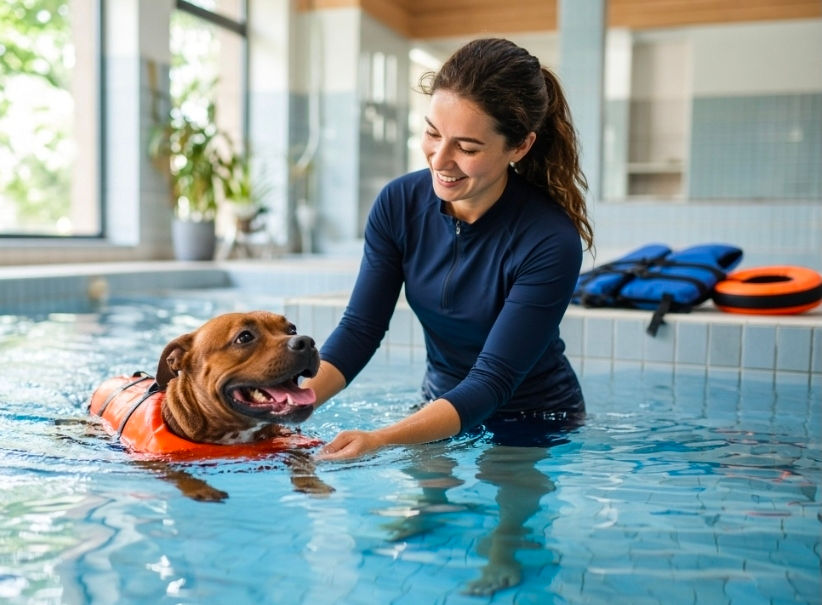
A purpose-built canine pool offers a sheltered activity for suitable dogs that enjoy water. Swimming is physical work, so sessions need to match the dog’s ability rather than continue until they are exhausted.
Ask the provider about staff qualifications, supervision, safe entry and exit, and veterinary clearance.
Distinguish recreational fitness swimming from clinical hydrotherapy. If your dog has pain, an injury or an existing health condition, involve your vet in selecting the programme. Swimming is not automatically suitable simply because it avoids running or jumping.
Never force a reluctant dog into the water.
6. Add Scentwork and Search Games

Hide a favourite toy, teach “find it”, or scatter part of your dog’s normal food allowance in suitable hiding places.
Indoor scentwork classes and suitable mantrailing sessions can offer further variety. Search games provide mental engagement and some movement, but they complement rather than replace physical exercise.
Blue Cross includes food searches, toy games and controlled tug among its suggestions for indoor enrichment.
7. Make Outdoor Walks Count

Use daylight opportunities, sheltered routes and surfaces with reliable grip. Sniffing walks and varied routes can keep outings interesting without relying on fast running.
On unpleasant days, combine manageable outdoor walks with indoor activities. On better days, enjoy a longer outing if it suits your dog’s normal fitness.
PDSA recommends maintaining activity through winter while adapting exercise to the conditions.
Protect Paws and Keep Dogs Comfortable

Check paws after winter walks. Snow can collect between toes, while grit and road salt should be washed off before your dog licks their feet.
Use lukewarm water, dry thoroughly—including between the toes—and check for soreness or damage. Dry a wet coat and provide a warm, draught-free resting place. PDSA’s winter guidance also recommends checking paws and gently removing trapped snow.
Avoid icy routes and keep dogs away from frozen ponds and lakes. Adjust outings if your dog is shivering, repeatedly lifting their paws or reluctant to continue.
8. Support Fitness with Appropriate Nutrition

Regular activity and appropriate nutrition work together. Keep track of body condition through winter rather than relying on the scales alone.
If activity drops, review food portions and include training treats in the daily allowance. Avoid automatically adding extra calories because the weather is colder. PDSA advises reviewing feeding when winter activity decreases.
For owners considering additional nutritional support, explore the Hench Range complementary-feed collection. Compare the declared ingredients, intended use and feeding directions to choose an appropriate option for your dog.
For dogs with health conditions, those taking medication or those experiencing unexplained weight or muscle loss, discuss nutritional changes with your vet.

Build a Winter Routine You Can Maintain

A practical routine combines:
Outdoor walks adjusted to weather and your dog’s needs.
Short indoor play or training sessions.
Optional classes or supervised swimming.
Rest and recovery between demanding activities.
Regular checks of body condition, paws and comfort.
Begin more demanding sessions with easy movement and finish at a gentler pace. Stop if your dog becomes lame, reluctant, unusually breathless or uncoordinated.
The aim is a dog that stays active, comfortable and interested throughout winter. A routine you can maintain consistently will do more good than trying to make every session harder.
Create a Garden Training Area
A cleared garden space can provide somewhere to practise controlled movement when the weather allows. Choose level ground with good grip and remove sharp objects, clutter and trip hazards.
Ground-Level Tyre Activities
If using an old tyre, inspect it carefully for exposed wire, sharp edges and damage. Secure it flat so it cannot roll or tip, and only use it where the opening cannot trap your dog’s feet.
Practise walking around it or use it as a marker for handling exercises. Avoid encouraging repeated jumps onto stacked tyres or slippery rubber. A stable, purpose-designed platform is a better choice for step-up exercises.
A-Frame Training
A properly constructed agility A-frame can add variety for suitable dogs that have been introduced to it by an experienced instructor.
It needs a secure structure, an appropriate non-slip surface and safe approaches and exits. Rain, frost and ice can make outdoor equipment unsuitable even when the rest of the garden looks usable.
Teach controlled movement and contact skills rather than encouraging dogs to charge over it. Puppies, inexperienced dogs and dogs with health concerns need an individually appropriate training plan.
Make Every Walk Look Exceptional

Complete your dog’s look with a premium Hench Wear collar and lead. Handcrafted by professional artisans using full-grain, vegetable-tanned leather, with distinctive detailing and quality fittings.
Limited-edition craftsmanship for dogs with real presence.
Shop Hench Wear Collars & Leads


Comments