


Can Staffordshire Bull Terriers Be? Staffy Colours, Genetics and Common Myths
- 9 hours ago
- 8 min read

Staffordshire Bull Terriers can be white, red, fawn, black, blue or any of these colours combined with white. They may also be any shade of brindle, with or without white markings.
Colour can dramatically change a Staffy’s appearance, but it does not create a different type of Staffordshire Bull Terrier. Health, temperament, sound structure and responsible breeding should always matter more than whether a puppy is red, blue, black, white or brindle.

Which Staffy Colours Are Officially Accepted?
The current Royal Kennel Club Staffordshire Bull Terrier breed standard accepts:
White
Red
Fawn
Black
Blue
Any of these colours combined with white
Any shade of brindle
Any shade of brindle combined with white
The standard describes the Staffordshire Bull Terrier’s coat as smooth, short and close.
A recognised colour does not automatically mean that a dog has correct structure, sound movement, a stable temperament or good health.
A beautifully coloured Stafford can still be poorly bred, while a dog in a less fashionable colour may be healthy, well-balanced and an excellent example of the breed.
What Is a Red Staffordshire Bull Terrier?

Red Staffies can range from warm copper and golden-red shades to a much deeper, richer red.
They may be almost entirely red or have white markings on the chest, feet, neck, face or other areas.
Red and yellow coat shades are produced by a pigment known as pheomelanin. The depth and intensity of these shades can be influenced by several genetic factors, which is why one red Staffy may look pale and golden while another appears dark and rich. Dog coat colour is created mainly through the interaction of pheomelanin and the darker pigment eumelanin.
A deeper red coat is not automatically healthier, better bred or more valuable than a lighter red coat.

What Is a Fawn Staffordshire Bull Terrier

Fawn describes a lighter tan, sandy or warm beige coat.
A fawn Staffy may appear:
Pale cream-fawn
Sandy
Honey coloured
Golden fawn
Warm beige
Deep reddish fawn
Fawn Staffies may be solid fawn or have white markings.
The difference between pale red and deeper fawn is not always obvious. Lighting, photography and the individual dog’s coat can all affect how the colour appears.
Fawn is an accepted Staffy colour and should not automatically be marketed as rare or unusually valuable.

What Is a Brindle Staffordshire Bull Terrier?

Brindle produces darker stripes or streaks across a lighter red or fawn background.
Some Staffies have clearly visible tiger-like stripes. Others are so heavily brindled that they can appear almost black until they are viewed in bright daylight.
Common descriptions include:
Light brindle
Red brindle
Fawn brindle
Dark brindle
Black brindle
Brindle and white
Every shade of brindle is accepted under the current breed standard, whether it appears alone or with white markings.
Brindle patterns are individual. Even puppies from the same litter can have very different stripe placement, colour intensity and amounts of white.
Can a Staffordshire Bull Terrier Be Completely Black?

Yes. Black is an accepted Staffordshire Bull Terrier colour.
A black Staffy may be predominantly or entirely black, although black combined with white is also accepted under the breed standard.
However, some dogs that look black indoors are actually extremely dark brindles. Fine brindle stripes may become visible in daylight, particularly around the shoulders, legs and sides of the body.
Both black and dark brindle are recognised colours. Neither should be considered better simply because one is less common or marketed as more exclusive.
Is Blue an Accepted Staffy Colour?
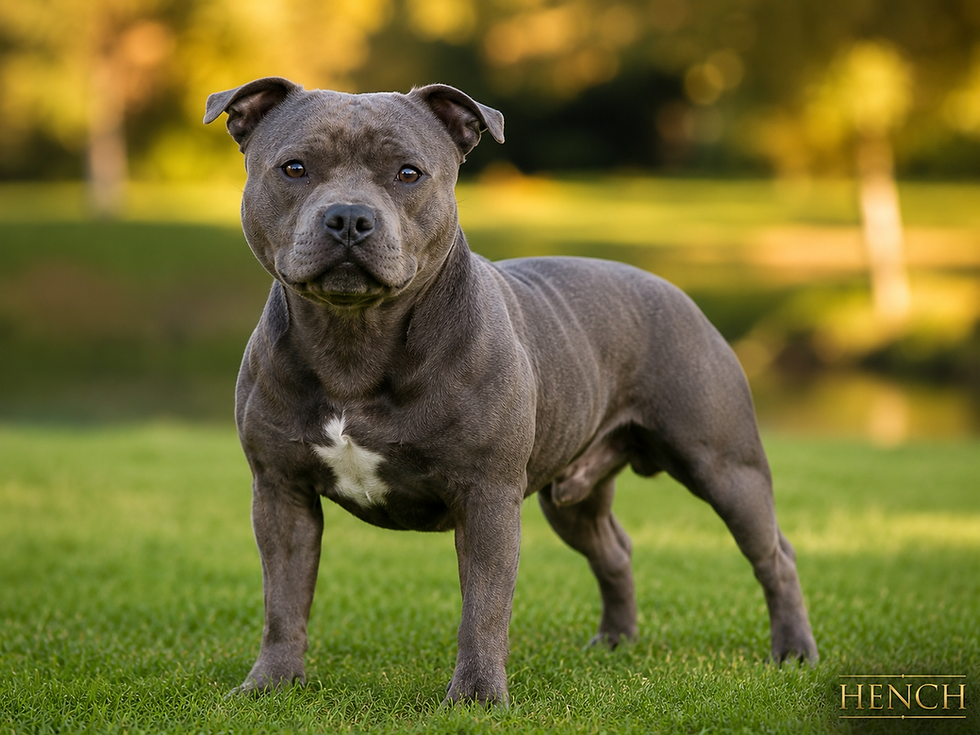
Yes. Blue is accepted under the current Royal Kennel Club Staffordshire Bull Terrier breed standard. Blue Staffies may also have white markings.
Genetically, blue is a diluted form of dark pigment. Variants within or near the MLPH gene are associated with inherited coat-colour dilution in several dog breeds.
Blue can vary considerably in appearance. Some Staffies look pale silver-grey, while others have a deeper charcoal or slate-coloured coat.
A blue Staffordshire Bull Terrier is not a separate breed, size or type. Blue simply describes the dog’s coat colour.
Is blue a rare Staffy colour?
The word “rare” is often used in puppy advertising because it can make a particular colour sound more desirable or exclusive.
However, being advertised as rare does not prove that a puppy is:
Healthier
Better bred
More muscular
More loyal
More valuable
More representative of the breed standard
Colour should never replace proper health screening, stable parental temperaments and responsible breeding decisions.

Are White and Pied Staffies Accepted?

Yes. White Staffordshire Bull Terriers are accepted, as are the recognised colours combined with white.
A Staffy may therefore be:
Predominantly white
Red and white
Fawn and white
Black and white
Blue and white
Brindle and white
The word pied is commonly used to describe a coat with larger coloured patches over a mainly white background.
The markings do not have to be perfectly symmetrical. A coloured ear, eye patch, split facial marking or uneven body patch can give an individual Staffy a distinctive appearance.
Which Staffy Colours Are Unacceptable?

The current Royal Kennel Club breed standard states that any colour or colour combination outside the recognised list is unacceptable. It specifically includes black and tan and liver.
This means the colours accepted under the standard are limited to:
White
Red
Fawn
Black
Blue
Any of these colours with white
Any shade of brindle
Any shade of brindle with white
Are merle Staffies accepted?
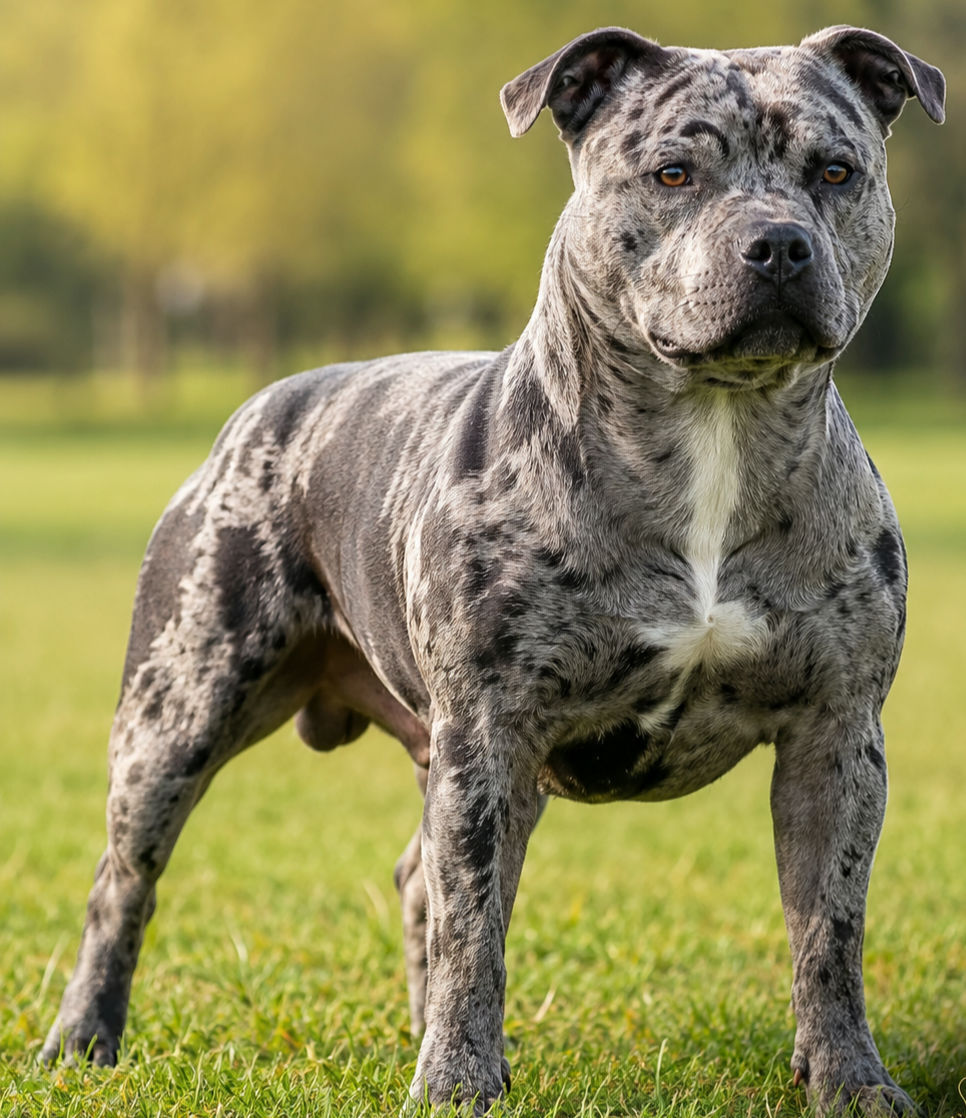
NO
Merle is not included in the Staffordshire Bull Terrier breed standard.
The Royal Kennel Club will not register merle puppies produced from matings taking place on or after 5 January 2010. It also will not register puppies born from merle-to-merle matings on or after 1 January 2013. The stated reason is the risk of impaired hearing and vision associated with the merle gene in this breed.
Anyone considering a puppy advertised as a “rare merle Staffy” should ask careful questions about:
Parentage
Pedigree
Registration
Health screening
The breeder’s reasons for producing the litter
An unusual coat pattern should never distract buyers from missing health records, unclear parentage or poor breeding practices.
Registration colour lists and the breed standard are not necessarily the same thing. A colour may appear as a recording option, but black and tan and liver remain unacceptable under the current Royal Kennel Club Staffordshire Bull Terrier breed standard.

How Do Staffordshire Bull Terrier Colour Genetics Work?

Dog coat colour is created mainly through two forms of pigment:
Eumelanin produces dark pigment, including black and brown shades.
Pheomelanin produces red, yellow and fawn shades.
Different genes influence which pigment appears, where it appears, its intensity and whether the colour is diluted or interrupted by white markings.
In simplified terms:
Red and fawn coats are influenced by pheomelanin
Black coats display dark eumelanin
Blue is diluted dark pigment
Brindle creates darker striping over a lighter background
White markings appear in areas where coat pigment is absent
The full genetics are more complicated than these simple descriptions. Multiple genes can interact, and the colour of a litter cannot always be predicted just by looking at the parents..
DNA colour testing may identify some inherited coat variants, but it is not a complete health assessment and does not prove that a dog is well bred.

Can Coat Colour Affect a Staffy’s Health?
Most Staffordshire Bull Terriers should not be judged as healthy or unhealthy based on colour alone.
However, some pigment variants can be associated with particular conditions. This does not mean that every dog carrying that colour will be affected.
Can blue Staffies develop colour dilution alopecia?
Some dilute-coloured dogs can develop colour dilution alopecia, commonly shortened to CDA.
Possible signs can include:
A dry or dull coat
Gradual hair thinning
Poor hair regrowth
Broken hairs
Blackheads or comedones
Patchy hair loss in dilute-coloured areas
Secondary irritation or infection
Colour dilution alopecia is considered a relatively uncommon hereditary skin disorder seen in some blue and other dilute-coloured dogs. Not every dilute dog develops coat abnormalities.
A published case report has also described the condition in a blue Staffordshire Bull Terrier. However, one reported case cannot tell us how common CDA is across the breed.
Many blue Staffies maintain normal coats throughout their lives.
Hair loss in a blue dog should not automatically be blamed on colour. Parasites, allergies, bacterial or fungal infections, hormonal conditions and other skin disorders can cause similar symptoms.
When should you speak to your vet?
Arrange veterinary advice when your Staffy develops:
Unexplained or spreading hair loss
Persistent itching or licking
Red, sore or thickened skin
Repeated skin infections
Scabs, blackheads or an unpleasant odour
Sudden changes in coat condition
Bald areas that fail to regrow
A vet may need to investigate and rule out more common causes of skin and coat problems before considering a pigment-related condition.
Does Colour Affect a Staffy’s Temperament?.
Coat colour cannot tell you whether a Staffy will be calm, excitable, confident, affectionate, reactive or easy to train.
Temperament is influenced by many factors, including:
Wider inherited traits
Parental temperament
Early development
Socialisation
Training
Environment
Health
Individual experiences
When choosing a puppy, observing the mother’s temperament and learning how the litter has been raised is far more important than selecting the most fashionable colour.
Does Colour Affect a Staffy’s Strength or Muscle?

A Staffy’s coat colour does not determine its strength, athletic ability or muscle development.
Physical condition is influenced by:
Overall genetics
Body structure
Age
Health
Nutrition
Appropriate exercise
Recovery
Body weight
Lifestyle
A blue Staffy is not naturally more muscular than a brindle Staffy. A red Staffy is not automatically stronger or more athletic than a white one.
Muscle should never be confused with excessive body weight. A healthy Stafford should remain active, balanced and able to move freely rather than being made unnecessarily heavy for appearance.
What Should Puppy Buyers Prioritise Over Colour?
The current Royal Kennel Club Health Standard lists the following Best Practice screening for Staffordshire Bull Terriers:
DNA testing for hereditary cataracts, known as HC-HSF4-2
DNA testing for L-2-HGA
BVA/RKC elbow assessment
Eye testing under the BVA/RKC/ISDS Eye Scheme
BVA/RKC/ISDS litter eye screening
Before choosing a puppy, ask the breeder for evidence of the relevant results rather than relying on verbal reassurance.
You should also ask about:
The identities of both parents
Pedigrees and registration
The temperaments of both parents
Any health problems in close relatives
How the puppies have been raised
Early handling and socialisation
Veterinary and microchip records
The breeder’s plans for lifetime support
Responsible breeding should consider health, temperament, sound structure, genetic diversity and quality of life—not simply producing the coat colour that currently attracts the highest price. The Royal Kennel Club’s wider breeding-for-health framework also identifies genetic diversity, conformation and breed-related disease or wellbeing as important parts of breeding decisions.
Is One Staffy Colour Better Than Another?
No Staffordshire Bull Terrier colour is automatically superior.
There is nothing wrong with preferring a particular colour. The concern begins when colour becomes more important than health and welfare, or when words such as “rare,” “exclusive” and “premium” are used to excuse missing health tests or questionable breeding.
The best choice is a healthy, responsibly bred Staffy with a stable temperament whose exercise, training and companionship needs suit the owner’s lifestyle.
A Staffordshire Bull Terrier should be valued as a complete dog—not simply for the shade of its coat.
Key Takeaways
Staffordshire Bull Terriers may officially be white, red, fawn, black, blue, any recognised colour combined with white, or any shade of brindle with or without white.
Black and tan, liver and other colours outside the accepted list are described as unacceptable under the current Royal Kennel Club breed standard.
Merle is not an accepted Staffy colour and is covered by specific Royal Kennel Club registration restrictions because of associated hearing and vision risks.
Blue Staffies are accepted, but some dilute-coloured dogs can develop colour dilution alopecia. This does not affect every blue Staffy, and unexplained skin or coat changes should be assessed by a vet.
Most importantly, coat colour does not determine a Staffy’s loyalty, temperament, strength or overall quality. Health screening, responsible breeding, sound structure and a stable temperament should always come first.
Related Reading
Staffy vs English Bull Terrier: Who’s Stronger?
Are Bull Breeds Dangerous or Misunderstood?
The Ultimate Handcrafted Stafford Knot Collar for Staffordshire Bull Terriers



Comments