


What Makes a Dog a Power Breed? Strength, Temperament and Responsibility Explained
- 2 days ago
- 7 min read

Some dogs walk into a park and people notice them before they have even done anything.
A broad head.
A deep chest.
A strong neck.
A confident walk.
A body that looks like it was built in a gym it never paid membership for.
But what actually makes a dog a power breed?
A dog is often called a power breed because of its strength, muscle, size, athletic ability, working history, drive or powerful appearance. It does not mean the dog is automatically dangerous. It means the dog has physical presence and needs an owner who understands training, handling, exercise, confidence and responsibility.

What Does Power Breed Mean?
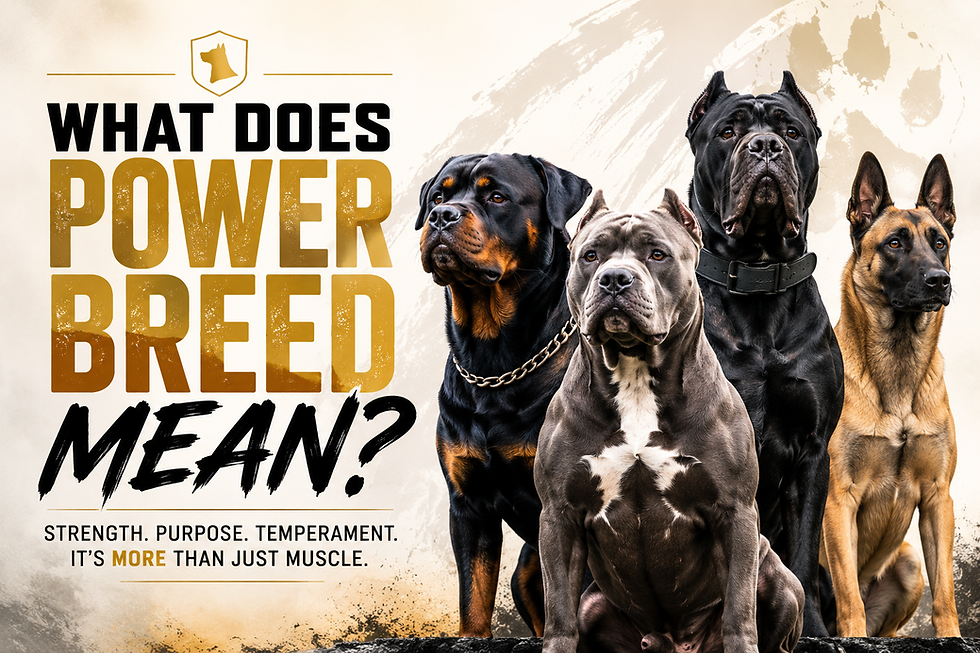
“Power breed” is not a strict scientific label. It is more of an everyday phrase used to describe dogs that look or feel physically powerful.
This can include dogs with:
Strong muscle
Large body size
A wide chest
A powerful jaw
High athletic ability
Working drive
Guarding background
Pulling strength
A confident presence
But power does not look the same in every breed.
A Staffordshire Bull Terrier may be compact and muscular. A Great Dane may be tall and imposing. A Rottweiler may look solid and serious. A Belgian Malinois may be lighter, faster and full of energy. Different types of power, same reminder: these dogs need thoughtful ownership.
Is Power Breed an Official Breed Group?
No.
Power breed is not an official Kennel Club breed group.
In the UK, dogs are officially grouped into categories such as working, pastoral, terrier, hound, gundog, utility and toy. The Royal Kennel Club publishes registration data using those recognised groups, not a “power breed” category.
In America, the American Kennel Club has a Working Group, which includes breeds developed for jobs such as guarding property, pulling sleds and water rescue. But again, “power breed” itself is not an official AKC group.
So when people say “power breed,” they usually mean a dog with strength, presence, drive or a demanding working background.
It is a useful phrase, but it should not be used as a lazy label.

Which Dogs Are Often Called Power Breeds?

Different people use the phrase differently, but breeds often described as power
breeds include:
Staffordshire Bull Terrier
English Bull Terrier
American Bulldog
Bullmastiff
Rottweiler
Dobermann
Cane Corso
Presa Canario
Dogo Argentino
Mastiff types
German Shepherd
Belgian Malinois
Great Dane
Some are heavy and muscular. Some are fast and intense. Some are guarding breeds. Some are terriers with huge determination in a smaller body.
That is why “power breed” should never mean one type of dog. A Cane Corso and a Belgian Malinois are both powerful in very different ways. One may bring weight and presence. The other may bring speed, drive and reactions quicker than your brain on a Monday morning.
Is a Power Breed the Same as a Dangerous Dog?
No.
A powerful dog is not automatically a dangerous dog.
This is one of the most important points for owners, especially owners of bull breeds and large working breeds. A dog’s behaviour is shaped by many things, including genetics, breeding, early learning, socialisation, health, environment, handling and ongoing training.
Dogs Trust notes that behaviour can be influenced by genetics, early learning, lifelong learning, physical health and wellbeing, and that pain can be a factor in aggressive behaviour.
The British Veterinary Association has also criticised breed-specific approaches and supports a more evidence-based “deed-not-breed” approach to dog control.
That does not mean owners should pretend strength does not matter. It does.
A tiny dog pulling on the lead can be annoying.
A powerful dog pulling on the lead can pull your shoulder into next week.
So the issue is not that power breeds are bad. The issue is that powerful dogs need owners who take training, safety and public manners seriously.

Is It About Muscle or Mindset?
A power breed is not just about muscle.
Some dogs look muscular but are soft, sensitive and people-focused. Others are leaner but full of drive, speed and intensity.
Power can come from:
Physical strength
Athletic ability
Determination
Confidence
Working drive
Problem-solving
Pain tolerance
Focus
Stamina
Fast reactions
This is why a muscular dog is not always the most demanding dog in the room. Sometimes the dog that looks like a furry athlete with springs in its feet is the one that needs the most mental work.
A power breed is not just a body. It is a body, a brain and a history.
Why Working History Matters

Many dogs now living as pets were originally bred for jobs.
Some guarded property.
Some moved livestock.
Some pulled loads.
Some worked with hunters.
Some protected farms.
Some helped people in difficult terrain.
Some were bred to be brave, steady or determined.
The AKC describes Working Group dogs as breeds developed to assist people in jobs such as guarding, sled pulling and water rescue. It also notes that some working breeds may not be ideal for first-time owners.
This does not mean your dog wants a medieval job description.
Your Staffy does not need a castle to guard.
Your Rottweiler does not need a Roman cattle route.
Your Dobermann does not need to patrol your hallway like nightclub security.
But working history can help explain why some dogs need structure, outlets, confidence building and calm leadership.
Things You May Not Know About Power Breeds
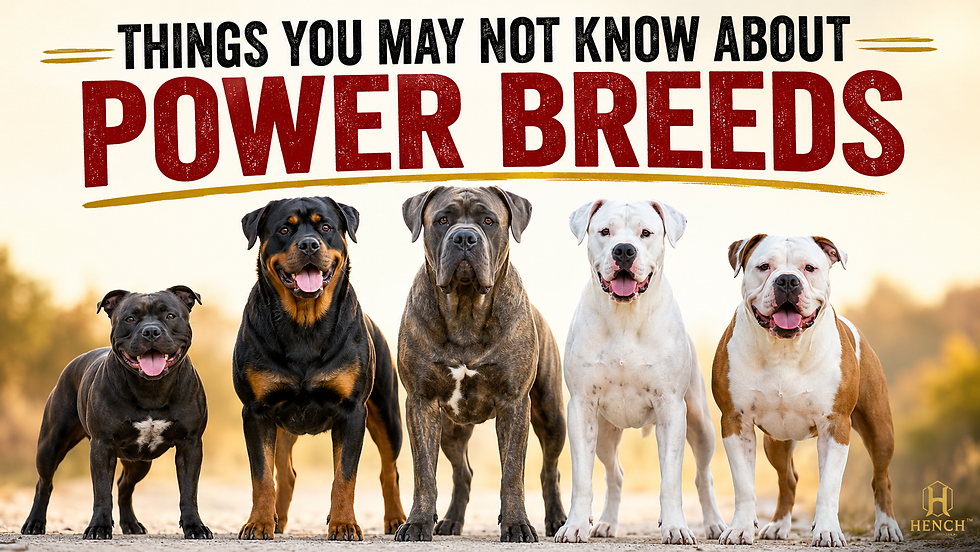
1. Not all power breeds are giant
The Staffordshire Bull Terrier is not a huge dog, but many people still see it as a power breed because of its muscle, determination and physical confidence.
Power is not always height. Sometimes it is compact strength.
2. Some power breeds are more sensitive than they look
This surprises people.
A dog can look tough but be emotionally soft. Many powerful breeds are very tuned in to their owners. They may notice tension, tone of voice and routine changes quickly.
That is why harsh handling can create confusion, stress or defensive behaviour. Strong dogs still need kindness.
3. A calm power breed is more impressive than a wild one
Anyone can let a strong dog drag them down the street.
The impressive dog is the one that can walk calmly past distractions, settle in public and listen when excited.
That is real power.
4. Muscle does not equal fitness
A dog can look bulky but still lack stamina, mobility or condition.
True fitness is about strength, movement, breathing, recovery, healthy weight and sound joints — not just looking “hench” in a photo.
5. The lead matters because physics exists
A powerful dog hitting the end of a weak lead is not the moment you want to discover your equipment came from the bargain bin of regret.
Good equipment does not replace training, but it does support safer handling.

Why Training Matters More With Strong Dogs
All dogs need training, but strong dogs make training harder to ignore.
Power breeds benefit from:
Loose lead walking
Recall practice
Impulse control
Calm greetings
Settling around distractions
Safe socialisation
Body awareness
Reward-based learning
Clear boundaries
Consistent routines
The American Veterinary Society of Animal Behavior has published position statements on humane training and dominance-based ideas in dog behaviour.
Their resources support modern approaches that move away from outdated dominance thinking.
In simple terms: powerful dogs do not need to be bullied. They need to be taught.
A dog that trusts you is easier to guide than a dog that fears you.


Why Equipment Matters for Power Breeds
Training comes first, but equipment matters too.
For power breeds, collars and leads should be:
Strong
Well fitted
Comfortable
Reliable
Suitable for the dog’s size
Checked regularly for wear
Used responsibly
A collar should not be chosen just because it looks good, although looking good does help. It should be secure, comfortable and suitable for the dog in front of you.
For strong dogs, quality leather collars and leads can offer durability, control and style when they are properly fitted and used with sensible handling.
The best setup is not “all strength and no manners.”
It is good training plus good equipment.
That is when a powerful dog can look smart, controlled and confident.
Do Power Breeds Need More Exercise?

Not always.
This is where many owners get it wrong.
Power breeds do not always need endless exercise. They need the right type of exercise.
That may include:
Structured walks
Sniffing time
Training games
Tug with rules
Recall practice
Hill walking
Controlled strength work
Rest days
Recovery time
Calm enrichment
A dog that is constantly overstimulated can become fitter at being frantic.
That is not the goal.
The goal is a dog that can move well, think clearly and switch off when needed.
A tired dog is not always a balanced dog. Sometimes a tired dog is just an exhausted chaos potato.
The Biggest Mistake People Make With Power Breeds

The biggest mistake is thinking strength needs harshness.
It does not.
Power breeds need:
Calm owners
Clear rules
Good timing
Positive training
Safe boundaries
Confidence building
Respectful handling
Patience
Routine
They do not need shouting, yanking, intimidation or someone trying to “dominate” them.
A powerful dog with a calm owner is a beautiful thing.
A powerful dog with a chaotic owner is usually where the problems start.
Dogs learn from what we repeat. If we repeat calmness, structure and fairness, they have a better chance of becoming steady and reliable.
Are Power Breeds Good Family Dogs?
They can be, but it depends on the individual dog and the home.
Many power breeds can be affectionate, loyal and wonderful family companions. But families must be realistic.
Children should never be left to manage a strong dog alone. Dogs need safe spaces, supervision, boundaries and respect. Even the softest dog can become uncomfortable if ignored, climbed on, cornered or hurt.
A good family power breed is not created by luck.
It comes from good breeding, socialisation, training, health care, supervision and sensible owners.
What Should Owners Remember?
A power breed is not a trophy.
It is not a status symbol.
It is not a weapon.
It is not a fashion accessory.
It is not something to make you look tough.
A power breed is a dog with strength and potential.
That potential can become calm confidence, loyalty, athleticism and trust. Or, in the wrong hands, it can become stress, frustration and poor behaviour.
The dog is not the ego boost.
The dog is the responsibility.

Final Thoughts: Power Comes With Responsibility
So, what makes a dog a power breed?
It is usually a mix of strength, muscle, working history, confidence, drive and physical presence. But the most important part is not how powerful the dog looks.
It is how responsibly that power is handled.
A power breed is not defined by danger. It is defined by strength, presence and potential — and with the right owner, that power can become calm confidence, loyalty and trust.


Comments